

Updated January 2026: We have updated the article with new developments in AI-powered mobility aids, voice-activated controls, ergonomic enhancements, advanced fall prevention, and telehealth-integrated assistive technologies, along with the latest market trends for elderly and disabled care devices.
Addressing the Growing Need for Elderly Nursing Care
With the U.S. population aging rapidly, the demand for elderly nursing care has reached critical levels. According to SeniorLiving.org, there were approximately 55.8 million adults aged 65 and older by 2020—a figure projected to soar to 95 million by 2060. This demographic shift poses significant challenges to current care infrastructures, evidenced by the fact that around 1.3 million elderly adults reside in nursing homes. Data from the U.S. Census Bureau indicates a gender disparity, with women comprising up to 75% of nursing home residents due to longer life expectancies.
Understanding the Growing Need for Elderly Nursing Care
As the elderly demographic expands, so does the strain on nursing care services. Women represent a significant proportion—73.5%—of nursing home residents, highlighting the impact of longer female lifespans. For example, the Florida-based nursing home sees a consistent influx of older women, reflecting data from the CDC that reveals 4.5% of seniors reside in long-term care facilities.
Types of Elderly Nursing Care Services Available
Elderly care typically falls into institutional care like nursing homes and personalized in-home care. Each presents unique benefits and challenges. Institutional care provides structured environments with medical staff expertise but may lack personalized attention. In contrast, in-home care offers familiarity and personal comfort, albeit with limited immediate medical support. Consider an elderly woman in Massachusetts wrestling with the decision between staying in her comfortable home or transitioning to a nearby skilled nursing facility. The U.S. Department of Health and Human Services emphasizes the critical nature of these decisions for both care quality and life satisfaction.
Cost Analysis: Financial Planning for Long-term Care
Financial planning for long-term elderly care is complex and daunting. Costs vary significantly with care type, with institutional nursing homes often being more expensive than in-home services. Insurance, particularly Medicare and Medicaid, plays a crucial role in cost management. A Denver family planning their aging father’s care exemplifies this, as they evaluate different Medicare plans and the potential benefits of Medicaid. The Kaiser Family Foundation stresses the significance of financial planning, focusing on insurance coverage and savings strategies.
Specialized Care for Dementia and Alzheimer’s Patients
Individuals with dementia or Alzheimer’s demand specialized care, profoundly affecting their daily routines. Facilities offering these services must have staff trained to handle dementia’s unique challenges. Nursing homes with specialized memory care units, as indexed by the NurseRegistry, report positive outcomes from tailored care approaches, demonstrating that patient-specific strategies significantly enhance patient well-being.
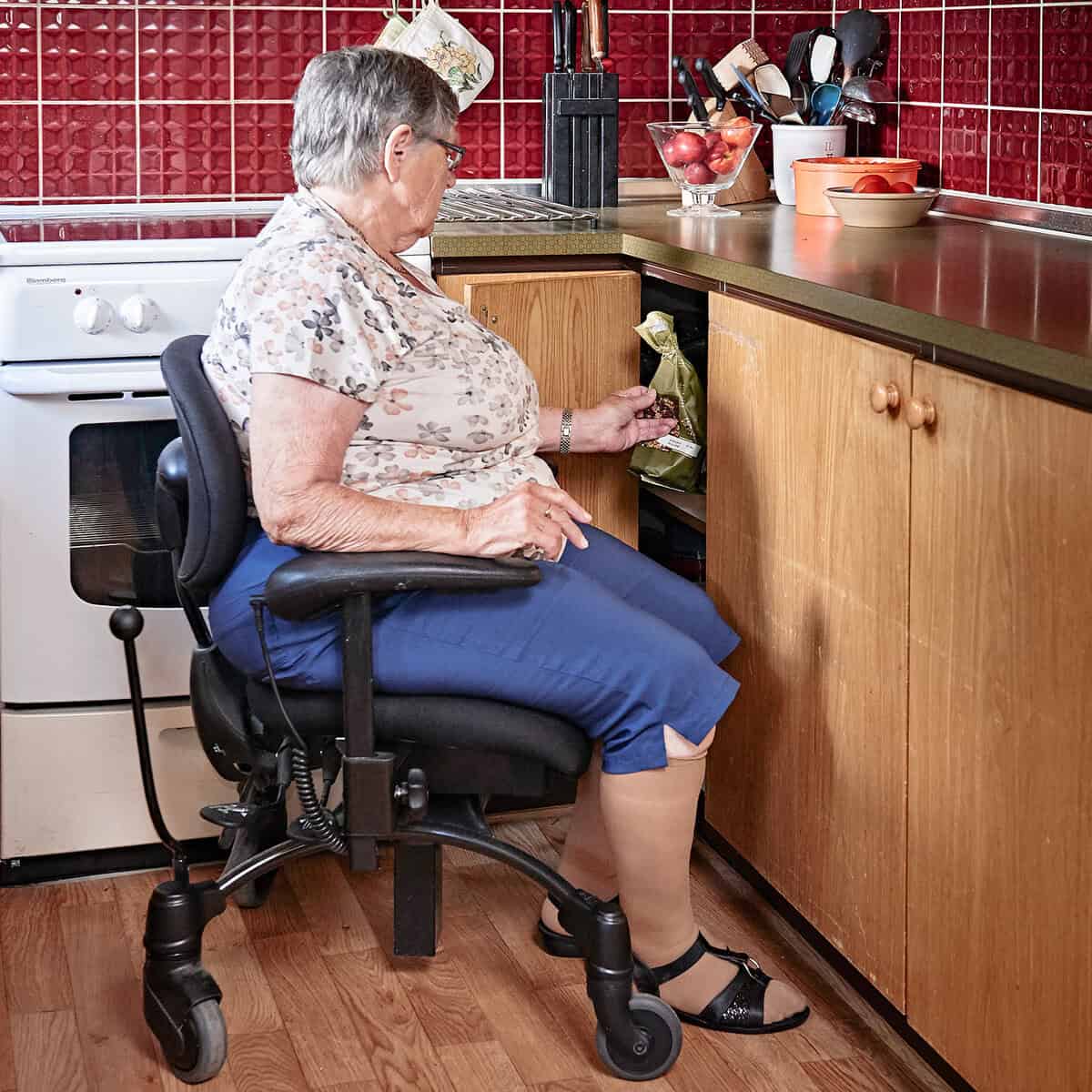
As the limitations of traditional nursing homes come into focus, solutions that enable elderly individuals to maintain independence at home gain importance. This is where innovative approaches, such as the medically approved VELA Independence Chair, come into play. The chair is designed for at-home use with features that ensure safety while encouraging freedom of movement. With a central brake for added protection, electric height adjustability, and a rotating seat for seamless transitions during daily activities, the VELA Chair serves as a practical support system. This not only assists with tasks like cooking, dressing, or transferring but also eases the burden on informal caregivers, creating a supportive environment that can delay or reduce the dependence on nursing home care.
Staying Independent at Home with Support
Mobility solutions like the VELA Independence Chair are transforming how elderly individuals experience life at home. Recent advances have made AI-powered mobility aids standard in the industry. These devices, including smart walkers with AI sensors to detect falls, wheelchairs with real-time movement monitoring, and scooters with GPS tracking, now offer continuous feedback to users and caregivers for increased safety and independence. Voice-activated controls have become common, allowing those with limited dexterity to operate their equipment hands-free and enabling caregivers to make adjustments remotely. Ergonomic enhancements—such as adjustable armrests, customizable seats, and even vibration or massage features—improve comfort, circulation, and usability for a variety of needs. Smart grab bars embedded with pressure sensors and integrated lighting add another layer of safety at home NextMSC, Cyces.
Recent fall prevention technology now moves beyond simple detection; for example, wearable devices like the Smart Hip Guardian can deploy protective airbags when a fall is detected, reducing the risk of hip fractures. Smart bathroom safety devices with embedded lighting and sensors are helping further reduce at-home injuries. Telehealth integration is also increasingly common, with medical equipment now able to connect with remote monitoring systems that allow healthcare providers to track device usage and other health metrics proactively Cyces, iHealthcareAnalyst.com.
The market for disabled and elderly assistive technology is rapidly expanding, projected to reach US$ 32.5 billion by 2026, driven by a strong demand for solutions that help seniors maintain independence. The latest generation of assistive devices incorporates AI, IoT connectivity, and customizable features, such as autonomous navigation, health monitoring, and real-time environmental feedback. 3D printing and biomaterials continue to increase the comfort and fit of mobility aids, while voice-activated features and smartphone integration extend accessibility and convenience. AI-powered assistants support user safety with features like autonomous speed adjustment, personalized reminders, and predictive risk alerts, which can all be managed remotely by caregivers for enhanced peace of mind Custom Market Insights, Let’s Envision, Market.us Media, PR Newswire.
Classic solutions remain effective, but the addition of robotics, smart wheelchairs, wearable monitors, and user-centered AI makes it possible to tailor care to each individual’s requirements and preferences Age In Place Tech. Virtual healthcare consultations and remote equipment monitoring now play a routine role, enabling quick intervention for medical issues and making elderly care at home more reliable than ever. These digital solutions also place an emphasis on privacy, ethical data use, and ensuring digital literacy so that all users and caregivers benefit from recent innovations.
While VELA offers a proven solution, exploring various mobility aids can provide families with practical options for enhancing elderly independence at home.
- Sources:
- Cyces, “AgeTech Trends 2025: AI, Robotics & the Future of Aging,” 2025-01-01
- Cyces, “AgeTech Trends 2025: AI, Robotics & the Future of Aging,” 2025-05-01
- NextMSC, “Disabled and Elderly Assistive Device Market | 2025–2030,” 2025-05-20
- NextMSC, “Disabled and Elderly Assistive Device Market | 2025–2030,” 2025-08-01
- PubMed Central, Giansanti et al., “Integrating AI and Assistive Technologies in Healthcare,” Healthcare (Basel), 2025-03-04
- NCBI, “Integrating AI and Assistive Technologies in Healthcare,” 2025-08-26
- PR Newswire, “Assistive Technology (AT) Market to Grow by USD 6.3 Billion from 2025-2029,” 2025-02-07
- Age In Place Tech, “Five more Health and Aging Tech offerings from CES 2025,” 2025-01-09
- Age In Place Tech, “Market Overview 2025 Technology for Aging,” 2025-08-18
- iHealthcareAnalyst.com, “Geriatric Assistive Devices Market: Trends, Technologies & Outlook,” 2025-03-20
- Custom Market Insights, “Disabled and Elderly Assistive Technology Market Size – 2034,” 2025-08-10
- Let’s Envision, “Future of Assistive Technology & AI Assistants,” 2025-07-28
- Market.us Media, “Assistive Technology Statistics and Facts,” 2025-07-01