

Updated February 2026: We have updated the article with the latest regulatory shifts, including the repeal of minimum federal nursing home staffing requirements, enhanced insights on CMS Nursing Home Care Compare ratings, and new technologies. The update highlights recent advances in AI-powered fall detection, remote monitoring, robotics, wearable sensors, smart home devices, and other digital solutions supporting independence for seniors and those with limited mobility.
Exploring Nursing Home Options in Southampton, NY
When searching for a “Southampton nursing home,” families are often seeking quality options that balance comfort, care, and cost-effectiveness in Southampton, NY. Situated in the esteemed “The Hamptons,” this area is renowned for its affluence and significant senior population. According to Medicare.gov, some facilities like The Hamptons Center for Rehabilitation and Nursing face challenges, scoring just 2.0 out of 5 stars. With nursing home costs in Southampton averaging $9,705 per month, above the national mean, the decision process can be daunting.
Nursing Home Care vs. Assisted and Memory Care
Southampton presents a growing need for senior care, fueled by its aging population. Understanding the differences between nursing homes, assisted living, and memory care is crucial for making an informed choice. Nursing homes typically provide comprehensive medical care, while assisted living focuses on daily assistance with more independence. Memory care units are specifically designed for residents with Alzheimer’s or dementia. According to A Place for Mom, Southampton offers varied services tailored to these diverse needs.
Top-Rated Nursing Homes and Facilities
Within Southampton, facilities like The Hamptons Center for Rehabilitation and Nursing are well-documented, though they may not always have the highest ratings. The Medicare.gov website provides a detailed assessment of such facilities, evaluating based on services and ratings that include specific criteria such as health inspections, staffing adequacy, and quality measures.
Beyond metrics, testimonials from residents and families often reveal day-to-day experiences that can be vital for decision-making. For example, residents have cited participation in group activities, quality of dietary provisions, and staff responsiveness as key satisfaction indicators. Visiting these facilities and engaging directly with staff and residents can illuminate these qualitative aspects, often obscured by statistics alone.
Understanding Costs and Financial Considerations
According to SeniorLiving.org, the financial burden is a substantial factor when choosing a nursing home, with costs in Southampton significantly above average. Factors influencing costs include care levels, room types, and additional services like specialized therapies. It’s essential to explore insurance options like Medicare and Medicaid to help mitigate out-of-pocket expenses. Clarifying these coverages ensures informed financial planning and helps families avoid unexpected financial stressors.
Evaluating Quality of Care in Local Facilities
Quality of care is paramount in the selection process, assessed through systems like the Medicare rating system, which evaluates health inspections, staff-to-resident ratios, and overall quality measures. Star ratings offer a baseline, but personal evaluations—such as visiting facilities and speaking with current residents—provide a comprehensive view of a facility’s environment and care standard. A thorough evaluation involves observing staff engagement levels, the cleanliness of the facility, and the general ambiance.
As of 2026, the Centers for Medicare & Medicaid Services (CMS) have updated their Nursing Home Care Compare and Five-Star ratings to emphasize more recent surveys and antipsychotic medication use. This provides families and caregivers with improved tools to assess current quality of care. In a major regulatory change, CMS has repealed the federal minimum staffing mandate, effective February 2026, reverting to earlier rules for registered nurse (RN) coverage but retaining facility-level assessments to determine staffing based on resident needs. This allows facilities in Southampton and nationally to implement more flexible care models and adjust to local workforce realities while maintaining focus on individualized care assessments.[8][9][10]
Alternatives to Traditional Nursing Home Care
For many, the challenges presented by nursing home options can lead families to consider alternatives that allow for greater independence while still providing necessary support. In recent years, there has been significant progress in advanced assistive technologies that enhance both safety and independence for seniors. As of 2026, AI-powered remote monitoring, wearable devices, and integrated smart home systems are increasingly mainstream in both nursing home and home settings for mobility-limited seniors. These technologies enable continuous health and safety tracking, automated fall detection, predictive analytics on vital signs, gait and wound monitoring, and enhanced pressure ulcer prevention. This supports earlier intervention to reduce hospitalizations and helps personalize care.[9][11][12]
Innovations such as AI-powered smart wheelchairs, robotic exoskeletons for mobility support, wearable health sensors, voice-activated home assistants, and automatic door openers have become practical solutions for enhancing user autonomy and safety.[11][12] Despite the accelerated adoption of these technologies, the use of sophisticated AI systems by nursing staff remains relatively low, around 4.5%, reflecting ongoing challenges in integrating advanced digital tools in everyday care.[9]
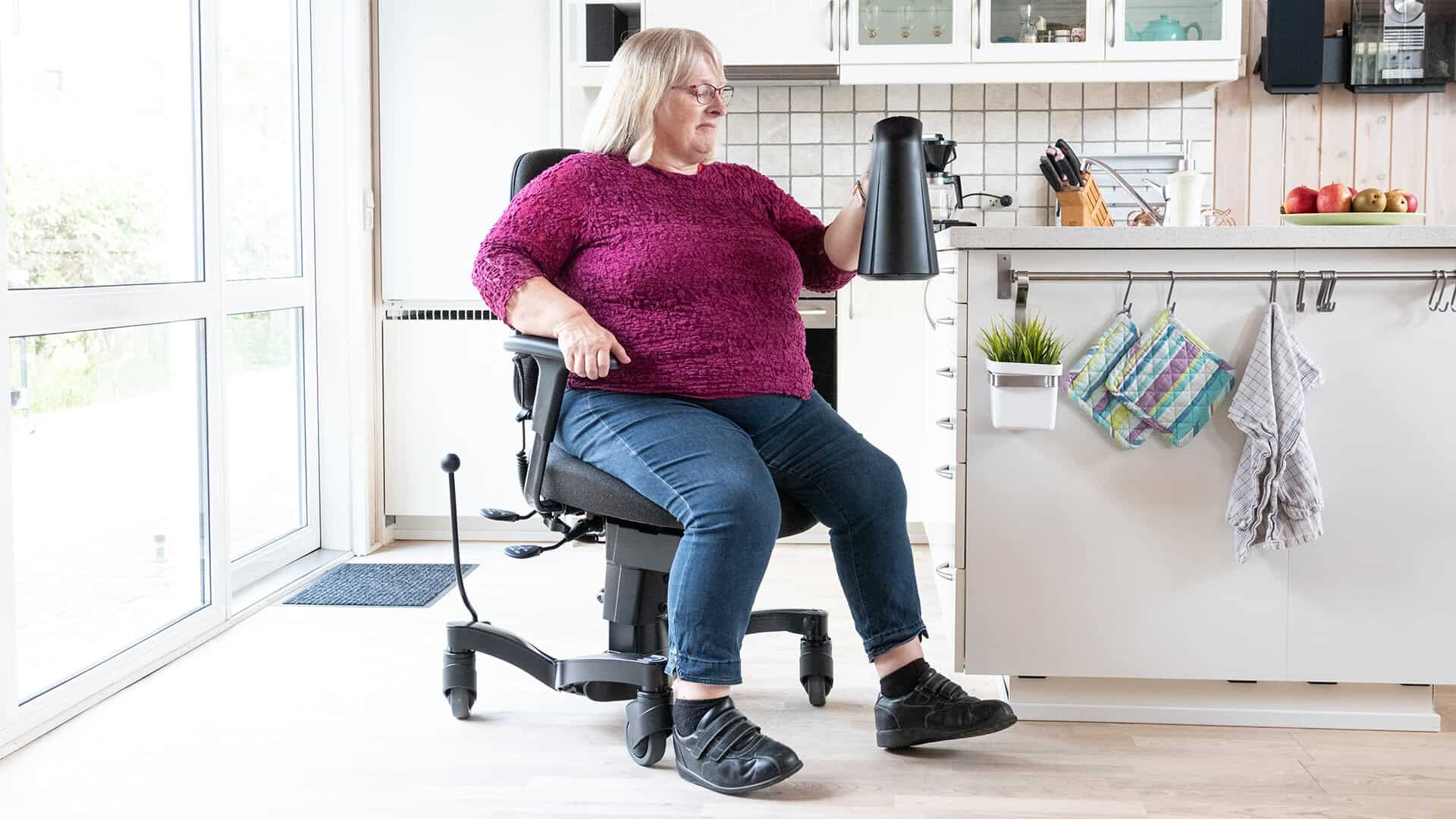
Solutions such as mobility solutions for the elderly continue to be vital tools. Among these, VELA Independence Chairs stand out as a medically-approved option, designed to enhance safety and mobility indoors. These chairs enable seniors to perform daily activities like cooking, dressing, or transferring with ease and minimal strain on caregivers, promoting autonomy and delaying the need for a nursing home setting.
Supporting Aging in Place: A Practical Option
The integration of ergonomic and sensor-enabled tools like the VELA Chair allows seniors to maintain their dignity and independence at home longer while supporting a safer environment. Mobility aids now increasingly feature real-time data capture and automated documentation, supporting efficient rehabilitation for users and easing the administrative burden on healthcare workers. Smart environments and AI-based analytics are used to monitor residents’ wellbeing and identify potential health risks, enabling staff and caregivers to intervene proactively, even in times of workforce shortages. Advanced systems, such as digital twins, are now leveraged for predictive health modeling, allowing clinicians to deliver proactive and tailored interventions that improve outcomes and enhance recovery experiences.[11]
The expansion of smart home assistants, motion-activated lighting, and voice-controlled devices has also contributed significantly to fall prevention and improved daily task performance, supporting seniors aging in place. Additional attention is now given to cybersecurity and system interoperability to protect privacy and ensure equitable access as assistive technologies become central to senior care. Regulatory frameworks are evolving to incentivize adoption of these advancements, though challenges remain in affordability and accessibility—particularly for middle-income seniors who may not qualify for subsidized care. User input from both seniors and healthcare professionals underlines the value of intuitive and adaptable devices that blend seamlessly into everyday routines, improving acceptance and promoting better care outcomes.[11][12]
For many, a VELA Chair can make everyday activities like cooking or relaxing at home possible, reducing dependency on caregivers and potentially delaying the transition to a nursing home. While not the only solution, VELA offers a proven, practical alternative that supports aging in place with dignity and security.
References:
[1] SynchronyFL, “The Future of Home Health Care: Trends to Watch in 2025” (2025-04-10)
[2] Everything Medical Online, “2025 Trends in AI-Powered Mobility Aids” (2025)
[3] Provider Magazine, “Long-Term Care Trends in 2025 and Beyond” (2025-01)
[4] NCBI PMC, “AI Integration in Assistive Devices” (2024-12)
[5] McKnight’s Long-Term Care News (2024-10-08)
[6] ResearchAndMarkets.com, “Assistive Technologies Market for Older Adults, US 2025 Report” (2025-09)
[7] Research in Occupational Therapy Journal, “Smart Homes for Seniors: Review of Benefits and Barriers” (2025)
[8] CMS repeals minimum staffing requirements (Dec 2025)
[9] Top trends shaping skilled nursing in 2026, including AI tools (2026-01)
[10] CMS updates to Nursing Home Care Compare and Five-Star ratings (June 2025)
[11] Emerging home health trends: robotics, wearables, AI for seniors (2026)
[12] Enabling technology for mobility: smart devices case studies