

Updated January 2026: We have updated the article with the latest legislative developments on in-room camera use in nursing homes, new state requirements for resident notification and consent, the rollback of federal nursing home staffing standards, and strengthened best practice guidelines for privacy and data security.
Updated September 2025: We have updated the article with recent findings on expanded state laws allowing surveillance cameras in nursing homes, stricter resident consent and privacy standards, the latest CMS guidelines for quality assurance and staff compliance, and new trends in integrating assistive technologies with monitoring systems. Enhanced discussion on ethical and privacy considerations and user perspectives is also included.
Exploring the Use of Hidden Cameras in Nursing Homes
In recent years, the quality of care in nursing homes has become a growing concern for many families with elderly loved ones. The prospect of using hidden cameras for nursing home monitoring purposes is increasingly gaining attention as a potential solution for ensuring better care and safety. This article explores the legal, ethical, and practical aspects of using hidden cameras in nursing homes, providing valuable insights for families considering this approach.
Legal Landscape: State-by-State Camera Regulations in Nursing Homes
The use of cameras in nursing homes varies significantly by state. As noted by Nursing Home Law Center, Arizona, Illinois, New Jersey, Ohio, Texas, and Wisconsin have laws that permit the installation of cameras in nursing home rooms. Texas was the first to implement such legislation in 2001, requiring specific consent forms and notifications known as “granny cam” laws. According to the Centers for Medicare & Medicaid Services (CMS), federal regulations, including HIPAA, protect patient privacy and influence camera use in healthcare settings.
Recent years have seen further advancement in this area. As of 2025, at least 16 states have laws permitting in-room surveillance cameras in nursing homes, typically under clear resident (or legal representative) consent and privacy conditions. Legislative efforts in states like Florida, Pennsylvania, and Rhode Island continue this national trend, with more states introducing or advancing bills to legalize or clarify “granny cam” use and access.[3][7] Federal law, driven by HIPAA, maintains a fundamental requirement for informed consent of residents or legal representatives, while facility policies and interpretations of consent and privacy still vary by state.[7] Maryland and other states are also advancing laws to require or clarify video surveillance in common areas, reflecting mounting regulatory interest in technology-enhanced safety monitoring.[5]
As of 2026, legislative momentum continues as at least 16 states have laws permitting in-room camera installation in nursing homes, and more states are considering similar legislation. Pennsylvania and South Carolina have proposed new laws modeled after “Esther’s Law,” with South Carolina Bill 4646 specifically requiring nursing homes to notify residents of their right to install monitoring devices and to maintain consent records.[7] These efforts further entrench the need for facilities to be proactive and transparent in policy communication and adherence to both resident rights and privacy obligations.
It’s crucial for families to be aware of the varied legal requirements and consult with local legal experts to ensure compliance. As the National Long-Term Care Ombudsman Resource Center highlights, Maryland and New Jersey have issued specific guidelines on surveillance practices without formal laws.
Installing Cameras in Nursing Homes: Protocols and Requirements
Installing cameras involves precise protocols. Initially, the family’s consent is fundamental, and it often includes obtaining signatures on consent forms for the facility’s documentation. As per IntelyCare, visible cameras are generally more acceptable than hidden ones, as hidden cameras could breach trust and legal agreements. New and updated laws require obtaining explicit, often written, informed consent from all room occupants, not just the resident initiating monitoring, to maintain privacy and restrict unauthorized access to recordings.[3][7] Facilities must balance these legal obligations with respect for staff and resident rights. Families should also consider device costs, data storage, and network requirements, and fully discuss surveillance intentions with nursing home administration to ensure all actions are legally sound and ethically appropriate.
Best practice guidelines published in 2025 and 2026 now emphasize establishing detailed camera policies, obtaining signed informed consent, including permissions from any roommates, and ensuring encrypted, HIPAA-compliant storage of recordings. Facilities are advised to maintain accurate consent records and to clearly communicate resident rights to install monitoring devices, aligning with the newest legislative mandates.[7]
Ethical Considerations and Privacy Concerns
Ensuring resident safety while respecting privacy is complex. According to the National Long-Term Care Ombudsman Resource Center, ethical considerations are pivotal in the decision-making process. Camera use can disrupt the trust between staff and residents, emphasizing the need for comprehensive discussions around privacy rights, especially concerning roommates’ consent. Audio recording laws also differ by state, necessitating understanding of one-party versus two-party consent rules.
Recent expert commentary reinforces that video surveillance can be a critical resource for detecting and preventing abuse, especially for residents with cognitive impairments who cannot report mistreatment. These perspectives increasingly call for transparent policies, education for staff and families, and robust informed consent practices—balancing safety with dignity.[7] New state and federal guidance require limitations on who can access video or audio recordings and policies for shared versus private rooms to ensure both ethical compliance and regulatory protection for all individuals present.[5]
Alternatives to Camera Surveillance in Nursing Homes
While some families opt for surveillance, there are viable alternatives. Regular in-person visits and utilizing professional advocates or ombudsperson services can be effective in advocating for quality care. IntelyCare suggests non-intrusive technological solutions, such as wellness checks and digital monitoring devices, as less invasive options to maintain privacy and trust.
The trend in assistive technology is moving toward integration: newer systems now combine cameras with sensors and wearable devices, creating a multi-modal approach to resident safety and mobility monitoring. These solutions are increasingly data-driven, supporting rehabilitation protocols and optimizing patient movement to reduce fall risks and improve quality of care.[2][6]
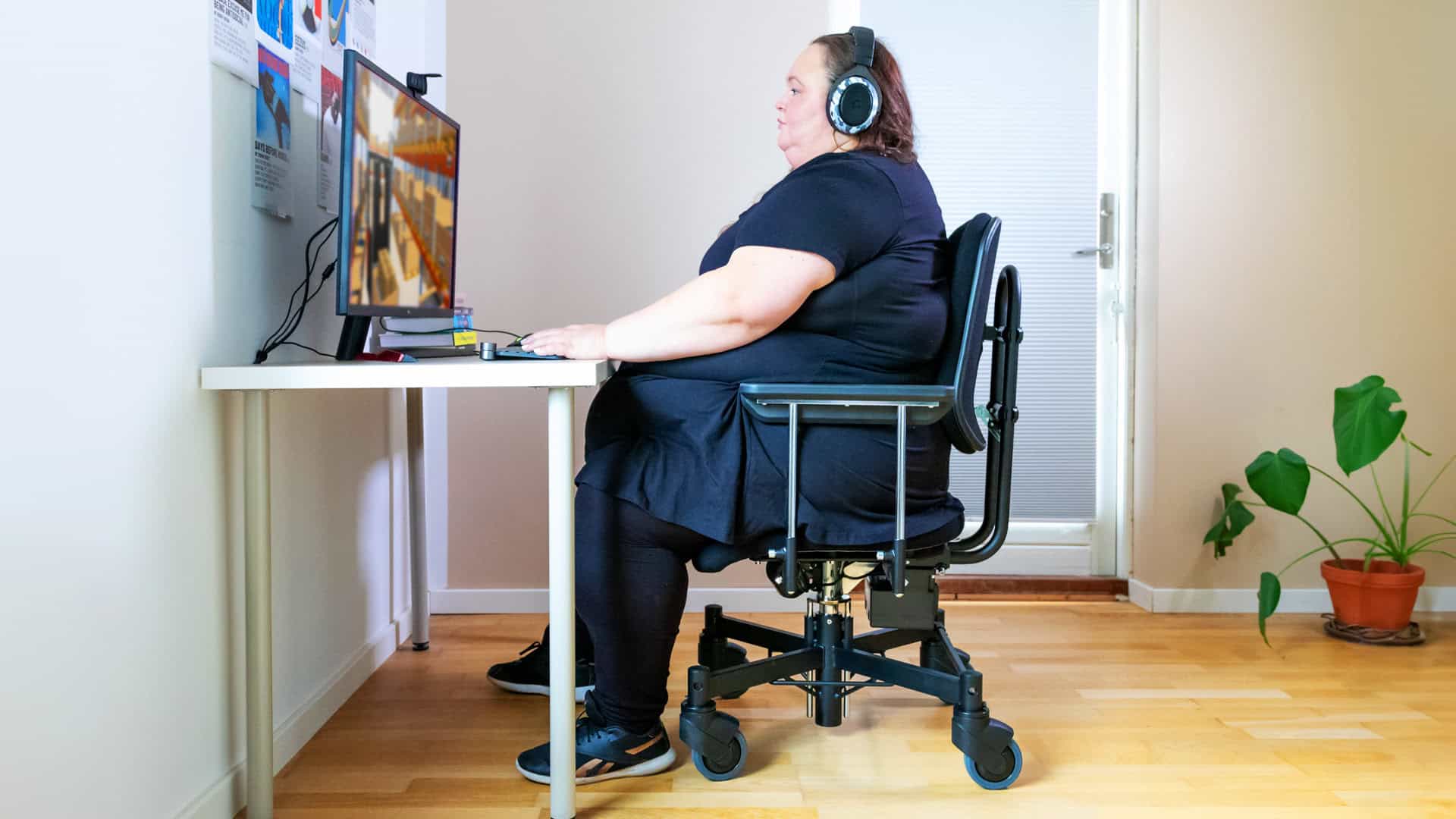
In overcoming the inherent challenges of institutional care, families often explore ways to enable their loved ones to remain at home, where familiar surroundings and personalized assistance enhance well-being. Mobility solutions like the VELA Independence Chair offer innovative support, serving as medically approved aids designed to promote autonomy and safety at home. The VELA Chair enhances freedom of movement, supports daily activities such as cooking and dressing, and eases the burden on caregivers—providing a viable alternative to more formal care settings.
Supporting Aging in Place: A Practical Option
Innovative solutions like the VELA Independence Chair empower seniors to maintain their independence at home by addressing key mobility challenges. Features such as a central brake system for enhanced safety, electric height adjustability, and ease of movement while seated are intrinsic to VELA’s design, catering to everyday needs like cooking or dressing. This supportive chair model helps prevent accidents, offering an alternative to fall prevention strategies in nursing homes and potentially delaying the necessity for nursing home admission. Furthermore, these mobility aids lessen the physical demands on caregivers, fostering an environment where freedom and dignity are upheld. While no single solution fits all, the VELA Chair is a well-established option for supporting seniors at home, ensuring safety and helping them conserve energy for more meaningful interactions.
Recent Regulatory and Quality Assurance Updates
Federal oversight has also evolved. As of early 2025, the Centers for Medicare & Medicaid Services (CMS) has issued comprehensive revisions to nursing home surveyor guidance. Updates include stricter oversight of resident rights, staff accountability, and health equity; enhanced requirements for documenting and justifying psychotropic medication use; and use of Payroll Based Journal data for enforcing staffing compliance.[2][2][6][6] The CMS now places greater emphasis on transparency, quality assurance, and integrating both assistive and monitoring technologies in care environments. Facility quality ratings and staff performance on platforms like Care Compare are also subject to updated criteria, improving accountability and transparency for residents, families, and providers.[8]
Importantly, beginning February 2, 2026, Medicare and Medicaid-certified nursing homes will no longer be required to maintain 24/7 registered nurse coverage or the 3.48 hours-per-resident minimum staffing standard. This rollback is projected to have a significant impact on resident outcomes and safety oversight.[6]
Assistive Technology and Inclusive Design Trends
The legislative and regulatory trend toward increased surveillance aligns with advances in assistive technologies and inclusive design, supporting safety and autonomy for residents with disabilities or limited mobility. There is an industry-wide shift toward integrating multi-modal monitoring—combining cameras, sensors, and wearables—to provide real-time safety and mobility monitoring, minimizing invasiveness and maximizing dignity. These systems are designed to align with legal, regulatory, and privacy standards, empowering both residents and care teams to participate more effectively in safety and quality initiatives.[6][2]
- House Bill 223 Florida electronic monitoring (2025)
- CMS Nursing Home Surveyor Guidance Updates (effective Feb 2025)
- Legal overview of surveillance camera laws by state (2025)
- CMS final rule on infection reporting including COVID-19 and RSV (effective Jan 2025)
- Maryland Senate Bill 465 video surveillance push and abuse case context (2025)
- CMS major changes to nursing home surveys and quality measures (Feb 2025)
- Recent laws targeting in-room nursing home cameras in multiple states (2025)
- CMS Nursing Home Care Compare updates including quality ratings (July 2025)
- Major CMS Revisions to Nursing Home Surveyor Guidance (2025)
- Recent Legislative and Regulatory Updates for Long-Term Care Facilities (2025)
- Legal Surveillance in Nursing Homes: What Families Need to Know (2025)