

Updated January 2026: We have updated the article with the latest information on AI-driven assistive technologies, remote monitoring wearables, smart mobility aids, expanded “Hospital at Home” care models, new regulatory changes such as the Transforming Episode Accountability Model (TEAM), enhanced Medicare Advantage coverage for in-home skilled nursing, and recent trends in ergonomic and smart device adoption, holistic care, and workforce training programs.
Understanding In-Home Skilled Nursing: A Comprehensive Guide
As the demand for personalized healthcare rises, many seniors, individuals recovering from surgery, and those with chronic conditions are opting for a more comfortable alternative: in-home skilled nursing. This approach is generally seen as more cost-effective, convenient, and equally effective as the care provided in hospitals or skilled nursing facilities (SNF). According to Medicare.gov, home health care is typically less expensive, caters to personal schedules, and offers a tailored approach to patient needs compared to traditional inpatient care.
What Is In-Home Skilled Nursing?
In-home skilled nursing delivers professional medical care within the comfort of a patient’s home. Licensed professionals, such as registered nurses (RNs) and licensed practical nurses (LPNs), perform a variety of services. These include intermittent skilled nursing care, therapy, and medical social services, ensuring a continuum of care tailored to individual medical needs (Medicare.gov; Aetna). Unlike regular home aide care, which focuses on assisting with daily living activities, skilled nursing is medically necessary and involves direct oversight by healthcare professionals.
Services Provided by In-Home Skilled Nurses
In-home skilled nursing encompasses a range of medical services. Care professionals administer wound care, IV therapy, medication management, and patient education. These services are essential for restoring and maintaining the optimal health and functional status of patients. According to Amedisys, skilled nursing services also include observation/assessment and the management and evaluation of patient care. Care plans are personalized and developed in coordination with the patient’s family and physicians, ensuring a holistic approach (Visiting Nurse Association of Florida).
Recent advancements continue to revolutionize home care by incorporating remote monitoring with wearables, sensors, and AI-driven platforms that enable real-time health tracking and provide alerts for caregivers and family. New wearable devices feature predictive analytics for fall and infection prevention, contributing to proactive care and helping reduce emergency hospitalizations[1][2][3][4][5][6]. Smart wheelchairs now include autonomous navigation features, such as LUCI sensors for pressure monitoring and Robooter X40 app-controlled folding chairs, offering increased mobility and safety at home[2][4][6]. Integration of predictive remote monitoring wearables supports individualized care plans and allows professionals to intervene before issues escalate.
Beyond mobility, remote platforms and virtual check-ins through telehealth are now a standard part of in-home skilled nursing, allowing seamless patient-provider communication and increasing access to care, especially under the expanding “Hospital at Home” model. These models now routinely offer services like IV therapy and wound care delivered at home alongside skilled nursing oversight, supported by evolving Medicare Advantage policies[1][3][5]. The integration of holistic therapies, such as yoga and music therapy, as part of rehabilitation and wellness programs also reflects a shift toward more comprehensive and patient-centered care packages[5]. Devices such as iSee smart glasses for low vision, stair-climbing power chairs (XSTO X12), and brain-controlled prosthetics increase independence and support rehabilitation outcomes, allowing patients to maintain dignity and autonomy while aging in place[2][4][6].
Recent trends also show rapid growth in ergonomic and smart assistive devices, many of which offer customizable features for comfort, support, and enhanced user satisfaction[4][6]. The adoption rate of insurance-funded upgrades for mobility solutions—including powerful wheelchair attachments like WheelMove (offering a 25km range)—is expected to increase as market share of advanced mobility aids expands through 2026[4][6]. Caregiver training programs are being scaled to equip providers with skills for managing these new technologies and addressing ongoing workforce shortages[1][5][7].
In-Home Skilled Nursing vs. Nursing Home Care
When deciding between in-home skilled nursing and traditional nursing home care, several distinctions come to light. In-home care provides individualized attention in a familiar environment, suited for short-term, acute needs often following hospital discharge. Nursing homes, on the other hand, offer long-term custodial care for individuals who cannot manage basic daily tasks independently. According to the Centers for Medicare & Medicaid Services (CMS), skilled care is medically necessary, more intensive, and can be provided at home or in a facility. Skilled nursing at home is particularly beneficial for those seeking comfort and personalized care without the rigidity of institutional settings (Visiting Nurse Association of Florida).
Recent regulatory and policy changes have significantly improved access to in-home skilled nursing. The introduction of the Transforming Episode Accountability Model (TEAM) in January 2026 aims to enhance coordination between skilled nursing facilities and hospitals, streamline care transitions, and foster value-based contracts[1][3][5]. Medicare Advantage plans now offer expanded coverage and higher payment rates for in-home care, supporting “SNF at Home” and “Hospital at Home” initiatives[1][3][5]. Despite progress, workforce shortages continue to challenge the sector, prompting a national focus on flexible staffing strategies and expanded caregiver training to support the uptake of advanced technologies in home settings[1][5][7].
Choosing the Right In-Home Skilled Nursing Provider
Selecting the right in-home skilled nursing provider necessitates thorough research. Important factors include provider accreditation, staff qualifications, and patient reviews (Harrogate Life Care). Ensuring cooperation among providers, families, and physicians is crucial for delivering comprehensive care. Moreover, adaptive equipment plays a significant role in enhancing patient independence and quality of life (Visiting Nurse Association of Florida; Amedisys).
In addition to traditional solutions, rehabilitation and assistive devices increasingly feature ergonomic and inclusive designs, responsive to user needs and feedback. Technologies such as smart prosthetics, adaptive exoskeletons, and AI-enabled wheelchair systems with autonomous navigation and MaaS-Bridge software are creating new standards for accessible mobility and daily living[2][4][6]. These devices are tailored for both comfort and functionality and are integrated with smart home platforms, ensuring users can control their environment with ease. Design improvements and holistic approaches, including integration of therapies like music or yoga, also help reduce caregiver burden and improve user satisfaction, supporting better rehabilitative results[5][6].
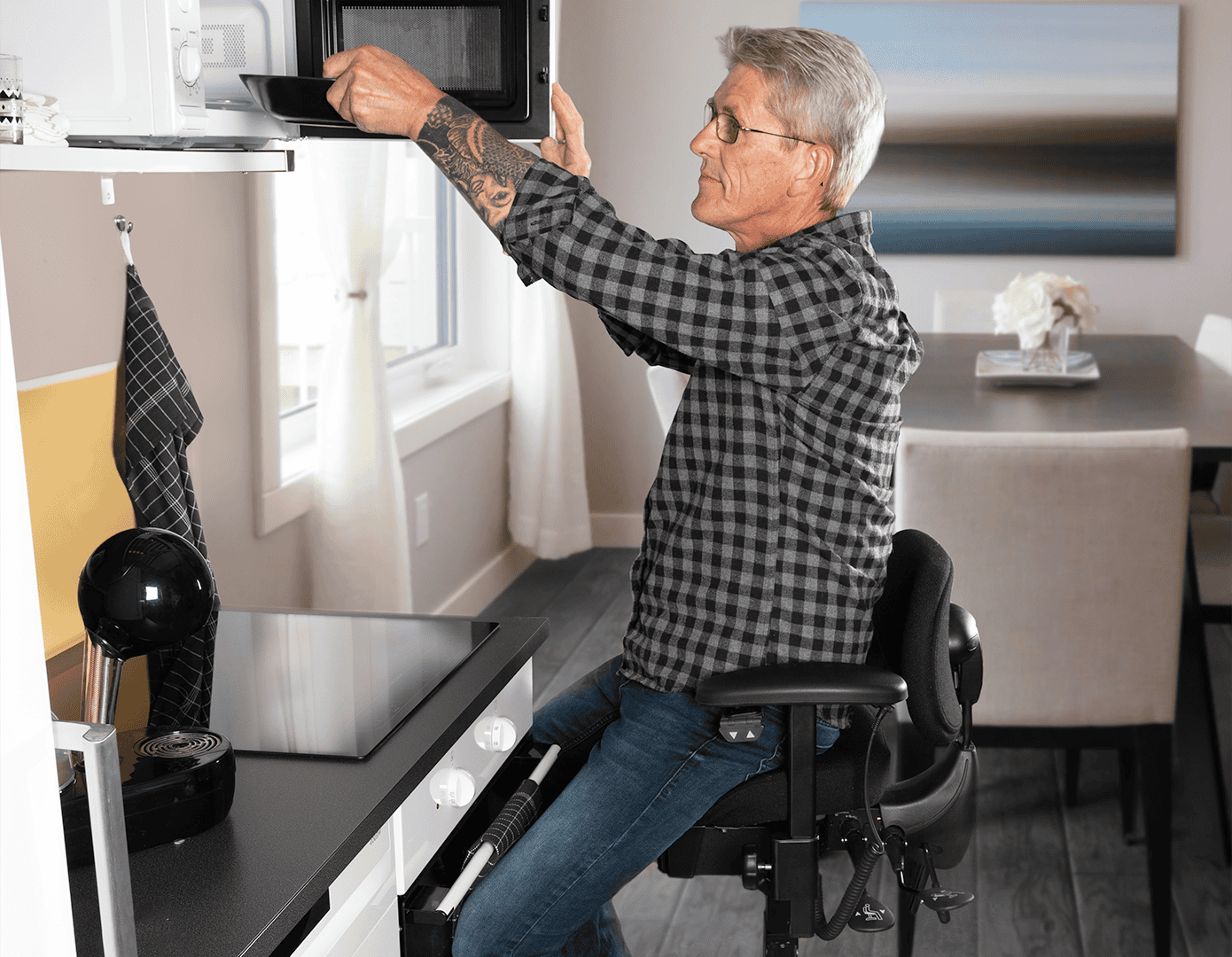
In recognizing the challenges posed by the structured setting of nursing homes, tools and solutions that promote independence at home become invaluable. The VELA Independence Chair represents one such innovation, designed specifically to address the needs of aging individuals or those requiring mobility assistance. This medically approved mobility chair offers enhanced safety and freedom of movement while seated, significantly aiding daily activities such as cooking, dressing, or transitioning from one position to another. By effectively reducing the load on informal caregivers, VELA chairs empower individuals to maintain autonomy within their homes.
Supporting Aging in Place: A Practical Option
Mobility solutions like the VELA Chair offer pragmatic benefits for those wishing to remain in their own homes while maintaining safety and independence. These chairs are equipped with features such as a central brake for added security, electric height adjustability, and effortless maneuverability. Such characteristics make everyday activities achievable with less risk and strain, potentially delaying the need for transitioning to a nursing home. Life without the support of a VELA Chair can mean increased vulnerability during daily tasks, leading to a dependence on caregivers. In contrast, the chair’s design prioritizes dignity, freedom, and energy conservation, contributing significantly to the user’s quality of life. While VELA is a proven and practical option, it is essential to consider it alongside other mobility solutions to best meet diverse needs at home. For more on how VELA chairs enhance senior independence, visit Senior Chair Solutions.
For further insights into the philosophy and innovation behind VELA’s mobility solutions, you may also explore VELA Mobility Solutions.
Sources:
- Allied Home Health Houston. 2025 Home Care Trends: The Future of In-Home Healthcare, 2025-06-02. [1]
- Keyway Medical. AI-Powered Mobility and Assistive Technologies: Next-Gen Solutions for 2025, 2025-07-15. [2]
- NIC. Skilled Nursing Faces Opportunities and Challenges in 2025, 2025-01-09. [3]
- Think Beyond the Chair. Best Assistive Tech Gadgets in 2025, 2025-02-07. [4]
- NCHStats. Home Care Industry Outlook: Market Growth and Workforce Trends, 2025-05-01. [5]
- TomCare. Smart Home Tech and Communication Devices for People with Disabilities, 2025-04-18. [6]
- ACPlus. 2025 Skilled Nursing Facility Industry Outlook, 2025-02-06. [7]
- EqualAccessibility.co. Innovations in Assistive Technology, 2025-03-19. [8]
- Skilled Nursing News: Top Trends That Will Shape the Skilled Nursing Sector in 2026, 2026-01-24. [1]
- Advanced Nursing Care: Elder Care in 2026 Trends to Watch, 2026-01-10. [3]
- All Seniors Care: Emerging Trends in Home Health Services for Aging Seniors in 2026, 2026-01-12. [5]
- Mobility Management: CES 2026: 4 Assistive Technology Exhibitors to Watch, 2026-01-08. [4]
- FactMR: Disabled and Elderly Assistive Technology Market Report, 2026-01-06. [6]