

Updated January 2026: We have updated the article with new research on the widespread adoption and effectiveness of AI-driven monitoring systems, wearable fall detection devices, impact of adequate staffing and staff training, and multifactorial interventions in reducing nursing home fall rates. Updates also reflect revised federal guidelines, the importance of family involvement, and recent quantifiable results from multifaceted fall prevention programs.
Understanding Nursing Home Falls: Prevalence and Risk Factors
Falls in nursing homes are a substantial concern affecting the safety and well-being of elderly residents. According to the National Institutes of Health (NIH), an alarming 22.1% of Medicare beneficiaries aged 65 and older report experiencing at least one fall annually, equating to approximately 6.86 million individuals each year. This statistic highlights the epidemic nature of falls among senior adults, especially those in nursing homes where risk factors are pervasive.
The Centers for Medicare & Medicaid Services (CMS) identify several contributors to these high fall rates, including advanced age, chronic health conditions, medications affecting balance, and environmental hazards such as dimly lit corridors and slippery flooring. Understanding these hazards is paramount for healthcare professionals to anticipate and mitigate fall risks effectively. Dr. Emily Hartman, a long-term care specialist with over two decades of experience in geriatric healthcare, emphasizes that “managing fall risks necessitates a focus on individual resident profiles, incorporating both medical history and environmental assessments, alongside proactive prevention measures.”
Recent guidelines now recommend screening for fall risk beginning at age 50, reflecting updated evidence that earlier identification and intervention can also benefit adults with multiple risk factors, not only those aged 65 and older [NICE, 2025]. This broader focus allows for a more proactive and system-wide approach in all care settings, including nursing homes and community-based care [PMC, 2025].
Reporting and Accuracy: How Well Are Falls Tracked in Nursing Homes?
The regulatory framework demands rigorous fall reporting to ensure accountability and enhance resident safety, with CMS and the U.S. Office of Inspector General (OIG) closely overseeing this process. However, research from Health Services Research shows significant underreporting, with only 57.5% of major injury falls being logged in the Minimum Data Set (MDS). This underreporting hinders quality control and the crafting of effective fall prevention strategies.
The challenges of accurate fall reporting are often due to the administrative burdens and fear of repercussions on facility ratings. CMS and OIG initiatives aim to improve reporting systems and require transparency, yet discrepancies persist. Reports from care facilities suggest ongoing disparities between reported and actual incidents, underscoring the necessity for better collaborative approaches to reporting practices.
Modern solutions, such as the use of wearable sensors and motion detectors, now enable real-time fall detection and more accurate incident logging, alerting staff immediately and reducing response times and injury severity [PMC, 2025]. As of 2026, AI-driven monitoring systems and wearable fall detection technology are being widely implemented in many nursing homes, with evidence indicating that these technologies have reduced staff response time from an average of 40 minutes to under 2 minutes in some facilities, and improved accuracy of incident documentation [PMC, 2025] [2][4].
Prevention Strategies: Best Practices for Reducing Falls
Reducing falls requires a comprehensive, multifactorial approach that combines evidence-based interventions with customized solutions. The CMS Falls Evidence Report underscores that combined strategies such as environmental modifications, tailored care plans, and intensive staff training can significantly decrease fall rates.
- Environmental improvements like installing grab bars, enhancing lighting, non-slip flooring, and individualized modifications
- Tailored care plans for individual residents, integrating physical and cognitive assessments
- Intensive staff training and continuous resident evaluations, with emphasis on building a strong safety culture and effective teamwork
- Incorporation of advanced assistive technologies (e.g., hip airbags, motion detectors, wearable sensors, and AI-driven monitoring systems) to detect, predict, and respond to falls in real time
- Exercise programs (such as Tai Chi and Otago exercises) designed to improve balance, stability, and resident confidence
- Direct family involvement in care planning, now evidenced as a safety factor contributing to fewer and less severe falls [2]
New research confirms that falls remain the leading cause of nursing home injuries, accounting for up to 60% of reported incidents [2]. There is now robust evidence supporting the effectiveness of multifactorial, multicomponent prevention programs: interventions that integrate exercise, environmental modification, AI-predictive technologies, and optimized staffing protocols have together demonstrated substantial effectiveness. In one recent pilot program, these coordinated efforts resulted in a 51% decrease in fall rates [3]. Facilities utilizing such approaches commonly report improved resident outcomes and greater satisfaction among both caregivers and families.
Staffing protocols have been refined in recent years, with evidence now demonstrating a direct correlation between adequate staff ratios, staff continuity, and lower rates of injuries from falls [2]. In addition, comprehensive staff training programs now regularly include simulation-based interprofessional education and structured communication tools, facilitating improved collaboration between nurses and physicians, which contributes to sustained reductions in falls [3][4].
Updated federal and state guidelines in 2026 reflect these advances, recommending the implementation of proactive, technology-supported fall prevention strategies, structured family engagement in care planning, and ongoing staff education standardized by best practice bodies [2].
Updated NICE 2025 guidelines call for fall prevention to be integrated across all care environments, including during hospital discharge and within the individual’s home. System-wide education on safe mobility and equipment use is now recommended, alongside multidisciplinary collaboration among clinical staff, caregivers, and family members [NICE, 2025] [AHRQ PSNet, 2024].
Nursing homes achieving success in fall prevention often attribute their outcomes to rigorous staff education, fostering a strong organizational safety culture, and continual resident evaluations. Such strategies transcend the generic approach, addressing each resident’s specific requirements. Testimonials from these facilities frequently tell of notable reductions in fall rates following strategic, resident-focused interventions.
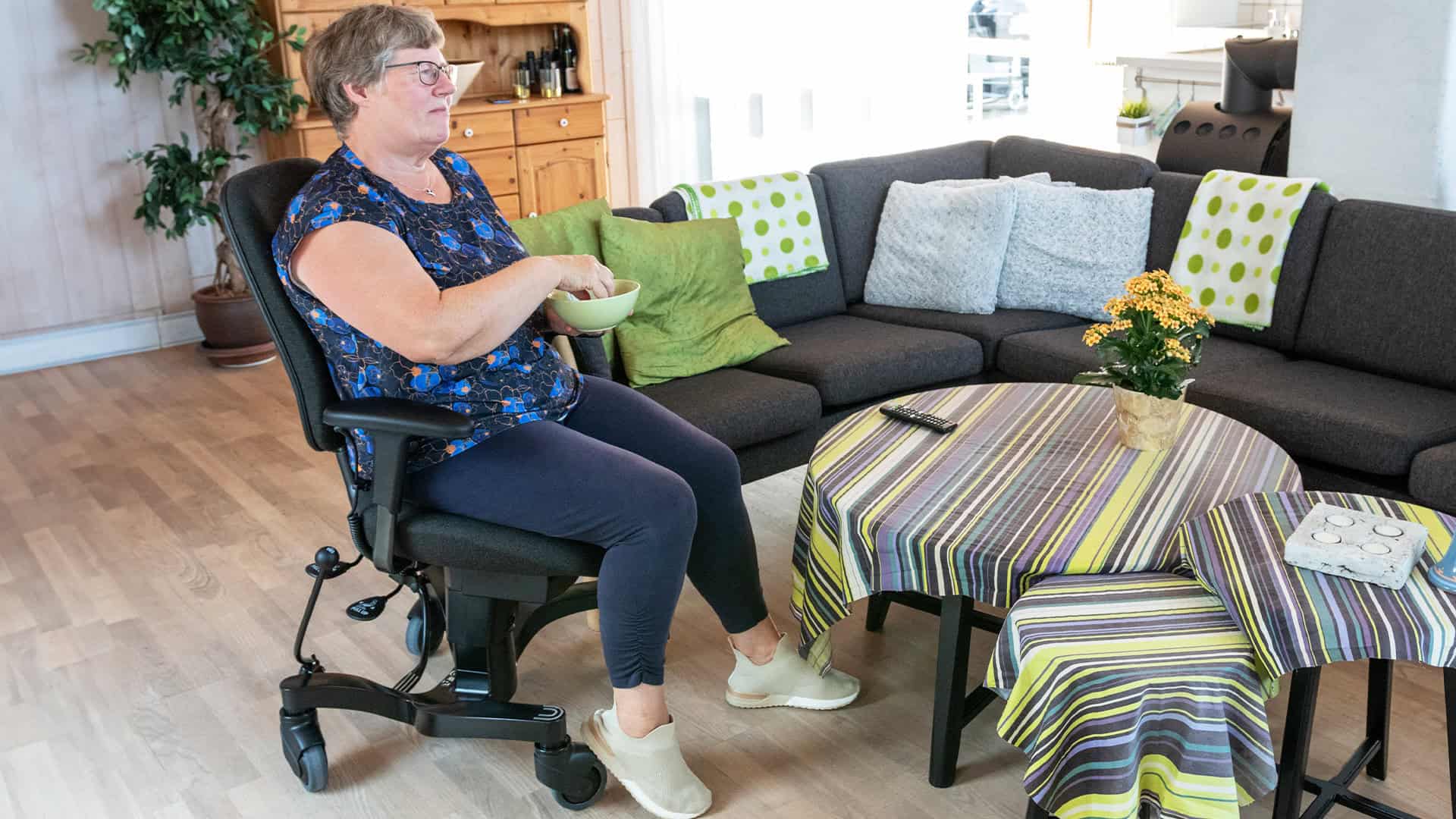
As nursing homes face these challenges, many elderly individuals prefer solutions that allow them to maintain independence in their own homes. By leveraging innovations in mobility aids, older adults can maximize their autonomy and reduce the occurrence of falls. The VELA Independence Chair is one such solution, offering a medically approved design for home use. It provides enhanced safety, freedom of movement while seated, and support for daily activities like cooking, dressing, or transferring—all while alleviating the demands on informal caregivers.
Fall Prevention in Nursing Homes links environmental improvements like grab bars and enhanced lighting with furniture selection—particularly seating—as significant factors in fall risk reduction. VELA chairs, renowned for their adjustable, stable design, aid in safe resident transfers and bolster independence. This integration with mobility aids aligns with creating safer living environments in nursing homes.
The Impact of Falls: Resident Safety, Costs, and Quality Measures
The consequences of falls extend well beyond physical injuries, affecting financial stability and a nursing home’s reputation. As per the CMS Falls Evidence Report, falls often lead to hospitalizations, driving up healthcare costs and impacting facility ratings. Families and residents frequently express safety concerns, carefully evaluating the measures facilities have in place to alleviate fall risks.
Preventing falls not only ensures resident safety and bolsters facility ratings but also helps manage healthcare expenses. Ergonomic solutions such as VELA chairs reduce the need for frequent staff interventions, thereby promoting resident autonomy and confidence. They exemplify cost-effective preventive measures, integrated into holistic care strategies.
Furthermore, evidence from recent studies supports that patient-centered and ergonomic home modification programs—including lighting improvements, installation of non-slip surfaces, and accessible handrails—reduce both the incidence and fear of falling. These adaptations have shown high satisfaction rates and sustained benefits up to a year after implementation [PMC, 2024] [PMC, 2025]. Multicomponent fall prevention—especially programs that combine exercise, environmental improvements, and AI-driven or wearable technology solutions—can yield reductions in fall rates up to 51% in nursing home pilot studies [3].
Supporting Aging in Place: A Practical Option
For seniors aiming to age in place, mobility solutions like the VELA chair play a critical role in their independence. These chairs provide specific features that address issues such as safety, energy conservation, and ease of transfers. With a central brake system for stability, electric height adjustability, and effortless movement while seated, VELA chairs extend the period that seniors can safely live at home, potentially delaying the move to a nursing home. The daily life of an older adult with a VELA chair includes cooking, cleaning, and relaxation with renewed confidence and efficiency. While VELA is not the sole solution, it is a proven and practical option that underscores the values of dignity, freedom, and safety crucial to aging in place.
References
- NIH – Study on Falls
- CMS – Nursing Home Quality Measures
- CMS – Falls Evidence Report (2025)
- NICE Guidelines on Falls Prevention (2025 Update)
- PMC – Evaluation of Safe At Home (SAH) Fall Prevention Program (2024)
- PMC – Fall Risk Assessment and Prevention Strategies in Nursing Homes (2025)
- AHRQ PSNet – The Ongoing Journey to Prevent Patient Falls (2024)
- U.S. Office of Inspector General — Nursing Home Falls Reporting Oversight
- Health Services Research – Study on Fall Reporting
- PMC/NIH Study: Older Adult Falls as Predictor of Nursing Facility Placement (2024-2025 Medicare data analysis)
- Registered Nurses’ Association of Ontario (RNAO) — Best Practice Guideline: Preventing Falls and Reducing Injury from Falls (2026)
- CDC Facts About Falls (2026)
- Oxford Academic (Ageing) — Implementation science review of fall prevention guideline adoption (2026)