

Updated January 2026: We have updated the article with insights on smart med cart technologies, including AI and IoT integration for predictive maintenance and telehealth, inclusive ergonomic and modular designs, up-to-date regulatory trends about medication adherence and staffing, and new market growth data for 2026 and beyond.
Nursing Home Med Carts: Enhancing Safety and Efficiency in Elder Care
In the realm of elderly care, the seamless administration of medication is paramount. One of the critical components in this process is the use of nursing home med carts. These specialized mobile units are designed to securely store and transport medications within long-term care facilities, playing a crucial role in reducing medication-related errors. Such errors, according to Altus, Inc., rank as the third leading cause of death in the United States. By addressing and mitigating these potential errors, med carts become indispensable tools in ensuring the safety and well-being of residents.
What Is a Nursing Home Med Cart?
A nursing home med cart serves as a mobile workstation that streamlines the medication distribution process. According to Medik Medical, the primary purpose of these carts is to facilitate organized, efficient, and secure medication administration. Various types of med carts are available, such as standard models, point-of-care units, and computer-integrated versions, each tailored to meet specific healthcare facility needs (Scott-Clark Medical). Their flexibility allows them to adapt to diverse healthcare environments, making them vital to daily operations.
Key Features and Safety Requirements of Medication Carts
To fulfill their purpose effectively, medication carts must include robust safety features. According to Altus, Inc., features such as locked drawers and advanced access control systems are essential in preventing unauthorized access, thereby enhancing patient safety. Compliance with standards set by authoritative bodies such as CMS.gov ensures that carts adhere to regulations regarding medication documentation and storage.
Moreover, infection control is an integral aspect of med cart maintenance. Regular inspections, as recommended by AliMed, are crucial to ensure cleanliness and hygiene, ultimately protecting both staff and residents. Numerous success stories emphasize that diligent maintenance of med carts leads to significant improvements in safety and operational efficiency.
Recent regulatory and clinical guidelines further require the use of antimicrobial-coated surfaces and easy-to-clean materials to align with infection control standards[1]. Many modern carts incorporate electronic Medication Administration Records (eMAR), barcode scanning, and medication verification systems to further improve medication safety and user confidence[5]. From 2025, enhanced safety requirements are also shaped by value-based care models and updated staffing and medication adherence standards, with more emphasis on features such as auto-locking drawers and regulatory compliance for reduced error rates and improved patient outcomes.[3][6]
How Med Carts Improve Medication Management in Nursing Homes
Med carts not only enhance operational efficiency but also significantly improve medication management within nursing homes. By facilitating streamlined workflows and reducing the likelihood of errors, these carts positively impact nurse productivity and patient safety. Scott-Clark Medical notes these improvements as a major benefit. Similarly, Capsa Healthcare highlights how well-maintained med carts can reduce medication theft and errors thanks to their effective organization.
Recent advances have seen widespread integration of AI and IoT for real-time monitoring, predictive maintenance, and telehealth, enabling remote consultations, data-driven medication management, and enhanced patient safety. These technologies are designed to optimize medication rounds, predict equipment failures before they occur, and help reduce hospital readmissions and falls by providing actionable alerts to nursing staff.[7][2]
Emerging models now often integrate telehealth capabilities, enabling remote patient monitoring and virtual consultations directly from the cart[3]. The shift toward wireless, battery-powered, and ergonomically adjustable carts minimizes physical strain on healthcare staff and optimizes workflow[4].
There has also been a pronounced trend toward modular and customizable med cart designs, allowing facilities to tailor carts for specific needs such as oncology, emergency response, or home care[2]. Modern carts are often lighter, height-adjustable, and include options for kinetic energy recharging to increase uptime and support nurses of varying physical abilities.[2]
Industry trends in North America are dominated by nursing and skilled care markets, with the use of smart med carts accelerating in both institutional and home-based care, particularly as regulations and Medicare/Medicaid expansions underpin technology adoption and remote monitoring.[5]
Choosing the Right Med Cart for Your Facility
Selecting the appropriate med cart involves careful consideration of various factors, including facility size, specific resident needs, and staff workflow demands. Capsa Healthcare offers guidance on tailoring choices to meet these demands for optimal outcomes. Ergonomic solutions, such as VELA chairs, are becoming increasingly popular as a complementary component to med carts. These chairs enhance staff comfort and significantly reduce nurse fatigue during long medication rounds.
Modern med carts frequently feature adjustable heights, lightweight frames, and smooth maneuverability, addressing inclusive design for staff of varying physical strengths and reducing musculoskeletal injuries[4]. Additional advancements are seen in user-friendly, secure interfaces, height-adjustable features, and storage options aimed at both caregivers and patients[1]. Current best practices involve regular feedback from users, ensuring modular features are accessible to staff with disabilities, and integrating smart environment monitoring where needed.[7]
Facility managers who have successfully chosen and implemented med carts share their best practices, emphasizing the importance of user feedback in the decision-making process. Ensuring that the selected carts meet all facility requirements is paramount to leveraging their full potential in enhancing patient care.
In long-term care settings, the adoption of furniture-style medication carts has become more widespread, combining functional reliability with aesthetics. These carts contribute to a homelike environment for residents, improving satisfaction while maintaining all necessary security features[6].
Common Questions about Nursing Home Med Carts
- What is a med cart in a nursing home?
A med cart is a mobile unit designed to securely store and transport medications for residents in a nursing home. - How do medication carts prevent drug errors or theft?
With features like locked drawers and access control systems, med carts enhance security and minimize the risk of errors and unauthorized access. - What features should a nursing home medication cart have?
Essential features include secure storage, compliance with healthcare regulations, and infection control measures. Recent advancements also recommend ergonomic design, wireless technology, telehealth capability integrations, and smart monitoring systems for predictive maintenance and regulatory alignment.[3][7] - How often should med carts be inspected?
Regular inspections are crucial to maintain cleanliness and functionality, preventing potential safety hazards. - Are medication carts required by law in LTC facilities?
While specific requirements may vary, med carts often form a part of compliance with broader healthcare regulation standards. Newer guidelines also address digitization, safety, and infection control as well as stricter medication adherence, with support from Medicare/Medicaid and value-based care policies.[4][6]
In summary, nursing home med carts are pivotal in enhancing the safety and efficiency of medication administration. By incorporating both traditional elements and innovative solutions like VELA chairs, facilities can optimize medication management and ensure the welfare of both residents and staff. Encouragingly, adopting a comprehensive approach that balances traditional methods with ergonomic and technological innovations paves the way for improved health outcomes and operational success in nursing homes. With the global medical carts market projected to reach $8.72B by 2036[2], med carts will continue to play a central role in value-based and technology-driven elder care.
Supporting Aging in Place: A Practical Option
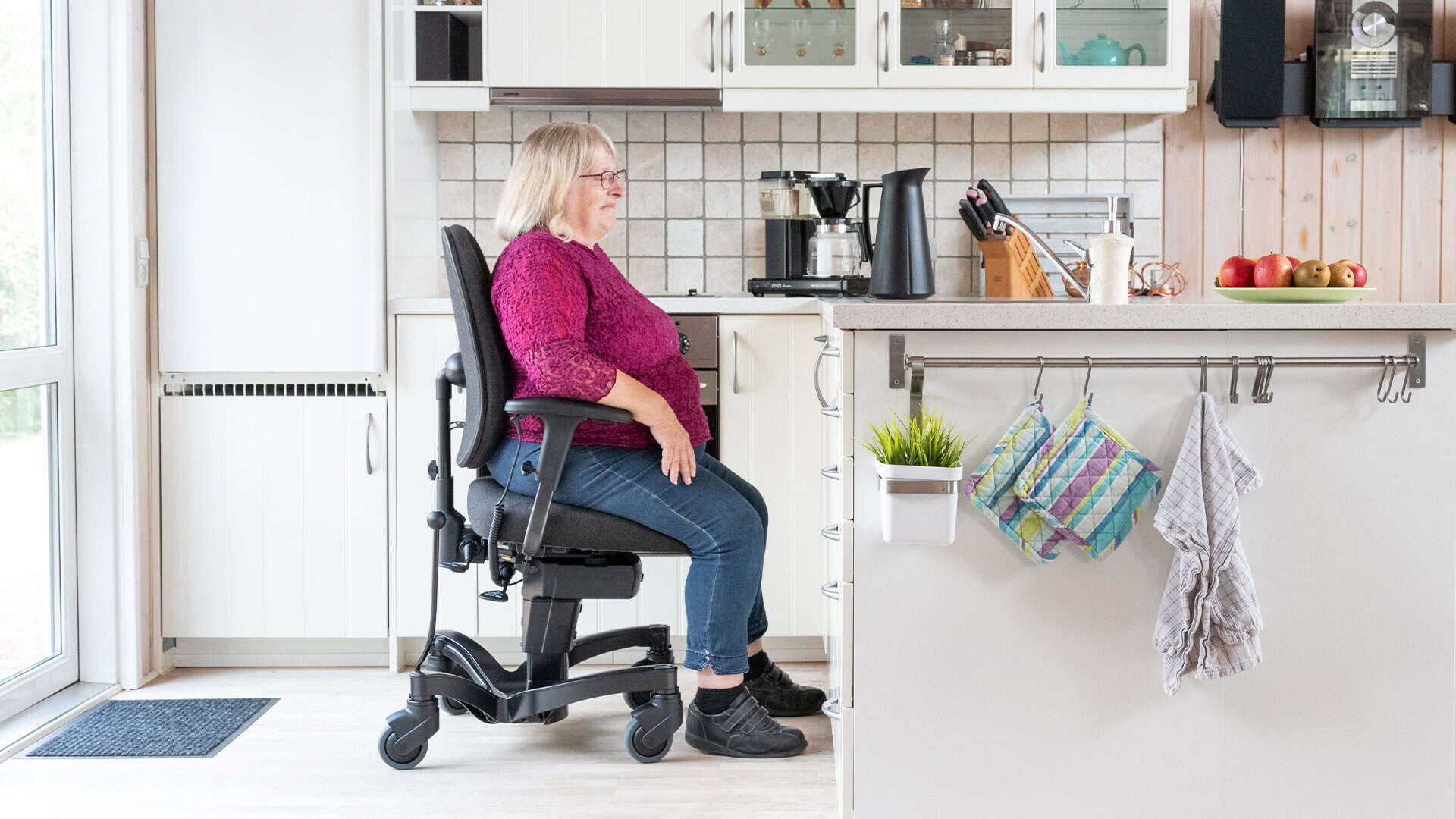
VELA Chairs are playing a transformative role in helping individuals remain independent at home longer, reducing the need for early nursing home admission. These chairs are designed with features such as a central brake for enhanced safety, electric height adjustability, and effortless movement while seated, directly addressing issues like safety and energy conservation. With a VELA Chair, individuals can engage in everyday activities such as cooking or cleaning more comfortably and confidently, preserving their dignity and sense of freedom. Moreover, by reducing caregiver strain through smart seating solutions, VELA presents a practical approach to supporting aging in place without compromising on quality of care. While not the only option available, the Mobility Support Solutions provided by VELA demonstrate a significant, proven difference in maintaining the quality of life for seniors.
References:
[1] Future Market Insights, North America Medical Carts Market Outlook 2025 to 2035
[2] Precedence Research, Medical Carts Market Size and Forecast 2025 to 2034
[3] Grandview Research, U.S. Medical Carts Market Analysis
[4] IMARC Group, Medical Carts Market Size, Share, Growth Report 2025-2033
[5] Grandview Research, U.S. Medical Carts Market Report 2030
[6] Capsa Healthcare Blog, Furniture-style Medication Carts Hit the Sweet Spot in Newer LTC Facilities
[7] Skilled Nursing News, Top Trends That Will Shape the Skilled Nursing Sector in 2026
[8] DosePacker Blog, Senior Living Trends to Watch in 2025
[9] AllSeniors.org, Emerging Home Health Services for Seniors Trends in Aging Care 2026-2027
[10] Provider Magazine, Long Term Care 2026 Trends and Outlook