

Updated January 2026: We have updated the article with new findings on AI-driven assistive technologies, telehealth-embedded devices, and smart home solutions. The article now highlights advancements in real-time obstacle detection, predictive health analytics, and inclusive smart home ecosystems that support proactive, personalized elderly care and aging in place.
Rising need for nursing elderly care
As the Baby Boomer generation ages, there’s an escalating necessity for comprehensive nursing elderly care. In the United States, individuals turning 65 today face a 70% probability of requiring long-term care at some point in their remaining years. According to the U.S. Department of Health and Human Services, this demographic shift underscores a critical demand for structured care systems and innovative solutions to support an aging population. In states like Louisiana, the presence of elderly assistance programs becomes increasingly vital to ensure accessible and effective care for seniors.
Navigating the landscape of nursing elderly care
Nursing elderly care encompasses a broad array of services designed to meet the complex needs of older adults, ranging from clinical care to personal assistance. This care is primarily delivered by Registered Nurses (RNs), Licensed Practical Nurses (LPNs), and nursing aides in various settings, including nursing homes, assisted living facilities, and through in-home care programs.
Imagine a day in the life of a nurse in a nursing home: the day starts with monitoring vital signs, a practice ensuring early detection of potential health issues. Nurses administer medication, perform necessary medical procedures, and provide invaluable emotional support to residents. According to the National Institute on Aging, as people live longer with chronic conditions, the need for skilled nursing and coordinated care management continues to grow.
Demographic shifts and their impact on elderly care demand
The demand for nursing elderly care grows significantly with demographic trends. People aged 65 and older, especially women due to their longer life expectancy, make up the primary recipients of this care. The CDC notes that nearly 1 million licensed nursing home beds in the U.S. provide care for over 3.9 million individuals in skilled facilities. This data underscores the importance of tailored strategies to address diverse socio-economic needs and preferences. The National Institute on Aging emphasizes the need for evidence-based practices to successfully manage these demographic challenges.
Comparing care settings: nursing homes, assisted living, and in-home care
Choosing the most suitable care setting involves understanding the distinct features of each option:
- Nursing homes are ideal for those with significant health issues needing intensive medical care.
- Assisted living offers a mix of independence and support for those requiring help with everyday tasks but not ongoing medical monitoring.
- In-home care allows seniors to remain in familiar surroundings while receiving tailored support, benefitting those who prefer to age in place.
The U.S. Department of Health and Human Services explains that families must weigh health requirements, personal desires, and financial constraints when choosing the right environment.
Modern innovations transforming elderly care
Recent advances have significantly enhanced the way elderly care is delivered. Artificial intelligence (AI) and machine learning are now integral to care delivery, enabling real-time obstacle detection in mobility aids, stability monitoring, and predictive health analytics that proactively identify risks and trigger caregiver alerts before incidents occur. Smart mobility devices autonomously adjust to user needs and provide enhanced safety during daily activities.
Telehealth-embedded durable medical equipment (DME) and wearable technologies allow for remote vital sign tracking and health monitoring, offering proactive, personalized coaching and reducing falls and hospitalizations through early warning systems. Internet of Things (IoT)-connected devices, such as sensor-equipped grab bars and remote-access home monitoring, offer additional protection and real-time feedback.
Aging in place is increasingly supported by voice-activated controls and smart home ecosystems that integrate health data, rehabilitation, and mental well-being support. These solutions deliver hyper-personalized care plans and enable virtual therapy, empowering seniors to stay independent in their own homes.
Health regulations are evolving to support value-based adoption of these technologies, with trends indicating increased Medicare and Medicaid support for evidence-based, inclusive care models.
References: ButterflyMX, MyCareConcierge.org, Cyces, WHO, AANP, K4Connect.
Overcoming challenges in elderly care with innovative solutions
Challenges in elderly care such as fall prevention, chronic condition management, emotional well-being, and the need for efficient care addressing staffing shortages are now being actively addressed with AI-driven solutions. Smart mobility aids incorporate real-time obstacle detection, stability sensors, and app-based controls for customized, safer navigation, while predictive analytics tools support proactive care and personalized intervention.
Robotic exoskeletons and therapy devices assist with rehabilitation, helping users regain strength and confidence. IoT-connected safety devices, such as sensor-equipped grab bars for bathrooms, contribute to a safer environment, alerting families and caregivers in real time.
Wearable health monitors provide continuous data, triggering responses before emergencies develop and supporting coordinated care among professionals, family members, and users.
The latest trends also include support for mental health, social engagement through digital companions, remote monitoring to enable longer independence at home, and inclusive, user-centered design. These solutions are becoming mainstream due to regulatory shifts and greater affordability, making smart technology accessible for a wider range of seniors and caregivers.
References: Everything Medical Online, Peters Creek Retirement & Assisted Living, Edenseniorhc.com, Healthline, PubMed, Harvard.edu, AANP, K4Connect.
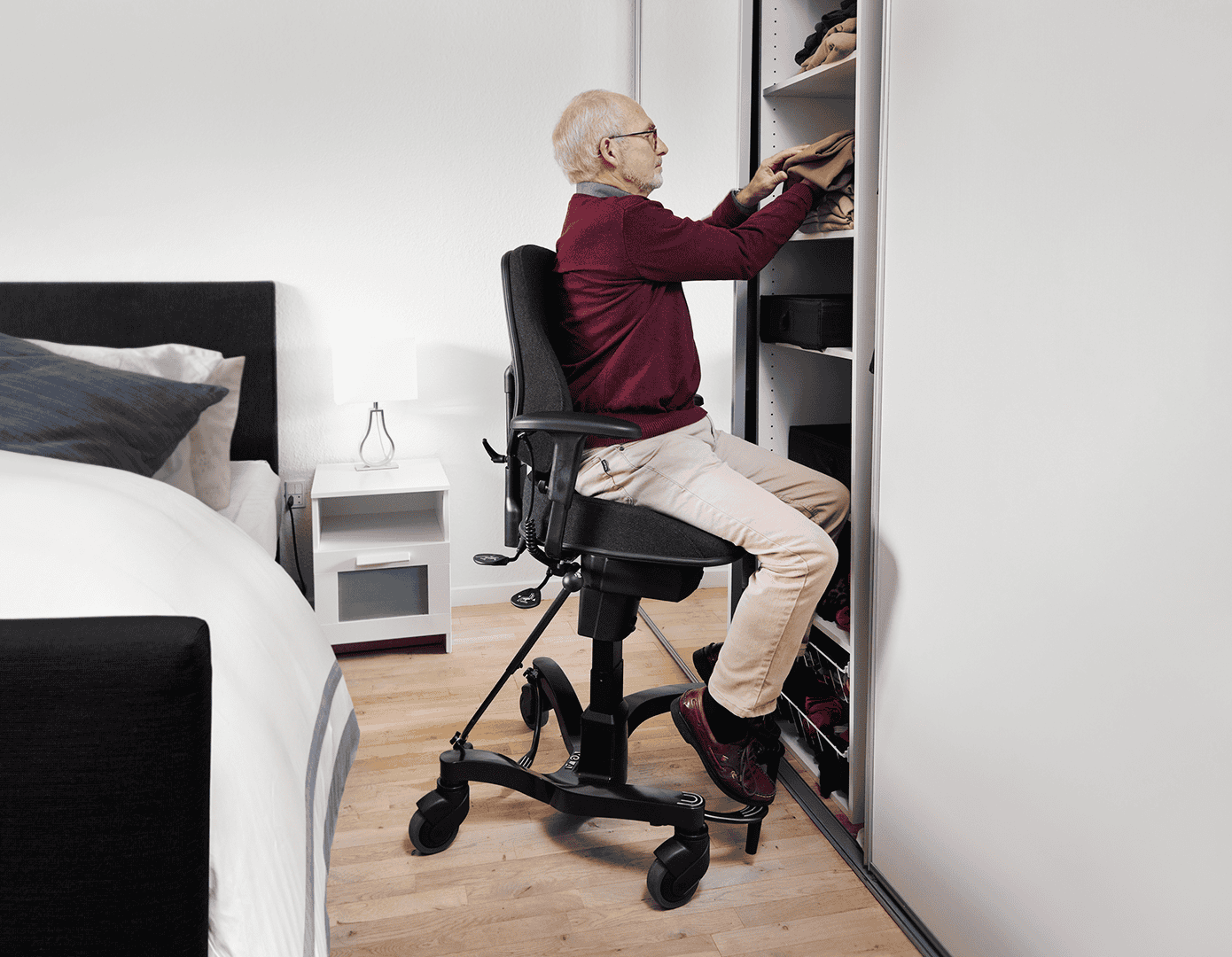
To bridge the gap between the structured environment of nursing homes and the autonomy of aging in place, solutions like the VELA Independence Chair come into play. This medically approved mobility chair is designed specifically for home use, providing enhanced safety and freedom of movement while seated. The VELA chair supports daily activities, such as cooking, dressing, and transferring, while significantly reducing the load on informal caregivers. With features such as a central brake for safety, electric height adjustability, and ease of movement while seated, it allows older adults to maintain independence and improve their quality of life at home.
Supporting aging in place: a practical option
For seniors keen on preserving their independence at home, mobility solutions like the VELA chair offer viable alternatives to entering a nursing facility. The chair’s functionalities address crucial needs such as safety and effortless movement, which are vital for seniors living alone. It provides energy-saving benefits by enabling tasks like cooking or cleaning without the strain of frequent standing. Utilizing features like the central brake ensures stability while engaging in daily activities, reducing the risk of falls—a significant concern discussed earlier. Unlike traditional seating, the VELA chair helps prolong a senior’s ability to live independently, delaying the potential need for assisted care. While it is not the only solution, the VELA chair represents a proven, practical option for enhancing the dignity, freedom, and safety of aging in place.