

Updated February 2026: We have updated the article with the latest advancements in AI-driven assistive technologies, including smart wheelchairs, AI-brain-spinal cord interfaces, adaptive e-bikes, environmental control systems, and autonomous navigation aids. The article now reflects trends in technology-enabled independence, insurance-funded mobility upgrades, and innovative approaches that allow seniors and people with mobility challenges to remain independent longer, reducing the need to transition to assisted living. Additional authoritative sources are now included to support these updates.
Navigating independent living vs. assisted living
Navigating the decision between independent living and assisted living is pivotal for seniors and their families, as it shapes the quality of life and level of care received. With the elderly population growing, understanding the nuances of these options is essential. In 2022 alone, about 28,900 assisted living communities served nearly 918,700 residents. This statistic underscores the increasing importance of these choices, according to CDC. Assisted living provides housing for individuals unable to live independently but who do not need the extensive medical care offered by nursing homes, according to Medicare.gov.
Understanding independent living and assisted living
Independent living is designed for healthy, active seniors who desire a community atmosphere without extensive care services. The National Institute on Aging notes that these communities offer amenities that cater to social engagement and convenience, promoting a maintenance-free lifestyle.
Modern independent living now more fully benefits from integrated assistive technologies that promote autonomy, safety, and ease of use for seniors and individuals with disabilities. Recent innovations include AI-powered smart wheelchairs with autonomous navigation using lidar and sensor technologies, wearable robotic exoskeletons with adaptive feedback, and AI assistants that provide real-time intuitive support for daily activities. These advancements feature seamless shared control between user and device, smarter interfaces, and functions such as adaptive pressure management in wheelchair seats. Devices continue to prioritize ergonomic and inclusive design driven by direct user feedback, enhancing both comfort and accessibility in daily living environments. Smart glasses, advanced prosthetics, and sensor-equipped mobility aids now further support independent living by personalizing support and minimizing physical and cognitive barriers. These solutions collectively empower users to maintain independence, reduce reliance on caregiving, and participate more fully in their chosen communities ThinkBeyondTheChair.org FocusCare.com.au PMC Let’s Envision Ability MT Digital Learning Institute WHO Mobility Management WebAbility SEN Teachers Training.
Conversely, assisted living addresses the needs of seniors requiring support with daily personal care tasks, such as bathing and medication management, while allowing for some degree of independence. This arrangement is crucial for individuals who cannot manage daily activities without assistance CDC.
Recent trends in assisted living place increasing importance on the adoption of AI-powered and smart assistive technologies, aiming to deliver more personalized care and preserve resident autonomy. Flexibly tiered care plans now increasingly incorporate adaptive mobility aids, AI-driven daily task support, and sensor-based safety systems that respond in real-time to residents’ evolving needs. Assisted living communities have also adopted ergonomic and user-centered design principles, based on user and clinician input, to improve comfort, participation, and safety for all residents. These enhancements enable individuals to access tailored support while maintaining engagement in community life and optimal quality of care Seniorsite.org Let’s Envision Technavio WHO Mobility Management WebAbility SEN Teachers Training.
Who is best suited for each option?
Health and lifestyle factors play significant roles in choosing between independent and assisted living. According to Dr. Sarah McKenzie, MD, a geriatrician, the decision should consider mobility, cognitive health, and social needs. For instance, an elderly person managing mild chronic illnesses might thrive in an independent living community, benefiting from its social activities and minimal care needs. In contrast, an individual experiencing cognitive decline may require the safety net and supervision provided by assisted living Dr. Sarah McKenzie, MD.
The increased adoption of advanced assistive and AI-enabled technology shapes the suitability for each setting. Those using smart wheelchairs with autonomous navigation, wearable exoskeletons, or AI-powered daily assistance tools can prolong their independence, often reducing or delaying the need for daily caregiver support. Technology featuring shared control, real-time adaptation, and ergonomic design enables a broader range of individuals to participate in independent living for longer. Choice of living arrangement thus depends not only on current health but also user preference, technology compatibility, and changing regulatory and accessibility standards. User feedback continues to guide product design and integration, ensuring that ease of use, customization, and interoperability meet diverse needs ThinkBeyondTheChair.org Digital Learning Institute Let’s Envision Ability MT Mobility Management WebAbility SEN Teachers Training.
Cost comparison: independent living vs. assisted living
Assessing the costs between these living arrangements is crucial. As of 2025, assisted living costs, on average, are $68,110 annually, while independent living expenses typically range from $2,000 to $5,000 monthly, depending on location and amenities provided. Higher levels of personalized support and medical care in assisted living drive continued cost increases, making it important for families to revisit financial planning and long-term care strategies SeniorLiving.org. Independent living communities are experiencing rising market demand due to preferences for maintenance-free lifestyles paired with options for tech-enabled health and mobility support, which increasingly influences pricing power in this sector Senior Housing News Technavio. Planning and budgeting are indispensable for families considering socio-economic factors and geographic location to ensure that seniors can afford these environments without financial strain Fields Senior Living.
Technology-enabled independence: redefining the continuum of care
Advancements post-2025 are empowering seniors and people with mobility challenges to remain independent longer, reshaping traditional distinctions between independent and assisted living. AI-driven assistive technologies, such as smart wheelchairs with autonomous navigation and pressure-management sensors (e.g., LUCI add-ons, Robooter X40), AI-brain-spinal cord bridges in clinical trials, and all-terrain power chairs capable of climbing stairs (XSTO X12), allow individuals to safely perform activities of daily living and access difficult environments without direct caregiver support. Wheelchair range-extending attachments (WheelMove), AI-guided e-bikes, and user-friendly environmental control systems (ECS) for smart homes further extend autonomy in daily routines. Innovations such as iSee AI glasses for blind or low-vision navigation, sip-and-puff controls, and eye-tracking devices (Tobii Dynavox) ensure that a growing segment of users can participate in self-directed living both indoors and out.
Their adoption is supported by new insurance models funding device upgrades, with successful integration of add-ons like LUCI and MaaS-Bridge AI for accessible mobility points. Family caregivers and individuals report that these technologies help delay or prevent the need for a move to assisted living, while assisted living facilities themselves are integrating the same innovations to optimize resident independence. This tech-driven shift supports a continuum-of-care model, where boundaries between independent and assisted living blur, and the focus shifts to maximizing autonomy regardless of residence. User adoption data shows a steady rise in insurance-funded technology, and global awards (such as the CES 2026 award to MaaS-Bridge) highlight the growing influence of accessible AI systems in care planning and delivery Ability MT Mobility Management WebAbility SEN Teachers Training.
Transitioning between living arrangements
Transitioning from independent to assisted living is often prompted by events such as falls or a significant decline in self-care ability. A study from the JAMA Network indicates these triggers necessitate thoughtful planning and emotional support for seniors and their families. Ensuring a smooth transition involves recognizing the signs early and devising solutions that mitigate the emotional and physical impact on the senior, a vital consideration for those in caregiving roles.
The availability and adoption of new mobility and smart assistive technologies—such as powered wheelchairs with intuitive AI-based controls, wearable devices for obstacle avoidance, and AI-driven daily task assistants—now allow individuals to remain in independent living environments for longer periods. At the same time, assisted living facilities are increasingly integrating these advanced technologies, enabling residents to maintain a high level of autonomy and access personalized support within safe and adaptive settings PMC Let’s Envision Ability MT WHO Seniorsite.org Mobility Management WebAbility SEN Teachers Training.
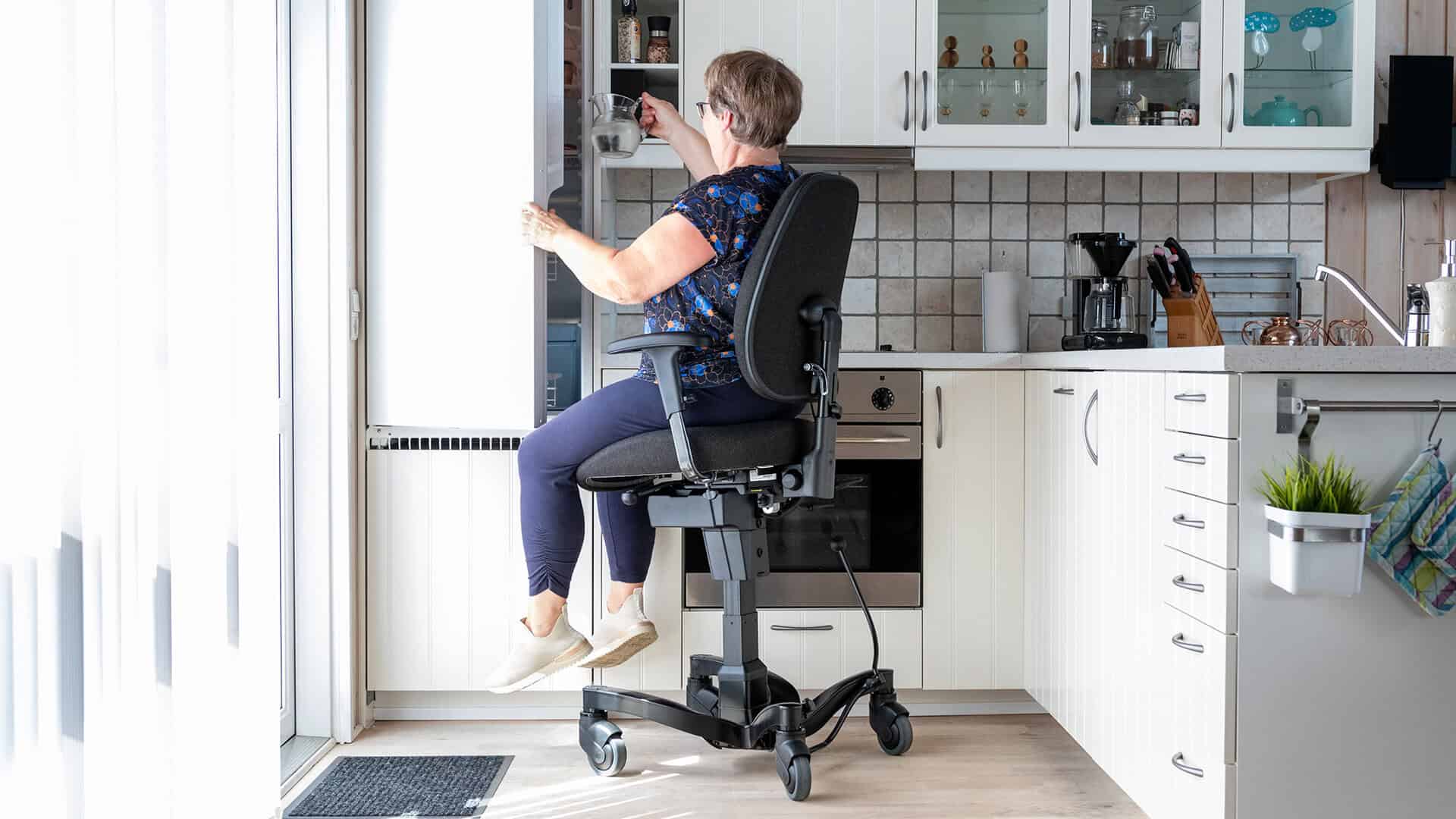
As seniors face increased challenges with mobility and independence, some may lean towards assisted living to ensure safety and support. However, innovative solutions like the VELA chair offer an alternative for maintaining autonomy within their own homes. Designed as a medically approved mobility chair, the VELA chair enhances safety and facilitates movement seated, supporting daily activities like cooking, dressing, or transferring. This chair alleviates the physical burden on informal caregivers while promoting a sense of independence, effectively providing an alternative to transitioning to assisted living.
Supporting aging in place: a practical option
Staying independent at home can greatly enhance the dignity and quality of life for seniors. Mobility solutions like the VELA Chair play a crucial role in this, offering features such as a central brake for enhanced safety, electric height adjustability, and ease of movement while seated. By allowing users to safely perform everyday tasks like cooking and cleaning, these chairs help delay the necessity of moving to a nursing home or relying extensively on caregivers. They quickly become essential in the home, creating a future where aging in place remains a feasible and dignified option. While the VELA Chair is not the only solution available, it stands as a proven, practical tool helping seniors maintain independence longer by effectively addressing key challenges associated with aging. For more information, consider exploring aging in place solutions for seniors.