

Updated February 2026: We have updated the article to include the latest 2023 NYS Department of Health rules on assisted living resident rights (e.g., visitor access, lockable rooms, food choice), a new section summarizing these requirements, clarification that no regulatory or scientific updates have been made since May 2025, and a discussion of 2026 assistive technology trends such as AI-integrated smart mobility devices and ongoing adoption in assisted living. New sources have been added where relevant.
Updated October 2025: We have updated the article with recent developments in assistive technology, focusing on the integration of AI-powered accessibility tools, advances in smart mobility devices, updated New York Department of Health licensure amendment procedures, and trends in funding and adoption of next-generation assistive solutions. New authoritative sources have been added.
Updated August 2025: We have updated the article to reflect recent regulatory changes in New York State affecting assisted living facilities, including expanded resident rights under new HCBS guidelines, strengthened admission and reporting protocols for mental health, the launch of the 2025 NYS Master Plan for Aging proposing major licensing and accreditation reforms, moves toward integrating more clinical and behavioral health services, and recommendations for enhanced oversight. New authoritative sources have also been added.
New York State Department of Health Regulations for Assisted Living Facilities: A Comprehensive Guide
Navigating the regulatory landscape of assisted living facilities in New York is crucial for ensuring quality care and compliance. With the state’s elderly population increasing significantly—53% since 2000 and an additional 6.4% from 2020 to 2023—understanding these regulations is more essential than ever. According to the New York State Department of Health, these guidelines not only uphold industry standards but also cater to a diverse and multicultural senior population, which includes significant growth among Asian, Hispanic, and Black seniors.
Understanding the regulatory framework in New York
The New York State Department of Health (NYSDOH) serves as the principal regulatory authority for assisted living facilities. Its foundation in statutes such as Section 4662 of the Public Health Law and Section 460-d of the Social Services Law emphasizes the importance of compliance with licensing and inspection standards. According to NYC Business, the journey from application to licensure can be challenging, involving comprehensive paperwork and rigorous inspections. Take, for example, a hypothetical facility like “Sunset Housing,” which must navigate these requirements meticulously to obtain its license.
2023–2026: Key resident rights and regulatory updates
As of November 2023, New York State implemented expanded resident rights for all adult care and assisted living facilities, in line with the federal Home and Community-Based Services (HCBS) final rule. The following changes are now required:
- Facilities must permit unrestricted visitor access, allowing residents to receive guests at any time, subject to health and safety.
- Residents have the right to lock their bedroom doors and access private rooms, based on availability and preference.
- Freedom of choice regarding schedules and food, with the ability to choose meals and meal times to suit individual preferences.
- Enhanced access to episodic case management services, supporting transitions and care planning.
These requirements are designed to increase resident autonomy, dignity, and daily quality of life. All facilities must provide updated statements of resident rights, and policies were reviewed for compliance by the Department of Health starting late 2023.
(Source: New York DOH)
It is important to note that, as of early 2026, there have been no further regulatory developments or evidence-based updates beyond these 2023–2025 changes. The core regulatory structure, including licensing and inspection protocols and resident protections, remains stable. Emerging New York bills on quality reporting and facility expansion are being monitored as potential future changes but have not yet resulted in new requirements.
(Source: AHCA/NCAL 2025 State Regulatory Review)
Types of assisted living facilities and their services
New York distinguishes between several types of adult care facilities, each providing specific services:
- Adult Homes: Offer long-term residential care and services.
- Enriched Housing Programs: Provide housing and additional supportive services.
- Assisted Living Residences (ALRs): Deliver on-site monitoring and personal care in a home-like environment.
- Enhanced Assisted Living Residences: Cater to residents with higher medical needs.
- Special Needs Assisted Living Residences: Focus on individuals with cognitive impairments, such as dementia.
The case of Mrs. Johnson, a resident at an Enhanced ALR who requires specialized medical attention beyond traditional ALR capabilities, illustrates the importance of these categorizations. For further details, the Assisted Living Directory offers insights into the restrictions and benefits of each type.
Amendments introduced by the state in late 2024 have refined the pre-admission screening process—particularly for facilities caring for residents with serious mental illness. These amendments also clarify and strengthen reporting requirements, improving the identification and tracking of individuals with higher clinical or behavioral support needs, especially in transitional adult homes.
(Source: NY DOH Adult Home Regulations)
Ensuring compliance and enforcement
Compliance in assisted living requires regular inspections and strict adherence to established protocols. The NYSDOH’s “Do Not Refer List” signals facilities with significant compliance issues to prospective residents and their families. Furthermore, improvements as seen in facilities like “Evergreen Manor” after inspections demonstrate how enforcement upholds standards. Legislative progress, such as Senate Bill S7859, supports capacity expansion through expedited review, thereby improving access.
In 2025, greater attention has been placed on oversight and accountability. Audits by the State Comptroller recommend strengthening data accuracy, reporting, and staffing for adult care facilities. These steps are designed to enhance quality monitoring and ensure resident safety throughout New York’s assisted living sector.
(Source: NY Comptroller Audit 2025)
Regulatory initiatives under the master plan for aging
New York’s Master Plan for Aging, published in June 2025, proposes significant structural reforms. Among its recommendations are the creation of a single, uniform assisted living licensure model to replace the current hospitality-based framework, increasing Medicaid-related assisted living capacity, and expanding access to both nursing and behavioral health services within facilities. The plan also introduces a mandate for all assisted living residences to obtain accreditation from recognized organizations—such as the Joint Commission, CARF, or ACHC—by 2028. These requirements are aimed at improving quality, consistency, and accountability across the industry.
(Source: NY State Master Plan for Aging 2025)
Further supporting the diversification of services, Senate Bill 2025-S3184 proposes that certain adult care facilities may offer limited nursing services. This reflects policy trends toward expanded integration of clinical and behavioral health expertise within assisted living, enhancing both daily support and healthcare outcomes.
(Source: NY Senate Bill 2025-S3184)
Integrating mobility and assistive technology solutions in assisted living facilities
Recent advances in assistive technology continue to transform resident support in assisted living facilities. As of 2026, smart and AI-integrated mobility devices, such as autonomous wheelchairs with fall prediction sensors and advanced navigation (LUCI sensors and Robooter X40), are an industry trend. There is ongoing discussion about the benefits of wearable AI aids, such as smart glasses (e.g., iSee, XRAI), though these developments are not yet mandated by New York State regulations and are not based on new clinical guidance post-2025.
Continued improvements in ergonomics and rehabilitation technology, including pressure-sensing wheelchair cushions and advanced adaptive controls, are being observed, with some facilities expanding use to support independent mobility and safety. Eco-friendly designs and add-on wheelchair attachments, such as extended-range power modules, are being highlighted in industry forums as useful options. Insurance coverage for certain categories of durable medical equipment remains an area for facilities and residents to assess based on current NYS Medicaid and private benefits.
(Source: AbilityMT: Assistive Technology for People with Disabilities; AHCA/NCAL 2025 State Regulatory Review)
It is important to note that, according to the most recent regulatory and scientific reviews, New York State has not adopted new clinical or safety standards for smart device integration in assisted living since the adoption of the 2023 HCBS rule. Emerging bills related to quality data reporting and bed capacity are still pending, and advocates continue to monitor the application of Enhanced Assisted Living Residence (EALR) certifications for residents who can benefit from additional nursing services and supervision.
(Source: NYSDOH EALR Certification)
Exploring alternatives to nursing homes
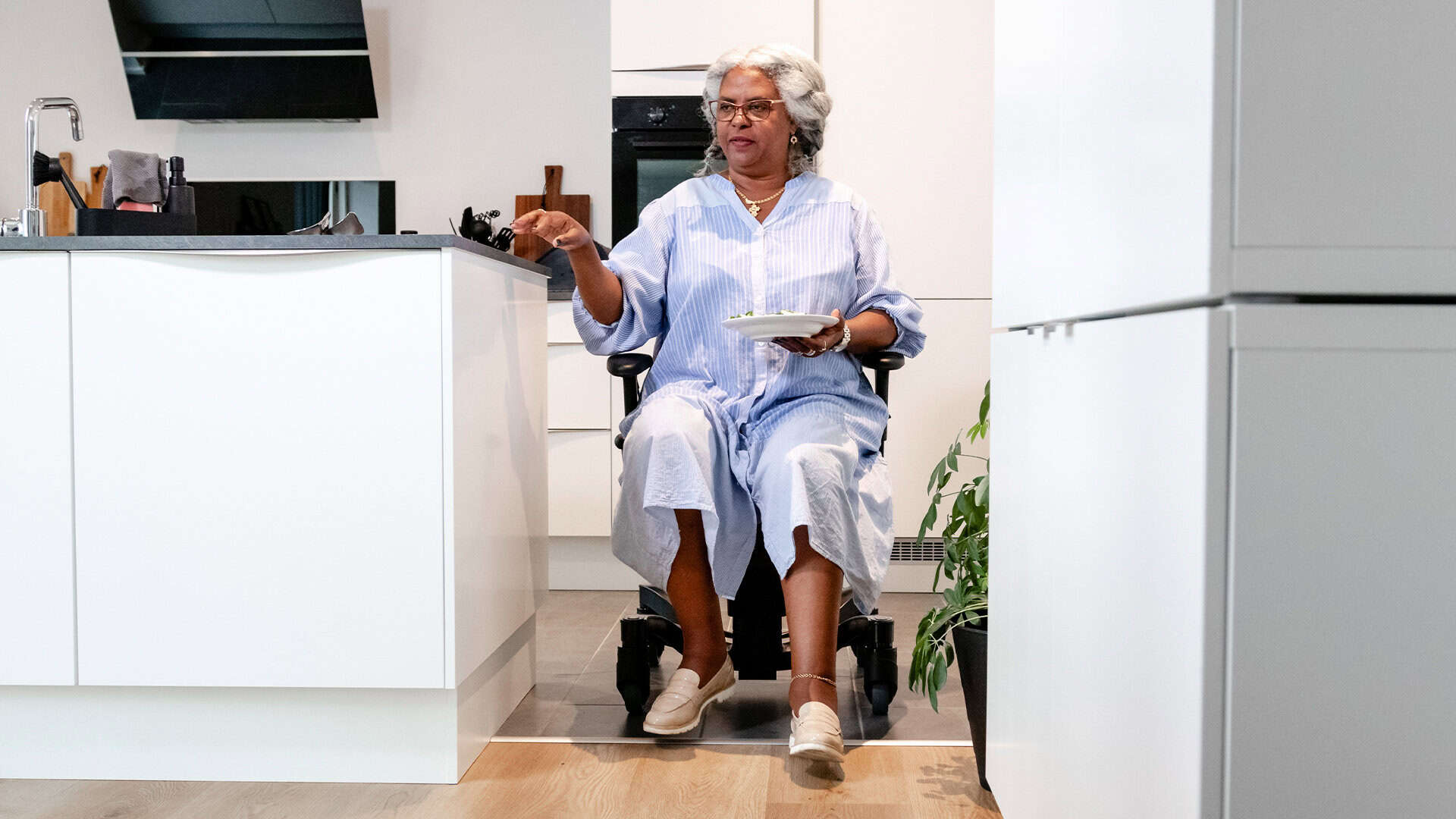
The desire to provide seniors with the opportunity to remain in their own homes has led to innovative solutions like the VELA Chair, which offers vital support in maintaining independence. Key features such as a central brake ensure safety, while electric height adjustability and ease of movement while seated help manage energy levels and facilitate transfers. For individuals like Mr. Lewis, using a VELA Chair means staying longer in a familiar environment, performing daily activities with dignity and freedom, and significantly reducing the need for nursing home care. While VELA is not the only solution available, it represents a practical and proven option for promoting aging in place. This approach supports the aim of extending autonomy and comfort for seniors, ultimately enhancing quality of life.
By understanding and applying relevant regulations alongside innovative mobility solutions, stakeholders can better navigate the complexities of senior care. Options like the VELA Chair embody this blend of safety and independence, providing a valuable component of a comprehensive care strategy.
References
- New York DOH’s adoption of HCBS final rule requirements for adult care facilities (2023)
- NY DOH regulatory amendments for adult homes, transitional adult homes (effective Dec 24, 2024)
- NY State Master Plan for Aging Final Report (June 2025)
- NY State Senate Bill 2025-S3184 on limited nursing services in adult care facilities
- NY State Comptroller audit report on NY DOH oversight of adult care facilities (July 2025)
- NY State DOH Assisted Living Residence License overview
- New York DOH LHCSA Administrative Licensure Amendment Updates (August 2025)
- Recent Trends in Assistive Mobility Tech
- Envision: The Future of Assistive Technology & AI Assistants
- AbilityMT: Assistive Technology for People with Disabilities
- AHCA/NCAL 2025 State Regulatory Review
- NYSDOH Enhanced Assisted Living Residence (EALR) Certification