

Updated February 2026: We have updated the article with the latest advancements from CES 2026 and current assistive technology trends, including AI-powered wheelchair enhancements, quick-attach power assists like WheelMove, all-terrain and stair-climbing mobility solutions, improved AAC communication devices, and innovative user-driven technologies supporting resident autonomy and accessibility.
Updated October 2025: We have updated the article to reflect major advancements in AI-powered and integrated assistive technologies, including voice-activated assistants, wearable smart devices, haptic feedback systems, and expanded user-centered design. The latest research, clinical recommendations, and real-time solutions for mobility and accessibility now inform our coverage of supports available at Madison York Assisted Living.
Madison York Assisted Living in Rego Park: A Comprehensive Overview
For individuals exploring assisted living options in Rego Park, New York, Madison York Assisted Living stands out as a facility that marries compassionate care with a community-oriented environment. This article delves into the distinct services, resident experiences, and additional support solutions that Madison York offers to enhance the lives of its residents.
Tailored care services for enhanced living
Madison York’s official site highlights the facility’s variety of core services, tailored to meet the diverse needs of its residents. These services include personalized dietary programs, meticulous medication management, and comprehensive personal care assistance. Furthermore, Madison York has established partnerships with local hospitals to ensure residents have access to high-quality medical care when necessary. For instance, a resident named Mary benefited significantly from these personalized services when her nutritional plan was carefully adjusted due to evolving health conditions, ultimately enhancing her overall well-being.
Enriching community life for residents
One of the significant attractions of Madison York is its vibrant community life. The facility offers an extensive activities program, widely praised for fostering social engagement among residents. Testimonials from residents, available on Caring.com, emphasize the positive impact of these activities on their social lives and overall sense of community. One resident praised the administrator’s welcoming demeanor, which helps build a friendly and supportive community atmosphere. Nonetheless, there is room for improvement, especially concerning the quality of food—an aspect highlighted by several residents.
Affordable quality living in Rego Park
The pricing strategy at Madison York is a notable advantage for those weighing assisted living options. As noted by A Place for Mom, the facility’s monthly costs begin at approximately $5,050, which is competitive compared to the Rego Park area average of $6,508. This affordability, coupled with high ratings for perceived value, positions Madison York as a cost-effective choice for quality senior living.
Empowering mobility in assisted living
As seniors seek independence and support to maintain their lifestyle and dignity, the right mobility solutions are essential. Recent advancements in assistive technology now provide real-time, intuitive support that goes beyond traditional devices. At CES 2026 and in current market trends, solutions such as WheelMove’s quick-attach power assist for manual wheelchairs—with up to 25 km range—are transforming daily mobility and ease of use for residents, while AI-driven powerchairs like XSTO offer all-terrain navigation and stair-climbing capabilities to improve accessibility (available from mid-2026).
Other recent innovations, such as MaaS-Bridge’s AI for accessible vehicle-to-pedestrian transitions and SEERU’s mobility awareness platforms, help improve safety and confidence when navigating mixed traffic settings. These advances complement established technologies—AI-powered assistants, wearable smart glasses, and haptic devices—which assist with interpreting environments and delivering context-aware support.
Expanded control for residents with limited mobility is increasingly achieved through sip-and-puff systems, eye-tracking, predictive typing, adaptive speech-generating devices, and smart environmental controls. These technologies, informed directly by resident feedback, reflect an evidence-based focus on maximizing autonomy and daily participation for those with varied physical and sensory abilities.
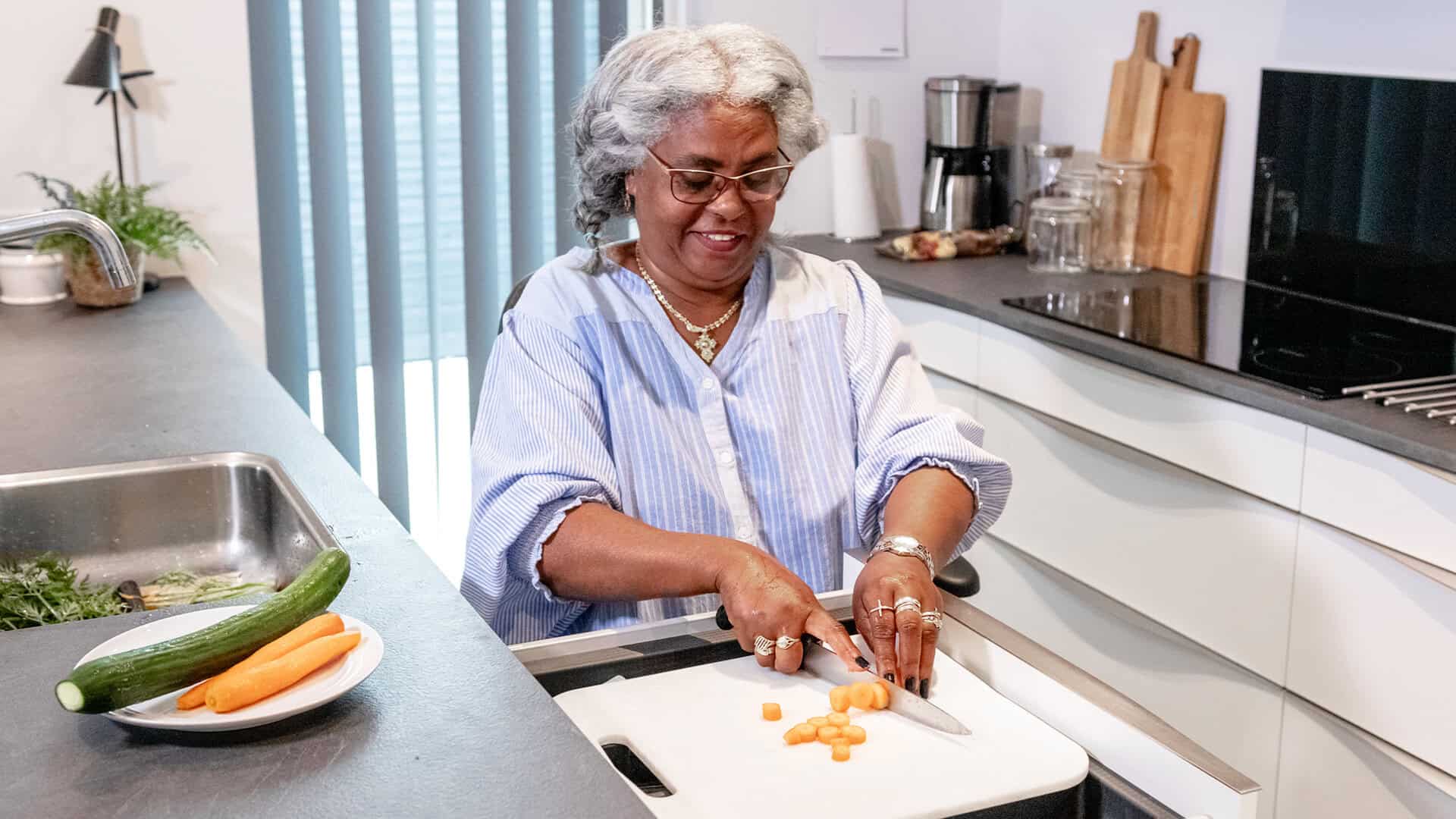
Ergonomic enhancements, advanced prosthetic options, adaptive furniture, and the ongoing use of safety-oriented mobility chairs, such as VELA Mobility Chairs, further decrease caregiver burden while reducing fall risks and supporting essential activities from dressing to kitchen tasks.
ThinkBeyondTheChair.org, Let’s Envision, Accessibility.com, American Foundation for the Blind, Envision Community, Innocaption, American Foundation for the Blind (AFB), Asian College of Teachers, Consumer Technology Association (CES), Assistive Technology Industry Association (ATIA), Mobility Management, Webability, Double Tap On Air, EdTech Magazine, CES
Supporting aging in place: a practical option
Supporting seniors in maintaining their independence at home is a multifaceted endeavor, with assistive and mobility solutions playing a crucial role. The most forward-looking approaches in 2026 increasingly leverage AI-driven and connected assistive technologies, including advanced quick-attach power assists, AI-powered navigation and communication devices, as well as accessible environmental controls. Real-time, context-aware support is now guided by user input, ensuring that seniors’ evolving needs are addressed through personalized, intuitive platforms.
Emerging trends highlighted at CES 2026 and recent market analysis emphasize the adoption of technologies such as sip-and-puff systems, predictive typing, speech-generating devices, and inclusive control schemes, making it easier for residents with significant physical or communication challenges to interact with their environment confidently. The availability of remote care and telehealth platforms has grown, with proactive monitoring and access to new assistive devices continuing to expand, supported by recent regulatory and clinical recommendations.
Adaptive solutions like VELA Chairs maintain a leading role in providing ergonomic, safety-focused support for activities of daily living and rehabilitation, while smart home and wearable devices further enhance safety, convenience, and independence.
Collectively, these integrated innovations reduce demands on caregivers, delay the transition to higher-acuity settings such as nursing home care, and enable older adults to maintain dignity, safety, and a higher quality of life at home.
Cognitive Market Research, Innocaption, First Aid for the Blind, Envision Community, Let’s Envision, Innocaption, American Foundation for the Blind (AFB), Asian College of Teachers, Consumer Technology Association (CES), Assistive Technology Industry Association (ATIA), Mobility Management, Webability, Double Tap On Air, EdTech Magazine, CES