

Updated February 2026: We have updated the article with 2026 findings on smart home technologies, AI-driven assistive devices, advances like exoskeletons and voice-controlled wheelchairs, and the growth of Hospital at Home and mobility aids for promoting aging in place. New person-centered care models, cost comparisons, and holistic approaches now reflect current best practices for both assisted living and in-home care.
Choosing the right path for elderly care: assisted living vs in-home care
Navigating care options for aging loved ones is a complex decision-making process, especially when choosing between assisted living facilities and in-home care solutions. Both options provide distinct advantages and challenges, which families must carefully evaluate to ensure the well-being of their senior family members.
Understanding the costs: assisted living and in-home care
Cost is a significant consideration for families deciding between assisted living and in-home care. According to Where You Live Matters, as of 2025, the national median monthly cost of assisted living is $5,676. In contrast, in-home care costs about $33 per hour. In Colorado, assisted living averages $5,018 per month, with regional variations per Cappella Grand Junction.
Assisted living generally covers housing, meals, utilities, and community activities, whereas in-home care costs involve caregiver wages and household expenses such as groceries and utilities. A family in Denver, for instance, evaluated the comprehensive benefits of assisted living against the apparent flexibility of in-home care. They decided on assisted living due to the predictable, all-inclusive pricing, compared to the variable costs of home care, including necessary safety modifications. It is worth noting that recent advances in technology—such as AI-powered monitors, smart home sensors, and digital health tools—are changing both the cost and quality of in-home care. Integrated technology solutions can reduce long-term caregiver hours and hospital readmissions, potentially balancing or even lowering in-home care costs compared to previous models. In 2026, about 75% of seniors express a preference to remain at home, but only 10% of U.S. homes are currently adapted for accessibility, making home modifications an increasingly attractive option as their typical costs remain lower than the annual $45,000 cost of assisted living.[3][5] Current guidelines now recommend digital health monitoring and smart home integrations as part of standard home care (CDC 2025; WHO 2025).
Weighing the benefits and challenges: home care vs assisted living
Home care allows seniors to remain in their familiar environment with personalized, one-on-one care, promoting independence and routine. Recent innovations in assistive technologies—including real-time health monitors, adaptive mobility aids, and smart home systems—now provide enhanced safety and autonomy for seniors receiving in-home care. Integration with telehealth platforms, including remote monitoring and Hospital at Home programs delivering IV therapy and acute care in the home, further supports rehabilitation and overall health, reducing the need for frequent facility visits.[1][3] However, while technology significantly expands the potential for independence and aging in place, in-home care may still lead to social isolation, as indicated by A Place for Mom, due to limited in-person interaction. New holistic trends now recommend supplementing tech-enabled care with person-centered experiences such as music and mindfulness therapies.[7] User feedback notes that technology can mitigate, but not entirely replace, the need for human connection, so hybrid models blending technology with personal visits are increasingly popular.
Assisted living offers a structured setting with social engagement and 24/7 support and is evolving; many facilities now incorporate adaptable, in-unit modifications and smart care community features to allow residents to age in place longer.[1][7] These communities increasingly deploy AI-powered mobility support, digital dashboards, and IoT monitoring, enabling greater personalization and safety. Recent trends favor person-centered, holistic care that integrates digital supports with wellness programs and social opportunities. Post-pandemic regulations also require more robust infection control and mental health support in these settings (U.S. Department of Health and Human Services 2025). Although transitioning from home can be challenging, the gap between environments is narrowing as both sectors adapt and intermix technological and human elements.
An example is Helen, a senior who initially hesitated to join an assisted living community but later found the vibrant social atmosphere and available activities reinvigorating. Richard, contrastingly, opted for in-home care, enjoying the comfort and autonomy of living according to his own pace. In some cases, seniors benefit from a hybrid approach, receiving both technology-enhanced home care and the social elements of assisted living through coordinated programs. These examples underscore how personal preferences and new care models significantly influence the decision-making process (MayoClinic.org 2025).
Considerations for memory care and specialized needs
For seniors with dementia or Alzheimer’s, the enhanced security and specialized care provided by memory care units in specific assisted living facilities are invaluable, CarePatrol notes. Post-2025 guidelines recommend not only specialized staff but also monitored environments with digital safety systems, supporting infection control and rapid response (CDC 2025; WHO 2025). Mrs. Thompson, diagnosed with early-stage Alzheimer’s, transitioned to an assisted living facility with a memory care unit. This move offered her a safe environment and access to staff specialized in cognitive care techniques, significantly improving her quality of life. In home settings, AI-powered safety sensors and remote monitoring for cognitive impairment have also become more common and are now part of best practice recommendations for in-home dementia care, supporting longer and safer aging in place.[1]
Enhancing independence with adaptive equipment and assistive technology
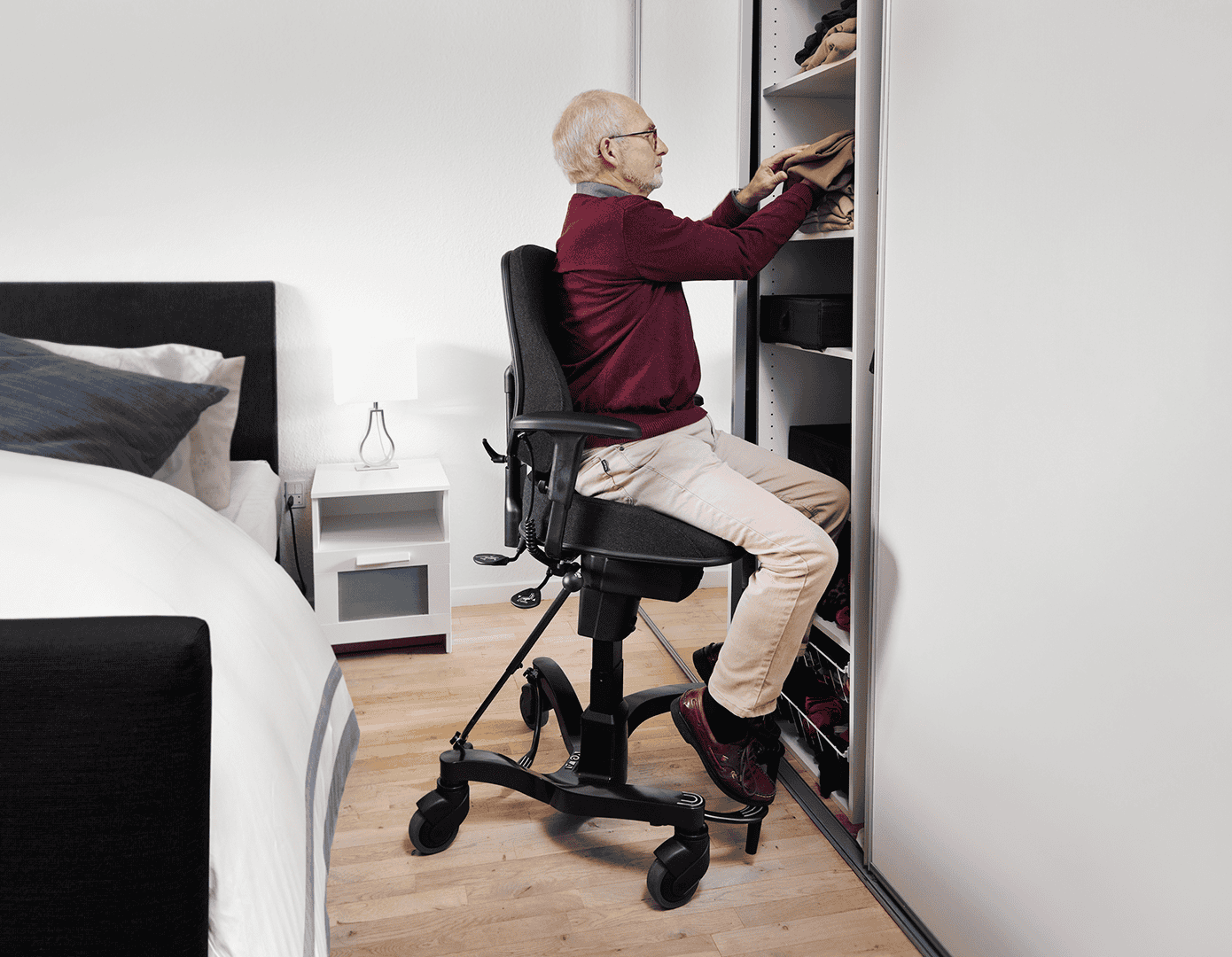
For seniors considering in-home care but concerned about their ability to live independently, adaptive equipment and new technologies offer enhanced solutions. Recent advances in ergonomic and inclusive product design, including autonomous navigation, smart exoskeletons, AI prosthetics, and wheelchair attachments such as WheelMove, now support greater mobility and independence.[4] The emergence of voice-controlled wheelchairs and accessible transport platforms such as MaaS-Bridge also improves community participation. Products like the VELA Independence Chair exemplify how modular, smart seating can support daily activities and safe transfers for seniors living at home. The chair’s central brakes and electric height adjustment aid with safety and daily tasks, and new models now integrate sensors for personalized monitoring. These advances are part of a rapidly expanding market for mobility and communication aids, projected to grow at a 6% CAGR through 2026, driven by longer life expectancy and the rise of chronic conditions.[8] Rehabilitation practices also emphasize early, home-based interventions using virtual reality and AI-driven feedback to support recovery and maintain independence (Rehabilitation Science 2025).
Deciding between assisted living and in-home care involves more than just financial considerations; families must assess the intricacies of individual care needs, environmental preferences, and family dynamics. In-home care provides comfort and independence, while assisted living offers safety, community, and structured care for those with more intensive needs. Often, a combination of both—starting with home care and transitioning to assisted living—proves beneficial (Aging Care).
Ultimately, engaging openly with loved ones to evaluate their preferences and practical needs will ensure a care plan that upholds the senior’s dignity, autonomy, and well-being. Technology, when thoughtfully integrated, enhances but does not replace the value of personal interaction and tailored human support.
Supporting aging in place: a practical option
The VELA Independence Chair exemplifies how modern mobility solutions make aging at home a viable and attractive option for many seniors. With its central brake system, the chair enhances safety, significantly reducing fall risks when moving around the house. The electric height adjustability aids with daily tasks, ensuring ease when cooking, cleaning, or relaxing. By facilitating effortless transfers from one position to another, the VELA chair maintains a senior’s daily rhythm and energy levels, thus prolonging their ability to live independently. Newer trends show that integration of smart sensors and connected home systems further enhance the chair’s utility as part of comprehensive home care, complemented by other innovations such as exoskeletons and AI-personalized mobility strategies.[4][3] This can delay, if not eliminate, the need for a move to a nursing home. Though VELA is among several options, its proven features provide a dignified path for seniors to enjoy their golden years in the familiarity of home, especially when combined with current advances in digital health, remote care, and new assistive devices.
[1] allseniors.org
[3] advancednursing.care
[4] mobilitymgmt.com
[5] dosepacker.com
[7] providermagazine.com
[8] factmr.com