

Updated February 2026: We have updated the article to reflect recent federal and state regulatory changes, including the 2025 and 2026 shifts in assisted living staff training mandates, the 3.4% CMS SNF rate increase for FY 2026, updates to ICD-10 billing codes, and the December 2025 repeal of federal SNF minimum staffing mandates. Payment, staffing, and regulatory guidance have been revised for current accuracy.
What is Skilled Nursing vs Assisted Living? A Comprehensive Comparison
Navigating senior care options can be overwhelming, especially when trying to determine whether skilled nursing or assisted living is the most suitable choice for your loved one. According to the National Institute on Aging, approximately 70% of adults aged 65 and older will need long-term care services at some point, highlighting the importance of understanding these options. Let’s explore the key distinctions between these two types of care facilities.
Understanding the Basics of Skilled Nursing and Assisted Living
Skilled nursing facilities (SNFs) offer intensive, round-the-clock medical care provided by licensed nurses, catering to those with complex health conditions requiring constant supervision. According to the Centers for Medicare & Medicaid Services, examples of care include wound management, IV therapy, and post-operative rehabilitation. Recent advancements in these settings have led to the integration of smart assistive technologies, such as sensor-based fall detection systems, automated medication dispensers, and smart wheelchairs that adapt to user needs. Additionally, skilled nursing rehabilitation now often incorporates robotic devices and personalized rehabilitation protocols using wearable sensors and tele-rehabilitation platforms to support functional recovery and optimize therapy outcomes.2025 SNF Benchmark Report
Conversely, assisted living centers provide support with daily living activities within a residential environment, prioritizing social engagement and autonomy for individuals with milder health needs. The National Institute on Aging explains that assisted living is suitable for those needing less extensive healthcare services. Many assisted living facilities are also beginning to integrate technology, such as AI-powered aids and inclusive design principles, to maximize resident independence and safety.Assisted Living vs Skilled Nursing – Tech Trends
Imagine an elderly individual with diabetes requiring specialized medical monitoring; a skilled nursing facility would be suitable. Meanwhile, a senior facing mild mobility challenges but wishing to participate in social activities may thrive in an assisted living environment. As residents’ needs evolve, transitions between these settings are not uncommon, illustrated by the case of Mr. Thompson, a resident who moved from assisted living to skilled nursing after his healthcare requirements became more demanding. Increasingly, experts note that technology is blurring the line between assisted living and skilled nursing, enabling higher independence levels and improved medical care across both settings.Assisted Living vs Skilled Nursing – Tech Trends
Key Differences: Medical Care, Independence, and Environment
Assisted living emphasizes personal autonomy within a supportive community. Residents typically maintain a good degree of independence and engage in numerous social activities, as seen with Mrs. Johnson, who enjoys bridge games and book clubs. Facilities are beginning to leverage assistive and smart technologies to further support this independence, such as automated alerts and mobility aids. In contrast, skilled nursing environments focus on medical care and supervision. Patients like Mr. Garcia, who experience frequent medical interventions and require constant monitoring, find skilled nursing facilities essential for their well-being. These environments now prioritize inclusive design alongside interdisciplinary care teams that integrate physical therapy, occupational therapy, and cognitive training with advanced assistive devices.2025 SNF Benchmark Report
According to CMS, skilled nursing mandates federal regulation and, until recently, required a 24/7 nursing staff in line with federal staffing requirements. However, federal minimum staffing mandates for skilled nursing facilities were repealed in December 2025, and facilities are now required to meet state-determined or previous federal RN presence standards, such as the reinstated daily eight-hour RN requirement.AHA Report on CMS Staffing Repeal Assisted living operates under state regulations, and as of 2025, many states have updated requirements emphasizing expanded education and training for direct care staff and administrators.NCAL 2025 Assisted Living State Regulatory Review Each state may have different regulatory standards, as noted by the National Institute on Aging. Experts are increasingly observing a trend toward hybrid models that blend supportive living and more advanced clinical care, made possible by new technologies and interdisciplinary collaboration.Assisted Living vs Skilled Nursing – Tech Trends
Costs, Payment Options, and Insurance Coverage
Financial planning is a critical consideration. Assisted living is usually covered out-of-pocket or through long-term care insurance, with costs averaging around $5,500 monthly, based on data from SeniorLiving.org. In contrast, skilled nursing, often costing upwards of $8,000 per month, may be partially covered by Medicare for short-term stays post-hospitalization. However, private pay is common for extended care, as reported by CMS. The CMS final rule for fiscal year 2026 affirmed a 3.4% per-diem rate increase for SNFs, impacting reimbursement and potentially influencing out-of-pocket expenses or facility offerings.CMS FY 2026 SNF PPS Final Rule Fact Sheet Families should note that from October 2025, CMS has updated ICD-10 code structures and removed certain social determinants of health measures from SNF assessments, which may affect billing practices and reported quality measures.CMS FY 2026 SNF Final Rule Summary
Consider the Brown family, who had to navigate financing skilled nursing care for their father through a combination of Medicare and personal savings, underscoring the importance of understanding these financial options to alleviate the burden associated with elder care.
State and Federal Regulations: What Families Need to Know
Regulations for these facilities differ significantly. Skilled nursing facilities adhere to stringent federal guidelines, ensuring high-quality medical care. Updates in 2025 and 2026 from the Centers for Medicare & Medicaid Services (CMS) have included changes to per-diem rates, ICD-10 billing codes, and assessment data requirements for SNFs, along with repeal of the 2024 minimum staffing hour mandates.CMS FY 2026 SNF PPS Final Rule Fact Sheet Facilities must continue to comply with reinstated rules around RN presence and are subject to updated quality reporting reduction penalties for non-compliance.CMS FY 2026 SNF Final Rule Summary Meanwhile, state regulations govern assisted living, and many states revised standards in 2025 to further emphasize direct care staff and administrator training requirements.NCAL 2025 Assisted Living State Regulatory Review According to the National Institute on Aging, the regulatory landscape directly impacts the quality of life and care provided. Prospective residents and families can now access transparent facility ratings through the updated CMS Nursing Home Care Compare platform.CMS Nursing Home Care Compare Updates 2025 Families, like the Martins, found peace of mind after evaluating compliance reports and resident satisfaction surveys when choosing a suitable facility.
Supporting Aging in Place: A Practical Option
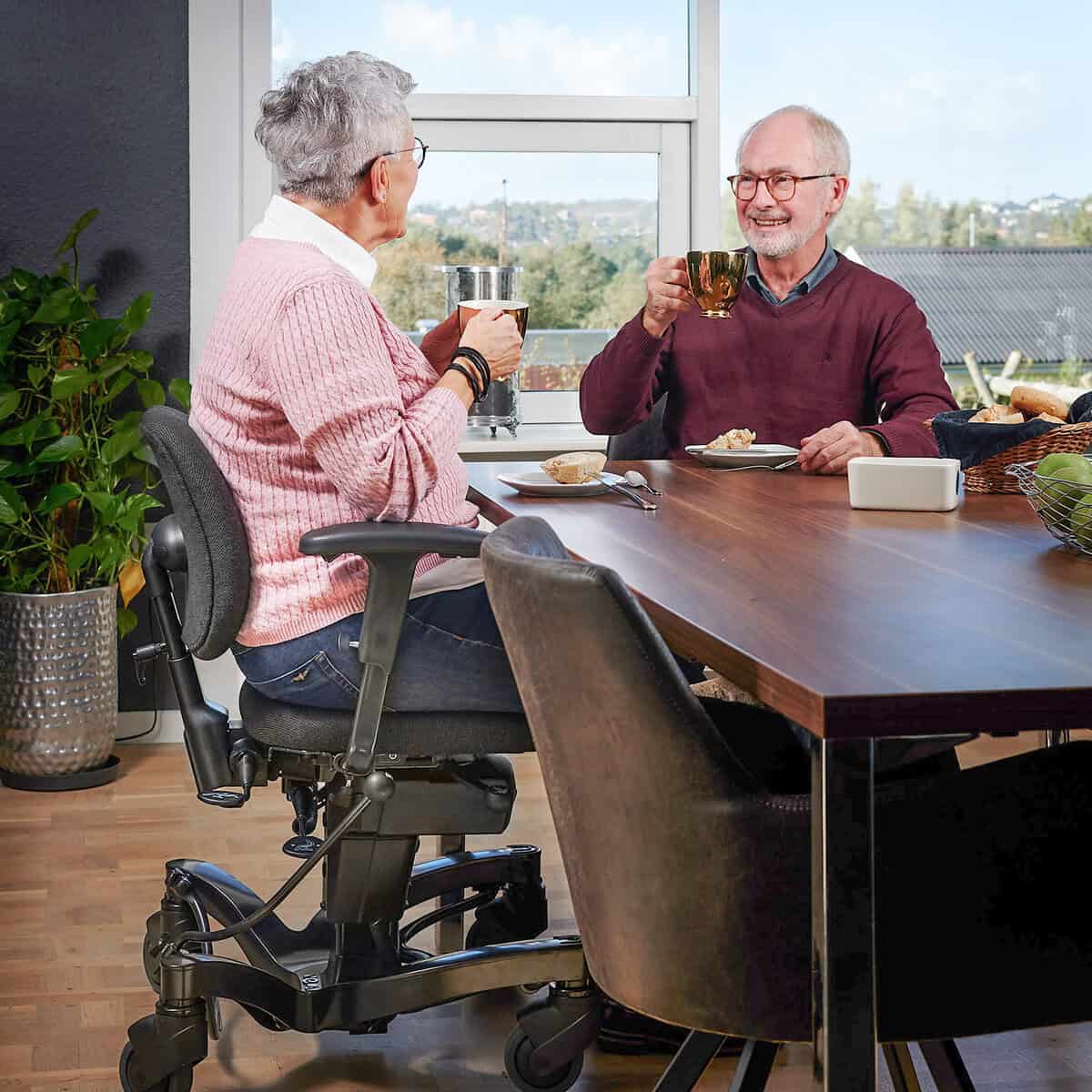
The VELA Independence Chair offers a practical alternative for individuals desiring to age in place rather than transition into a facility setting. By addressing crucial issues like safety and mobility, such as reducing the risk of falls with its central brake, the chair empowers seniors to conduct daily activities more freely. This independence not only helps conserve energy and fosters a sense of dignity but may also delay the need for nursing home placement. While it seamlessly aids with tasks from cooking to relaxing, the VELA Chair is one among various solutions available, illustrating how thoughtful design can support elderly mobility at home, encouraging healthy, vibrant aging. For more on how similar technologies foster independence, explore Enhancing Independence at Home.
Emerging User Experiences and Adoption Trends
Feedback from residents and families increasingly highlights the positive impact of smart technologies on autonomy, comfort, and peace of mind. Many express a preference for facilities and products that incorporate data-driven safety features, adaptive assistive devices, and support for social engagement through digital platforms. Providers are adopting hybrid care models, combining supportive living environments with advanced medical technology to better address evolving needs and expectations.Assisted Living vs Skilled Nursing – Tech Trends
References
- National Institute on Aging
- Centers for Medicare & Medicaid Services
- SeniorLiving.org
- 2025 SNF Benchmark Report
- CMS Nursing Home Surveyor Guidance Updates 2025
- 2025 Assisted Living Facility State Regulatory Updates
- CMS Nursing Home Care Compare Updates 2025
- Assisted Living vs Skilled Nursing – Tech Trends
- Medicare.gov Skilled Nursing Facility Care
- Legal Impact on Skilled Nursing 2025
- NCAL 2025 Assisted Living State Regulatory Review
- CMS FY 2026 SNF PPS Final Rule Fact Sheet
- CMS FY 2026 SNF Final Rule Summary
- AHA Report on CMS Staffing Repeal