

Updated February 2026: We have updated the article with the latest advances in AI-driven predictive monitoring, robotic mobility aids and companions, expanded telehealth via wearables, regulatory changes extending telehealth coverage, and user adoption trends among seniors. The article now reflects the shift toward proactive, technology-enabled care models and inclusive design in assisted living.
The Future of Med Tech and Mobility in Assisted Living
The field of assisted living is currently undergoing a dynamic transformation, with medical technology professionals playing an increasingly pivotal role in enhancing resident care. As demand for specialized senior care grows, the role of med techs has expanded well beyond basic medication administration, becoming foundational within comprehensive healthcare services in assisted living communities. With over 30,500 assisted living facilities in the U.S., housing approximately 800,000 residents, it’s evident that this sector is both expansive and critical. According to Haven Senior Investments, projections suggest the market value will climb from $95.085 billion in 2025 to $143.5 billion by 2032, indicating robust growth and increasing reliance on qualified med techs. Furthermore, occupancy rates have reached 83.2% as of 2025, marking a substantial post-pandemic recovery. This article explores the evolving landscape of med tech services, their technological advancements, and the indispensable role they play in assisted living.
The Evolving Role of Med Techs in Assisted Living
Med techs are indispensable in managing the increasingly complex medication regimens that many residents require. These professionals ensure medications are administered safely and in compliance with physician directives, a responsibility that directly impacts resident health and safety. For instance, in a notable example from a Florida facility, a med tech expertly coordinated a resident’s 20-medication schedule, significantly reducing hospital visits caused by adverse drug interactions (Provider Magazine). Med techs serve as vital facilitators of continuity in care, liaising between residents, families, and healthcare providers to ensure comprehensive, personalized care.
Technological Advancements Enhancing Med Tech Services
The integration of cutting-edge technologies has significantly enhanced the capabilities of med techs. One notable advancement is the implementation of electronic Medication Administration Records (eMAR) systems, which have proven effective in reducing medication errors and streamlining documentation processes. According to August Health, eMAR systems have become a mainstay in assisted living facilities, providing real-time compliance tracking and facilitating communication among care teams.
Artificial Intelligence (AI) and predictive analytics are now central to medication management and broader operations of assisted living communities. The latest solutions incorporate smart sensors for fall prevention, waste analysis, and vital tracking, using agentic AI to optimize schedules and anticipate care needs. These systems are designed to shift care from a reactive to a proactive model, reducing hospitalizations and supporting greater independence. User adoption is rapidly increasing, with nearly 2-in-5 seniors planning to purchase new assistive technologies for mobility or health in 2026, a trend fueled by tech-savvy Boomers (AARP: 2026 Technology Trends for Older Adults).
Modern fall detection and mobility monitoring now rely on not only AI-enabled, non-wearable sensors but also advanced smart home integrations, such as voice-activated safety systems and motion analysis. Robotic exoskeletons and therapy devices are increasingly used for mobility rehab and functional exercise, providing personalized strength and balance training. Robotic companions are also adopted as part of broader wellness programs to reduce loneliness-associated decline in mobility, with AI agents supporting both residents and caregivers (LeadingAge: What to Expect in 2026; HealthTech Magazine: 4 Health Tech Trends 2026).
There is a strong emphasis on interoperability and data integration across software platforms, facilitating information sharing for more effective clinical decision-making. However, persistent challenges remain due to incompatible software systems and funding constraints, which continue to be prominent barriers to seamless technology deployment in senior care environments (Senior Housing News).
Expansion of telemedicine—including regulatory extensions of telehealth coverage into 2026—has made remote care a routine part of health management in assisted living and home-based care. AI-powered wearables, smart home monitoring, and virtual or hybrid rehabilitation therapies offer real-time insights and enable remote intervention for both acute and preventive care. Dementia-friendly VR, personalized AI care plans, and teleconsultations reduce hospitalizations while allowing residents to safely age in place (Heisinger Bluffs; Caring Data; LeadingAge: What to Expect in 2026).
User engagement is further supported through a blend of voice-activated assistants, gesture-based controls, and smart devices that allow residents to interact naturally with their environment and maintain independence. Virtual reality and cognitive training tools are also being adopted to reduce loneliness and support wellness (Age in Place Technology; Align Senior Care).
Training and Qualifications for Med Tech Professionals
The competence of med techs is paramount, rooted in rigorous training and certification requirements that vary by state. Typically, med techs are required to complete state-approved training programs and pass certification exams. Continuing education is vital for these professionals, particularly in keeping pace with technological advancements. A successful training program in California illustrates this, where enhanced curricula led to a 30% reduction in medication errors (BoomersHub).
Increasingly, professional training in the med tech field emphasizes the use of advanced assistive technologies and software systems. There is also a growing movement toward co-creation and user-centered design, encouraging the participation of older adults in the development and implementation of assistive technologies. This inclusive approach has expanded to cover dementia-friendly virtual reality, personalized AI-driven care plans, and adaptive therapies tailored for diverse cognitive and mobility needs. These user-centered design strategies help ensure new solutions address real-world needs and support long-term adoption for both caregivers and residents (PMC (NCBI)).
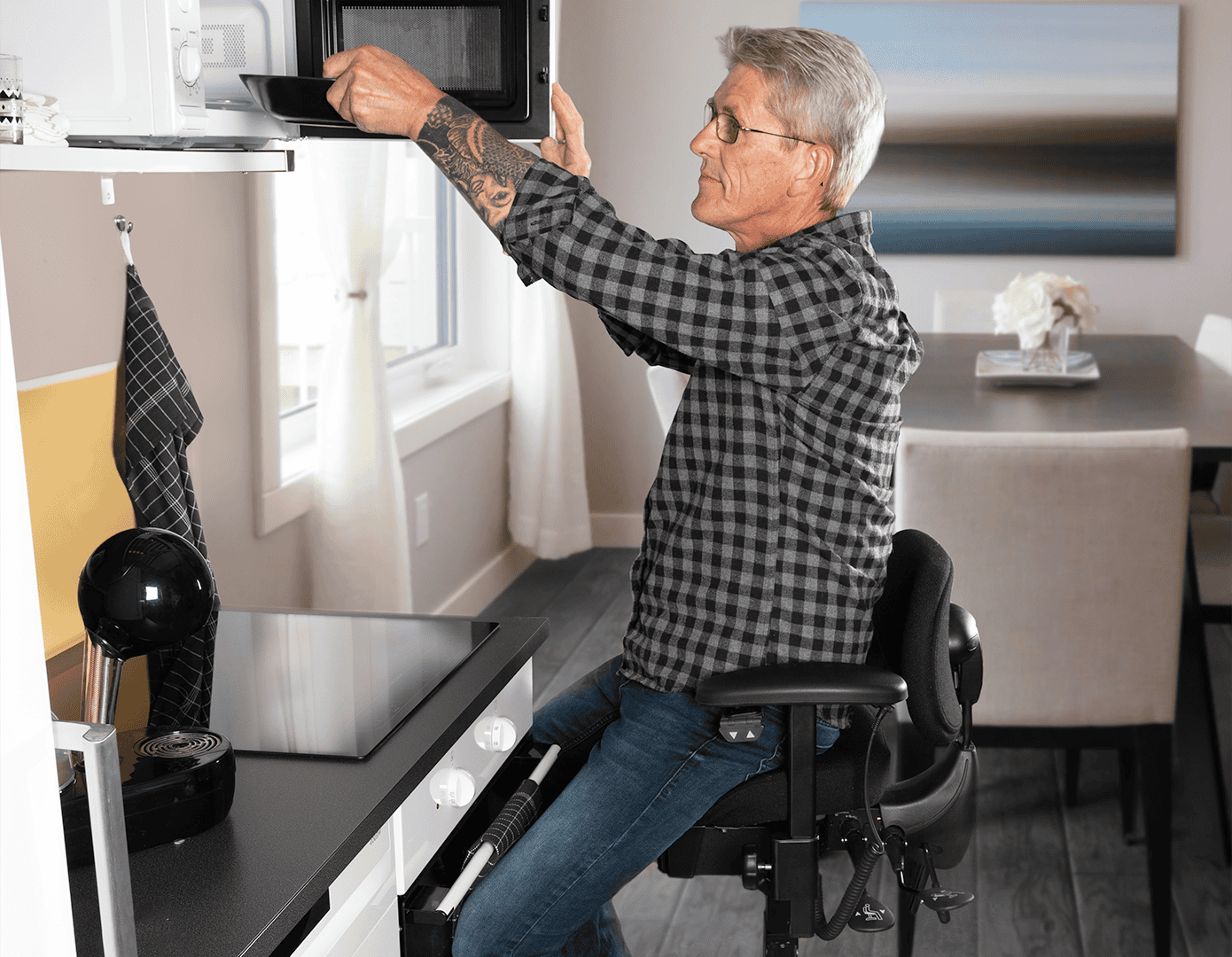
As the needs of aging populations evolve, assisted living facilities often face the challenge of balancing comprehensive care with promoting independence among residents. Many seniors prefer to maintain their independence in a home setting, which enhances their quality of life. This is where innovative solutions like the VELA Independence Chair come into play. Designed as a medically approved mobility chair, the VELA Chair offers essential features such as enhanced safety, freedom of movement while seated, and support for daily activities like cooking, dressing, and transferring—all while reducing the strain on informal caregivers by facilitating greater autonomy and confidence.
Supporting Aging in Place: A Practical Option
The desire to age in place is increasingly common among seniors, and tools like the VELA Chair can significantly aid in this goal. This chair, with its features like a central brake system for added safety and electric height adjustability, transforms everyday activities by making them accessible and less strenuous. For instance, cooking or doing household chores becomes more manageable, as users can comfortably reach different heights while maintaining stable seated mobility. Without such support, the transition to a nursing home might occur sooner due to safety risks or caregiver fatigue. The VELA Chair is not the sole solution, but its proven effectiveness in providing security, freedom, and energy conservation illustrates how strategic mobility solutions can fundamentally enhance senior living experiences. Such advanced mobility solutions for assisted living present residents with the option to remain safely in their homes longer, delaying the need for comprehensive institutional care. The integration of mobility solutions with smart home systems and wellness programs, such as cognitive workshops and fitness initiatives, supports holistic well-being in senior living environments (Align Senior Care).
Regulatory and Funding Considerations
The regulatory landscape now more readily supports the adoption of advanced med tech solutions in assisted living. Expanded telehealth coverage through federal policies has been extended into 2026, increasing access to remote patient monitoring and virtual care. Additionally, new privacy regulations ensure higher security standards as data integration and AI platforms proliferate in clinical workflows (HealthTech Magazine: 4 Health Tech Trends 2026). Reimbursement models, including expanded Medicaid coverage for remote monitoring, are increasing the feasibility and adoption of these innovations (Age in Place Tech).
Conclusion
The future of med tech and mobility in assisted living is marked by rapid technological innovation, increasing regulatory support, and a commitment to resident-centered care. Emerging advancements in AI-driven predictive monitoring, robotic companions, smart sensors, non-wearable technologies, and interoperable platforms—alongside inclusive design practices and home-based services—empower both caregivers and older adults. These advancements ultimately enhance safety, autonomy, and quality of life, supporting a sustainable shift toward proactive, personalized care in senior living communities.