

Updated October 2025: We have updated the article with new findings on AI-powered assistive technologies, advanced indoor navigation tools, and the latest inclusive design trends for assisted living environments, as well as emerging regulatory and ethical considerations.
Understanding Assisted Living Development: Trends and Challenges in 2025
In 2025, assisted living development remains pivotal in the landscape of senior care. The sector is projected to navigate approximately $10 billion in loan maturities, as reported by the National Investment Center for Seniors Housing & Care (NIC). This financial scenario, paired with the pressing demand driven by an aging population, underscores both the challenges and opportunities in developing and expanding assisted living facilities.
The Demographics Driving Assisted Living Expansion
The increasing numbers of individuals aged 80 and above are a critical driving force behind the expansion of senior housing development. According to a JLL 2025 Seniors Housing & Care Investor Survey, this demographic shift is fueling investor confidence, with many looking to intensify their focus on senior housing. Facilities must adapt to these changes by embracing cultural sensitivity models that cater to diverse populations, providing environments that are both inclusive and conducive to dignified aging.
Financing and Regulatory Considerations for New Facilities
The financial landscape for new assisted living facilities is shaped by evolving investment trends and robust government incentives. The ResearchAndMarkets.com Assisted Living Market Outlook reveals an expected market expansion to $95 billion by 2025. Regulatory guidelines from the U.S. Department of Health & Human Services emphasize promoting autonomy and safety, presenting both challenges and opportunities for compliance. Successful projects, such as those with innovative financing models, illustrate the balance between fiscal prudence and regulatory adherence.
Quality of Life: Designing Home-Like, Safe, and Social Environments
Creating environments that balance independence with care is crucial in assisted living facilities. According to a peer-reviewed study on Quality of Life in Assisted Living Facilities, fostering home-like settings that prioritize resident well-being is of significant importance. Design features such as climate-controlled rooms and inviting social spaces contribute significantly to residents’ perceived quality of life.
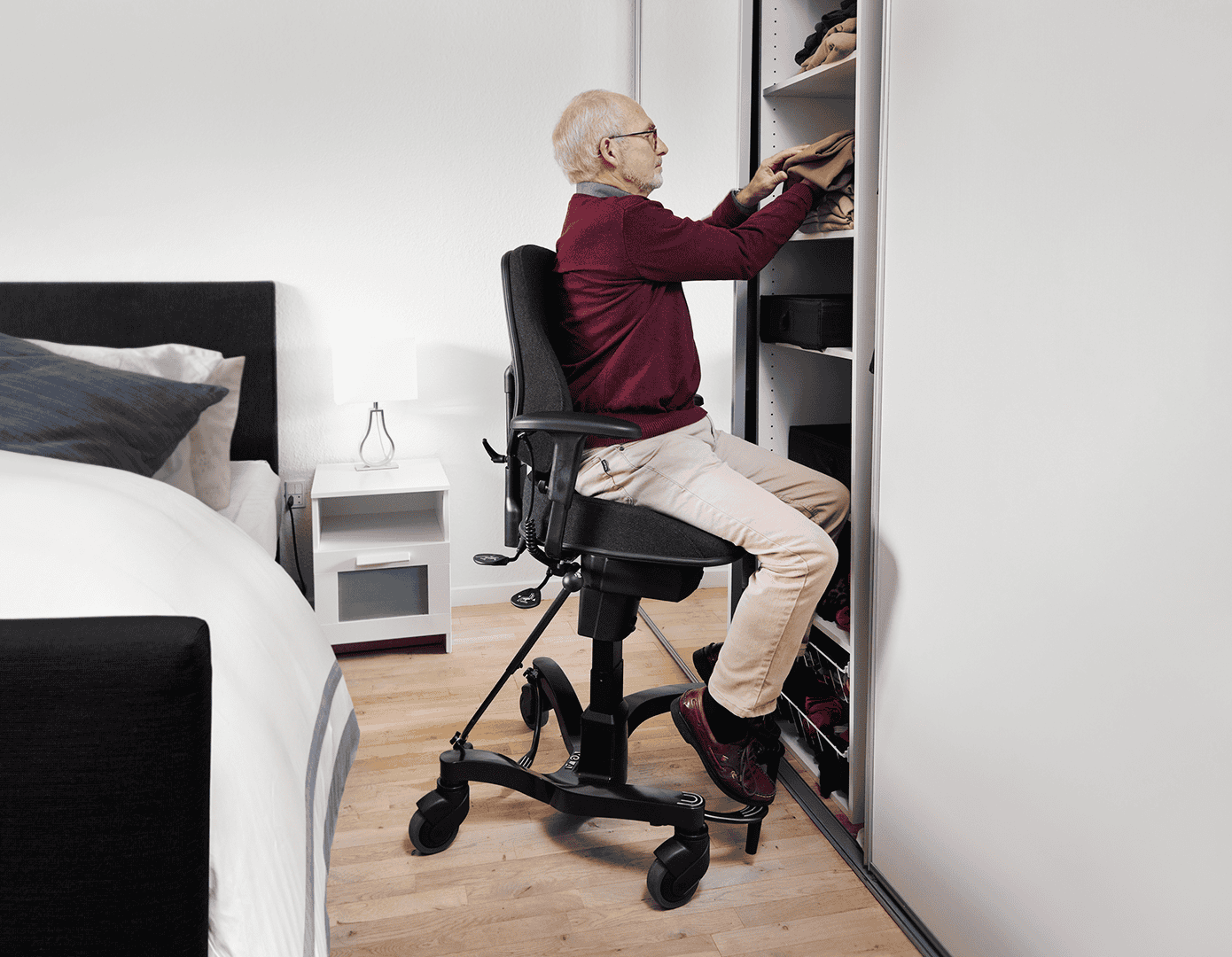
An integrated approach that considers both the limitations of traditional nursing homes and the means to empower older adults in their own spaces can significantly enhance residents’ lives. Solutions like VELA, a medically approved mobility chair, make striking strides in ensuring safety and freedom of movement for seniors at home. VELA chairs are designed to enable older adults to engage in everyday activities, such as cooking, dressing, or transferring, with minimal support from caregivers, thereby promoting greater autonomy within a home setting.
Integrating Advanced Mobility and Safety Tools
Mobility technologies like VELA chairs are revolutionizing assisted living by improving safety and enhancing quality of life. These chairs are designed with features such as height adjustability and stability, which are essential in preventing falls and promoting independent living. Facilities implementing these tools have reported marked improvements in resident satisfaction and quality of life.
Scenarios where mobility solutions have made a difference include facilitating easier participation in daily activities and enabling safer and simpler transfers. For more insights on how VELA chairs can transform assisted living environments, visit their website.
Integrating AI-powered Assistive Technologies and Inclusive Design
Recent advances in assistive technology are transforming the assisted living landscape. AI-driven tools such as smart glasses, advanced wearables, and integrated AI assistants now provide real-time object recognition, facial expression detection, and indoor navigation support using LiDAR and Bluetooth beacons. These features enhance independence and navigation within assisted living facilities, especially for individuals with visual or cognitive impairments.[1][2][3]
Industry trends also show a shift from single-function apps to seamless AI assistant systems. These AI-powered assistants offer instant, contextual support, including interpreting complex visual information and answering user queries immediately, which supports greater autonomy for residents with various impairments.[2][3][7]
In addition, ergonomic and inclusive product design is increasingly prioritized. New technologies consider accessibility from the earliest development phases, and the design process often involves people with disabilities and experts to ensure the final products truly meet user needs and facilitate daily living.[1][4]
Assistive technologies for reading, communication, and education—such as AI-driven text-to-speech, sip-and-puff control systems, FM listening systems for hearing loss, and writing support aids—are becoming more integrated in rehabilitation and educational programs.[6] This broadens the scope of support available in assisted living settings beyond traditional mobility aids.
Emerging AI trends, including agentic and physical AI, show promise for automating complex, adaptive tasks in the near future, increasing personalization and context-awareness for users in assisted living.[5] These developments are accompanied by evolving regulatory and ethical standards, emphasizing the importance of user-centered and ethical design in deploying new technologies.[3]
Frequently Asked Questions About Assisted Living and Facility Development
- How do assisted living facilities differ from nursing homes?
Assisted living facilities focus on providing a residential setting with supportive services, while nursing homes offer more intensive medical care. - What are key regulatory requirements for developing a new facility?
Regulations typically cover safety standards, staff qualifications, and resident rights, aiming to balance autonomy with protection. - How are rising costs and staff shortages being addressed?
Innovative financing and strategic staffing models, including technology integrations, are essential in addressing these challenges. - What features do seniors and families value most in assisted living?
Preferences include a home-like environment, social engagement opportunities, and high-quality care that promotes independence. - How can specialized seating, such as VELA chairs, support seniors in assisted living?
These chairs enhance safety and independence through ergonomic design, stability, and easy maneuverability, supporting daily activities with ease. - What are the latest trends in assistive technology for assisted living?
Recent trends include AI-powered wearables and navigation aids, seamlessly integrated AI assistants, and inclusive design practices involving users from the development stage.
In summary, the assisted living development sector is poised for significant growth amidst an aging population and evolving financial landscapes. Integrating mobility solutions like VELA chairs and leveraging AI-powered assistive technology are essential in creating environments that promote safety, independence, and dignity. As the industry continues to innovate, these features will play a pivotal role in shaping the future of senior care.
For seniors who wish to “age in place,” staying in their homes longer with the right support is crucial. VELA Chairs stand out as a proven solution, offering benefits such as a central brake for safety and electric height adjustability. These features make daily activities safer and more accessible, from cooking in the kitchen to reaching shelves with ease. With a focus on maintaining dignity and safety, VELA Chairs help reduce the burden on caregivers by enabling older adults to move freely and comfortably. By addressing common mobility challenges, such as energy conservation and safe transfers, these chairs may delay the need for nursing home care while enhancing quality of life. Learn more about these mobility solutions for seniors at home.
Sources:
[1] FloridaReading.com, Top Assistive Tech Trends for the Visually Impaired in 2025
[2] LetsEnvision.com, Future of Assistive Technology & AI in 2025
[3] DigitalLearningInstitute.com, Role of AI in Assistive Technology
[4] CTA / CES.tech, Accessibility Innovations and CES 2026 Trends
[5] Deloitte.com, Three New AI Breakthroughs for 2026: Agentic AI, Physical AI, and Sovereign AI
[6] Asian College of Teachers / Senteacherstraining.com, Assistive Tech Trends in 2026
[7] J.P. Morgan, Emerging Technology Trends 2025 Report