

Updated February 2026: We have updated the article to reflect new developments in assistive technology, including AI-integrated smart mobility aids, wearables for fall detection and health monitoring, robotic companions, VR/AR rehabilitation, adaptive furniture, and telehealth solutions. The article now details essential training in assistive tech integration, adaptive and ergonomic innovations, data-driven personalization, and telehealth coordination to address the latest trends and workforce needs in senior care.
Empowering Careers in Senior Care: The Essential Guide to Assisted Living Courses
Navigating the realm of assisted living courses is crucial for those aspiring to excel in the senior care industry. These programs provide valuable education tailored to managing and directing assisted living facilities, emphasizing the intricate balance of care, safety, and quality of life for elderly residents.
According to the Minnesota Board of Executives for Long Term Services and Supports, assisted living courses typically require over 120 hours of education, featuring 130+ on-demand modules accessible for a full year. This extensive curriculum underscores the dedication needed to develop effective management skills in this vital field.
Overview: What are assisted living courses and who needs them?
Assisted living courses equip future directors and managers with the skills required to oversee facilities where elderly residents, often aged 75 and older, reside. These individuals frequently face conditions like dementia, requiring specialized support and understanding.
Courses typically cover diverse topics, including leadership, ethical issues, and health and safety regulations. The ultimate aim is to address demographic needs by preparing caregivers to enhance residents’ lives, ensuring each facility maintains high standards in all aspects of operation. In-depth programs, like those highlighted by LeadingAge Minnesota, provide 46 hours of state regulation education paired with CORE/RCAL knowledge, tailoring training to meet state-specific requirements.
Practical experience in these courses might involve scenarios such as developing care plans that acknowledge the mobility challenges faced by seniors with arthritis or orchestrating activities that are accessible and stimulating for residents with varying levels of cognitive ability.
State licensure requirements: navigating training and exams for assisted living directors
Successfully pursuing a career as an assisted living director requires a mix of rigorous academic coursework, field experience, and certification exams. Each state’s licensure process varies, emphasizing the need for both state and national certifications.
Take Minnesota, for example, where licensure is notably stringent. Prospective directors must complete accredited courses, gain field experience, and pass the national licensing exam, a common bar set across many states as noted by the National Council of Certified Dementia Practitioners.
Core competencies in assisted living management
Leadership, problem-solving, and interpersonal skills form the bedrock of effective assisted living management. Ongoing professional development remains a cornerstone of this ever-evolving field.
For instance, top-rated facilities like Ebenezer Senior Living incorporate specialized training to foster these competencies. They emphasize the importance of adaptability and the continual pursuit of excellence in care through real-world applications such as managing staff dynamics or implementing emergency preparedness plans.
The National Assisted Living Manager Certification Course provides structured opportunities for continuing education, adapting managers to meet changing industry demands.
Quality of life in assisted living: resident perspectives
Resident well-being is paramount in assisted living facilities. Maintaining mobility and safety while promoting independence can significantly enhance senior living experiences. Adaptive equipment plays a crucial role in achieving these goals.
The latest shift in technology for residents with reduced mobility or specific support needs centers on advanced, AI-integrated smart mobility aids—such as powered wheelchairs equipped with GPS, sensors, and real-time health monitoring. Wearables now provide clinical-grade fall detection and vital sign tracking, while robotic companions support both mobility and social engagement. VR and AR platforms are increasingly implemented for rehabilitation therapy, encouraging independence and personalized care. Voice-activated devices, adaptive furniture aiming to prevent pressure ulcers, and telehealth-integrated remote monitoring have become part of standard care, facilitating aging in place and streamlining caregiver workflows LeadingAge, 2026 K4Connect, 2026 i Advance Senior Care, 2026.
Courses now increasingly address the integration and management of these advanced solutions, empowering future leaders to meet the demand for intuitive, non-intrusive devices accommodating dexterity limitations and diverse user needs. Training covers best practices for AI ethics, user acceptance, data-driven personalization, and regulatory updates for telehealth and durable medical equipment insurance to keep pace with new care models.
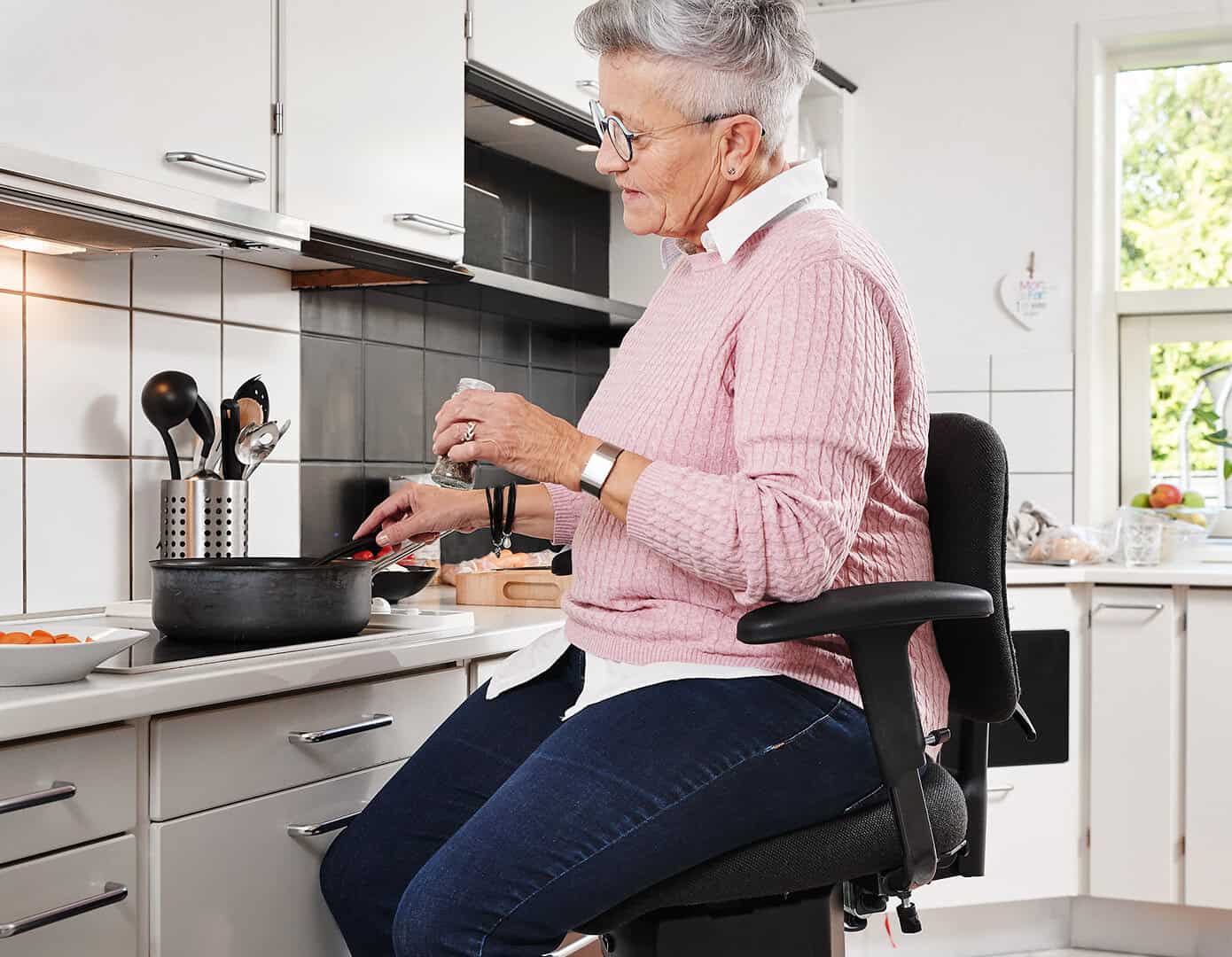
To address these needs and the challenges faced by facilities in ensuring residents’ independence, integrating solutions like the VELA Independence Chair can be transformative. Designed as a medically approved mobility chair, VELA facilitates enhanced safety and freedom of movement for older adults choosing to remain in their homes. It supports everyday activities such as cooking, dressing, or transferring, all while reducing the physical and emotional load on informal caregivers. Such equipment safeguards against falls and enhances autonomy, thereby offering a practical alternative to traditional nursing home care.
Integrating modern solutions: how equipment like VELA chairs enhance resident well-being
Enhancing the quality of life for assisted living residents involves integrating modern mobility solutions. Equipment like the VELA Independence Chair empowers residents by addressing the dual need for independence and security.
These chairs are designed with features such as height-adjustability and stability, reducing fall risks while ensuring comfort and accessibility. As the industry evolves, equipment design has further advanced to incorporate ergonomic innovations and adaptability from the outset, helping to prevent pressure ulcers and maximize accessibility for all users—including those with reduced dexterity or cognitive challenges. User feedback increasingly drives the creation of intuitive, non-intrusive devices that promote independence with privacy and dignity. These developments directly support safer, more dignified experiences for assisted living residents LeadingAge, 2026 K4Connect, 2026 CES, 2025.
By enabling residents to perform everyday activities safely, these solutions align with assisted living objectives, such as those highlighted in fall prevention strategies detailed here.
Empowering leaders in senior care through education and innovation
Assisted living courses are an indispensable part of preparing tomorrow’s leaders in senior care, combining comprehensive education and rigorous certification processes with practical care solutions.
Curricula are rapidly updating in 2026 to include essential modules on integrating new technologies—such as AI-powered assistive tools, telehealth coordination, and data security ethics—alongside training in ergonomic and adaptive innovations that meet diverse resident needs and support aging in place. State and national standards now increasingly require proficiency in these areas, and best practices drawn from recent user feedback and personalized rehab approaches are shaping instructional content i Advance Senior Care, 2026 K4Connect, 2026.
By emphasizing adaptive strategies and state-specific requirements, these programs ensure that directors and managers are well-equipped to provide exemplary care. According to the NIH, understanding resident experiences and maintaining a dedication to lifelong learning and innovation are critical components of this rewarding career path.
In addition to traditional management skills, leaders are now expected to evaluate and implement advanced technologies, such as AI-driven mobility aids, clinical wearables, robotic companions, and ergonomically inclusive furnishing, promoting individualized care and more efficient workflows LeadingAge, 2026 K4Connect, 2026.
Assisted living courses open doors to a fulfilling career in senior care, providing the expertise and resources necessary to make a meaningful difference in the lives of elderly individuals.
Supporting aging in place: a practical option
The VELA Independence Chair plays a pivotal role in helping seniors stay independent longer in their own homes. Its key features include a central brake for enhanced safety, electric height adjustability, and ease of movement while seated. Such capabilities not only prevent falls but also conserve energy, allowing seniors to comfortably perform daily activities without fatigue. With the VELA Chair, seniors can manage tasks like cooking and dressing more independently, thereby potentially delaying the need for a transition to a nursing home. The dignified and empowering experience it offers underscores the values of freedom and safety, demonstrating how such mobility solutions are not just helpful but essential for supporting aging in place. While VELA is a proven choice, it works best alongside broader support systems ensuring comprehensive care and comfort for seniors choosing to live at home.
- CES: Creating a More Accessible World
- Envision: Future of Assistive Technology & AI Assistants
- Digital Learning Institute: Role of AI in Assistive Technology
- LeadingAge: 3 Trends in Senior Care Technology
- K4Connect: The Future of Senior Living Arrived at CES 2026
- i Advance Senior Care: Key Senior Living Trends to Watch in 2026