

Updated February 2026: We have revised the article to include recent regulatory changes in assisted living and nursing homes for 2025–2026, with a focus on enhanced staff training requirements, staffing transparency, and quality assurance. New sections address evolving state and federal standards, electronic visit verification, public reporting on care outcomes, and updated medical director requirements, particularly highlighting developments in Florida and across 18 U.S. states.
Understanding the differences between nursing homes and assisted living
Navigating senior care is crucial, especially when deciding between nursing homes and assisted living. The phrase “difference nursing home and assisted living” resonates with those researching options for themselves or loved ones. According to National Institute on Aging, nursing homes offer the most intensive care outside hospitals, while assisted living caters to those needing help with daily activities without requiring round-the-clock medical oversight typical of nursing homes.
Understanding the core differences: assisted living vs. nursing home
Assisted living and nursing homes serve distinct needs in senior care. Assisted living offers a blend of independence and support for individuals who may require help with activities like bathing and dressing. Residents typically enjoy apartment-style living, social activities, and some nursing assistance. In contrast, nursing homes provide full-time medical care and supervision, suited for seniors with severe health issues, such as advanced dementia or chronic conditions requiring constant monitoring and medical attention. For an in-depth comparison, A Place for Mom offers significant insights.
Enhanced assisted living: bridging standard and skilled care
A new trend in senior care is the emergence of “enhanced assisted living,” which bridges the gap between traditional assisted living and nursing home care. Enhanced assisted living facilities provide additional medical support for individuals with chronic conditions or complex medication regimens who do not require the fully clinical environment of a nursing home. These settings often include access to therapies and more intensive oversight, helping seniors maintain a higher level of independence without sacrificing necessary health management (AHCA/NCAL, 2026).
Levels of care: what kind of support do you need?
Determining the necessary level of care is vital. Nursing homes provide comprehensive medical oversight, whereas assisted living focuses more on personal care with limited medical support. For example, a senior with mild mobility issues might flourish in an assisted living environment with customized support, while those with advanced dementia need the extensive medical oversight a nursing home provides. This differentiation in care requirement is detailed on Medicare.gov.
Quality of life and social environment comparison
The quality of life in senior communities often hinges on social interaction and engagement opportunities. Assisted living typically encourages active community participation and personal growth through social programs and recreational activities. A compelling case study involves a resident moving from a nursing home to assisted living, finding enhanced social interactions and quality of life. A Peer-Reviewed Study (2024) illustrates that quality of life in assisted living is closely linked to the facility’s ability to meet residents’ diverse needs and the individuals’ adaptability.
Costs, insurance, and payment options explained
Cost is a significant determinant in choosing between assisted living and nursing homes. Assisted living is often private pay, with costs averaging around $5,900 monthly, covering accommodation, meals, and basic care. Nursing homes, with costs around $10,000 per month, often qualify for Medicaid or Medicare funding. Understanding these financial aspects can guide effective planning—particularly when considering a family’s financial situation. As explained in A Place for Mom, these funding differences make nursing homes accessible to a more diverse economic demographic.
Enhancing safety and independence for seniors
Recent advances in assistive technology have transformed safety and independence for seniors across care settings. New smart mobility aids, such as AI-powered walkers and wheelchairs, are increasingly being adopted within both assisted living and nursing home environments. These devices often include sensor-based fall detection integrated with facility monitoring systems to help prevent injuries and support staff responsiveness (LeadingAge NY, 2025).
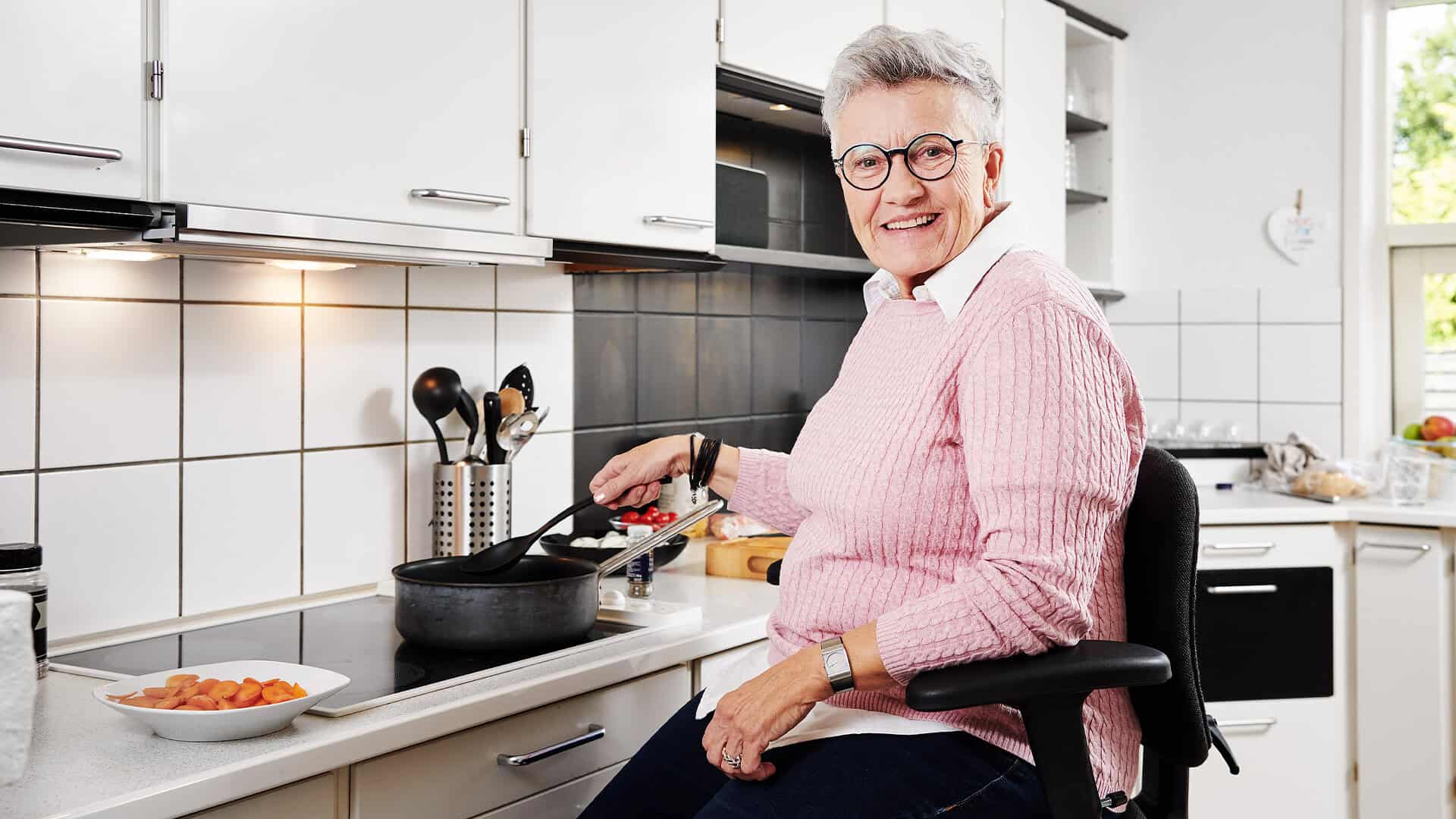
Product development also emphasizes ergonomically designed and adaptive features, allowing for a more personalized fit, reducing fall risks, and enhancing user comfort. The use of such technology helps balance safety with independence, enabling residents to engage more confidently in daily activities. For example, integrating solutions like the VELA chair supports mobility and facilitates numerous tasks at home or in care facilities, bridging the gap between safety and autonomy.
Additionally, rehabilitation practices have evolved to include tele-rehabilitation options, providing remote or on-site personalized therapy that fits seamlessly with residents’ routines and avoids unnecessary disruption (Law.com, 2025).
Supporting aging in place: a practical option
Staying independent at home is a viable alternative to institutional care for many seniors, facilitated by mobility solutions like the VELA chair. This equipment offers features that directly address the challenges highlighted earlier, such as enhanced safety and ease of movement. With its central brake for stability, electric height adjustability, and overall ease of use, the VELA chair helps seniors manage their daily routines more efficiently, thereby potentially delaying the need for a nursing home. By reducing reliance on caregivers, it allows older adults to enjoy a greater sense of dignity and autonomy in their own homes. While it’s not the only option available, the VELA chair represents a proven and practical choice for those seeking to prolong independence and comfort in their daily lives.
By using products that emphasize safety and freedom, individuals can navigate everyday activities like cooking, cleaning, or simply relaxing, with greater ease and confidence. Assistive technologies with smart monitoring functions and adaptive ergonomic design are also increasingly part of facility care systems, supporting both resident safety and independence (Skilled Nursing News, 2024).
For more insights into safety measures in senior care environments, consider exploring Safety Measures for Nursing Homes as part of the broader discussion on enhancing quality of life in assisted living and beyond.
New regulatory standards and policies (2025–2026 update)
Significant regulatory updates were implemented across the United States in 2025 and 2026, impacting both assisted living and nursing home operations. Eighteen states, including the District of Columbia, modified assisted living regulations with an emphasis on enhanced direct care staff training (in 10 states), and increased administrator education (in 9 states) (AHCA/NCAL, 2026).
The Centers for Medicare & Medicaid Services (CMS) and state agencies have implemented stricter standards, such as electronic visit verification (EVV) for Medicaid services in assisted living, robust infection prevention rules, and new requirements for public reporting of staffing ratios and turnover within facilities. Outcome-based quality metrics are now being used to evaluate and improve care, including tracking of falls, infections, and functional status gains (Activated Insights, post-2025).
Florida has proposed updated medical director requirements for nursing homes in line with 2025 reforms, which apply retroactively to January 1, 2026. These updates include expanded certification criteria and clarify the medical director’s responsibilities for care quality and resident safety (GTLaw, 2026; NatLawReview, 2026).
Across the country, increased transparency, continuous staff education, and regulatory oversight ensure that family members and caregivers have better insight into the quality and reliability of assisted living and nursing home options. These shifts are designed to improve resident outcomes and provide greater assurance to those selecting care facilities in today’s landscape.
Expert and resident perspectives on technology adoption
Experts highlight increased adoption of digital documentation and outcome-focused care, noting that both staff and residents benefit from technologies that promote autonomy while ensuring safety through seamless monitoring and reporting. Resident feedback generally favors solutions that uphold independence and dignity, while families and care teams value regulatory approaches that balance innovation, transparency, and resident rights (Law.com, 2025).