

Updated February 2026: We have updated the article with new findings on AI-powered autonomous mobility aids, integrated exoskeletons for gait support, neural interface innovations for paralysis recovery, and key trends in user-technology integration and inclusive design as highlighted at CES 2026.
Understanding Assisted Living Level 2: A Comprehensive Guide
Navigating the landscape of senior care involves understanding various levels of support, each designed to meet specific needs. Assisted living Level 2 serves as an intermediate option offering a crucial balance between independence and assistance for seniors, accommodating both personal autonomy and the necessity for support. This mode of care is essential for families seeking to ensure their loved ones receive the appropriate level of care.
According to the National Center for Assisted Living (NCAL), a significant percentage of seniors in assisted living require Level 2 care due to its tailored blend of autonomy and support, crucial for those not in need of intensive care but who still require some daily assistance.
Navigating the Middle Ground: Assisted Living Level 2
Assisted living Level 2 represents a medium level of care for seniors who require regular assistance with daily activities while retaining a degree of independence. Typically, this level involves hands-on help with at least one activity of daily living (ADL) such as bathing, while residents manage other tasks independently, like meal preparation. This structure ensures a mix of support that maintains the resident’s quality of life and wellbeing, as noted by A Place for Mom.
Recent advances in assisted living technology now support these aims through AI-powered assistive devices and smart home systems that provide intuitive, real-time support for residents. For example, AI assistants embedded in wearables and living environments can offer voice-activated interactions, prompt medication reminders, or even alert caregivers automatically in the event of health changes or emergencies, supporting both safety and independence.[1] [3]
Emerging trends since 2025 emphasize AI-driven user-technology integration for seamless control, including self-driving mobility chairs, gait-adaptive exoskeletons, and smart wheelchairs with autonomous navigation. These solutions—such as Strut EV, HyperShell exoskeletons, LUCI sensors, Adventus Robotics, and Robooter X40—are designed to reduce user effort and enhance independence through automated navigation, advanced obstacle avoidance, and shared control systems.[2] [3] [8] Wearable exoskeletons that blend human muscle with AI assistance are also supporting more natural movement and rehabilitation with less exertion.
Continuous health monitoring using advanced wearable devices has also transformed support for daily living, offering biometric tracking that empowers both users and caregivers to address needs proactively.[2] In addition, immersive extended reality (XR) tools, such as virtual and augmented reality, create new opportunities for engagement and rehabilitation, enhancing both motor skill development and cognitive participation.[2]
Residents often receive reminders for medication adherence and regular health monitoring while engaging in social activities, reflecting a lifestyle that balances care with community engagement, thus enhancing both social and physical aspects of their lives.
Determining the Need for Level 2 Assisted Living Care
Determining when Level 2 care is appropriate involves evaluating specific care needs, as detailed by Village Walk Senior Living. Signals that this level might be suitable include regular assistance needs with ADLs and medication management. An assessment typically considers daily functioning, cognitive abilities, and social engagement.
The latest telehealth innovations, increasingly supported by AI, now allow for remote health assessments and ongoing care coordination, leading to more personalized and timely adjustments in a resident’s care plan.[4] Adaptive, sensor-enhanced mobility aids can also dynamically adjust to an individual’s changing requirements, supporting a more tailored approach to daily living needs.[3] [4]
Clinical research highlighted at CES 2026 also points to emerging neural interface innovations for paralysis recovery, such as brain-spinal cord bridging technologies in clinical trials, offering new avenues for improved rehabilitation practices.[3] Inclusive design remains critical, given that a notable proportion of non-disabled users also encounter challenges with assistive technology, motivating broader accessibility and user-centered advances.
Consider a scenario where a senior actively participates in community events but requires reminders for grooming—indicative of the balanced needs that Level 2 care supports. Modern voice AI systems now make such reminders seamless and natural, greatly benefiting users with physical or cognitive limitations.[6]
Balancing Quality of Life with Cost in Level 2 Assisted Living
Quality of life is paramount in assisted living environments. Residents benefit from a structured lifestyle that promotes both autonomy and safety. Financial considerations are equally crucial, with costs varying by region, amenities, and services offered. According to a study from PMC, understanding service inclusions and potential additional fees is essential for planning financially.
Families should expect monthly fees to cover room, board, and basic care services, with additional charges applied for extra assistance, depending on the specific needs of the resident and the facility.
It is also important to consider the expanding range of assistive technology as part of the service offering. Many facilities are now equipped with AI-driven monitoring systems, adaptive devices, and smart home integrations as part of their promise to enhance resident quality of life through technology.[1] [5] [3] [4]
Enhancing Independence with VELA Mobility Chairs in Assisted Living
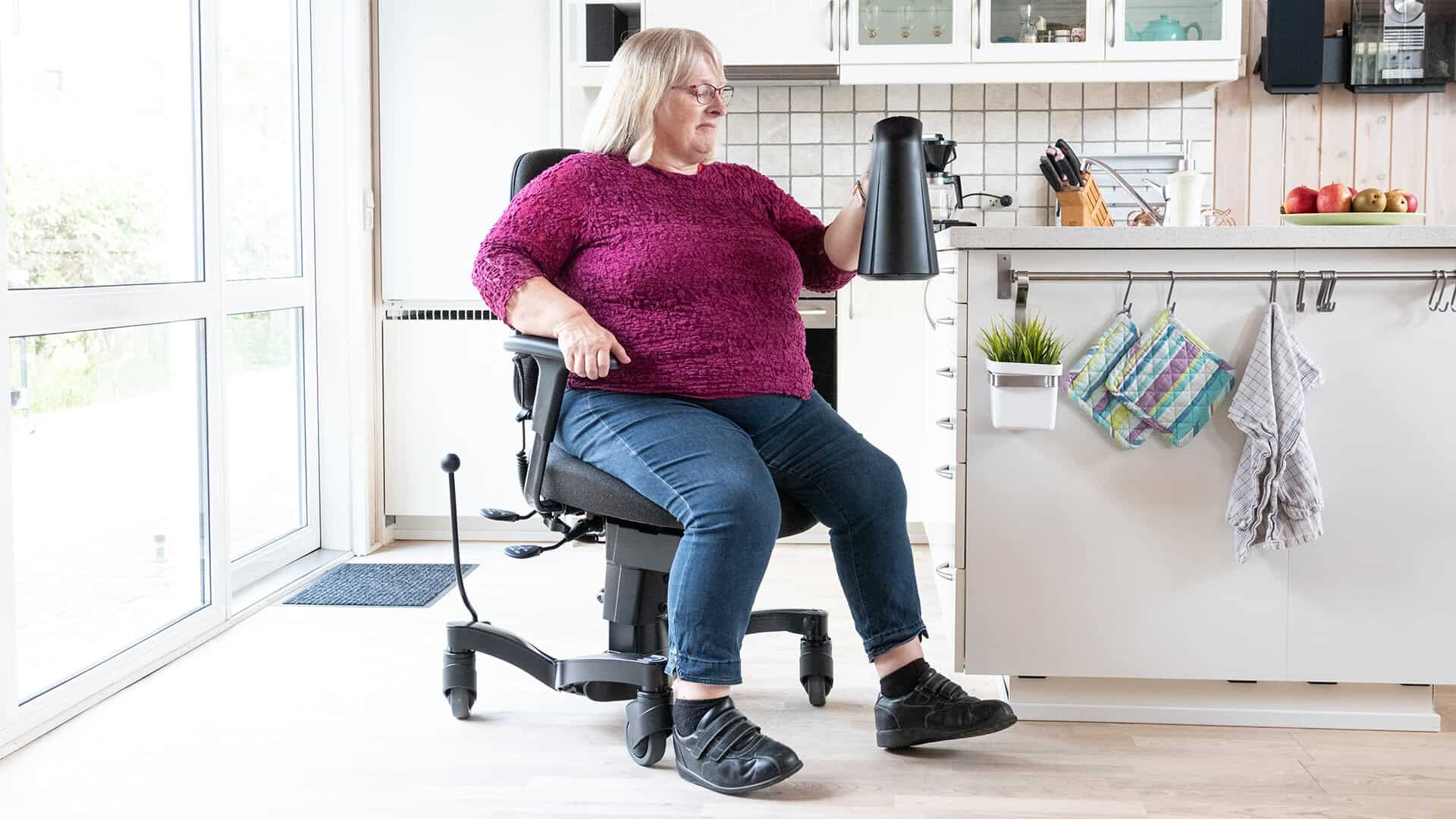
While nursing homes provide critical assistance, many seniors prefer alternatives that allow them to remain in their own homes as long as possible while still receiving necessary support. VELA provides one such solution through its medically approved mobility chairs, designed for at-home use. These chairs enhance safety and facilitate freedom of movement, supporting daily activities such as cooking, dressing, and transferring — all while alleviating the burden on informal caregivers.
New trends in inclusive ergonomic design mean products like VELA chairs increasingly integrate adaptive features and sensor technology that respond to an individual’s posture and movement needs in real time. CES 2026 highlighted such advances as part of a broader move toward integrated AI-supported mobility, blending human input with autonomous navigation for added safety and ease of use.[3] [2] [8] This focus on personalized ergonomics helps ensure that mobility chairs not only provide support, but actively contribute to rehabilitation and the maintenance of independence.
Ensuring the Right Level of Care for Senior Independence
In conclusion, assisted living Level 2 is pivotal for balancing necessary support with independence for seniors. Aligning care levels with individual needs ensures that families can offer their loved ones an enriched quality of life in a nurturing and respectful environment. The National Center for Assisted Living affirms the importance of tailored care options in senior living, supporting independence while providing necessary assistance.
Recent regulatory and clinical trends favor leveraging telemedicine, remote health management, and AI-enabled care models to provide more responsive, personalized, and cost-effective care.[4] Voice AI and speech recognition now facilitate hands-free interaction with assistive systems, making it easier for those with physical or cognitive challenges to participate in their care.[6] Policy discussions reflected at CES 2026 emphasize inclusive design, AI-ethics, and practical toolkits for facilitating accessibility and insurance funding, keeping innovation user-centered and widely accessible.[3]
As families navigate eldercare, understanding each care level’s distinctive elements is crucial to keeping seniors as engaged and independent as possible. Ongoing advancements in technology and personalized care are central to this mission.
Supporting Aging in Place: A Practical Option
VELA Chairs provide an elegant solution for seniors who wish to age in place with dignity and independence. These mobility aids come equipped with features like a central brake for enhanced safety, electric height adjustability for easy transfers, and effortless movement while seated. Such innovations allow individuals to conserve energy and engage in daily tasks like cooking and cleaning with ease. Using VELA’s ergonomic mobility solutions for assisted living, seniors can postpone or even avoid the need for nursing home care. This not only alleviates the stress on caregivers but also preserves the seniors’ sense of freedom and autonomy. While VELA isn’t the sole answer, it offers a proven pathway to maintaining a fulfilling life at home, as highlighted by supportive chairs for aging in place.
References
- Envision.ai’s insights on AI assistants and assistive tech in 2025
- CES 2026 Accessibility Innovations (Double Tap Podcast): self-driving mobility, exoskeleton, neural tech at CES 2026
- AbilityMT.org: AI spinal bridges, iSee, LUCI, Robooter X40, and inclusive design
- Assistive Technology Statistics 2026 (Market.us): Market growth, use, and accessibility trends
- Simplilearn on wearable health monitors and voice tech in healthcare trends for 2026
- CES 2026 Accessibility trends and smart home device advances
- Devabit summary of AI innovations in healthcare including telemedicine and diagnostics
- Special Needs Teacher training on assistive technology trends for 2026
- Double Tap on Air: CES 2026 Recap of exoskeleton and vision aid demos
- J.P. Morgan report on emerging voice AI agents improving accessibility and user experience