

Updated February 2026: We have updated the article with the latest insights from 2026 on AI-powered assistive technology, inclusive design processes, expanded adoption in residential and educational settings, and current regulatory trends focused on ethical AI use and data privacy in assistive care.
Navigating the Assisted Living Application Process: A Comprehensive Guide
Understanding the complexities of the assisted living application process is essential for families and seniors planning for elder care. With the median monthly cost of assisted living ranging from $4,500 to $5,800, financial considerations are paramount. According to Elder Care Alliance, assisted living costs vary significantly by region, and having a clear budget plan is crucial. In states like New Jersey, Medicaid imposes stringent income and asset limits, which further complicate eligibility. For instance, as of recent updates, single applicants cannot exceed $2,829 a month in income or have more than $2,000 in assets, as noted by Medicaid Planning Assistance. The New Jersey Department of Health serves as a reliable resource for understanding facility licensure requirements (NJ.gov).
Understanding the Assisted Living Application Process
Navigating the assisted living application process involves several key steps, starting with gathering detailed documentation. According to the New Jersey Department of Health, this includes completion of medical histories, financial disclosure, and resident agreements. Families often find themselves creating a comprehensive profile of their loved ones’ medical needs and personal preferences. Practical knowledge can greatly assist in this intensive process. For example, imagine the Phillips family in New Jersey, who systematically collected each medical report, insurance document, and personal identifier, prepared to meet all state licensing requirements while ensuring their father’s personal preferences were honored.
Key Eligibility Requirements for Admission
Eligibility criteria for assisted living typically center around an individual’s ability to manage activities of daily living (ADLs). These include basics like dressing and bathing. For example, an elderly individual with mobility impairments who struggles to bathe independently would be a likely candidate for assisted living support. Downers Grove Health Care specifies that residents generally need assistance with at least two ADLs. Industry terminology such as ADLs is critical for families to understand, as it directly impacts the eligibility and care planning for their loved ones.
Financial Considerations and Medicaid Eligibility
Financial eligibility for Medicaid coverage in New Jersey strictly adheres to income and asset limits: single applicants cannot exceed $2,829 a month in income or $2,000 in assets (Medicaid Planning Assistance). Families often bridge this gap with private savings, long-term care insurance, and exploring Medicaid benefits. Real-world experiences illustrate families creatively using a blend of these resources to afford quality care. For instance, consider the Ramirez family, who supplemented their mother’s Medicaid benefits with a carefully managed combination of long-term care insurance and family support to ensure continuous coverage.
Enhancing Resident Independence: The Role of Assistive Equipment
Independence within assisted living settings is significantly enhanced by a new generation of assistive equipment and technologies. Recent advances in AI-powered assistive systems and smart mobility solutions enable more responsive and context-sensitive support for residents. These tools include not only traditional mobility solutions, such as VELA chairs, but also a growing range of AI-driven wearable technologies, autonomous wheelchairs, customizable controllers, and intelligent communication devices.[1] [2] [3] [6]
For many seniors, maintaining autonomy is crucial when transitioning to assisted living. Devices like VELA chairs provide invaluable support, and, increasingly, advanced wearables and AI-based navigation aids allow for greater participation in daily activities and improved engagement with their environment. Innovations such as customizable controllers designed for those with limited motor skills and intelligent reading aids that respond to both text and speech further reduce barriers to independence.[4]
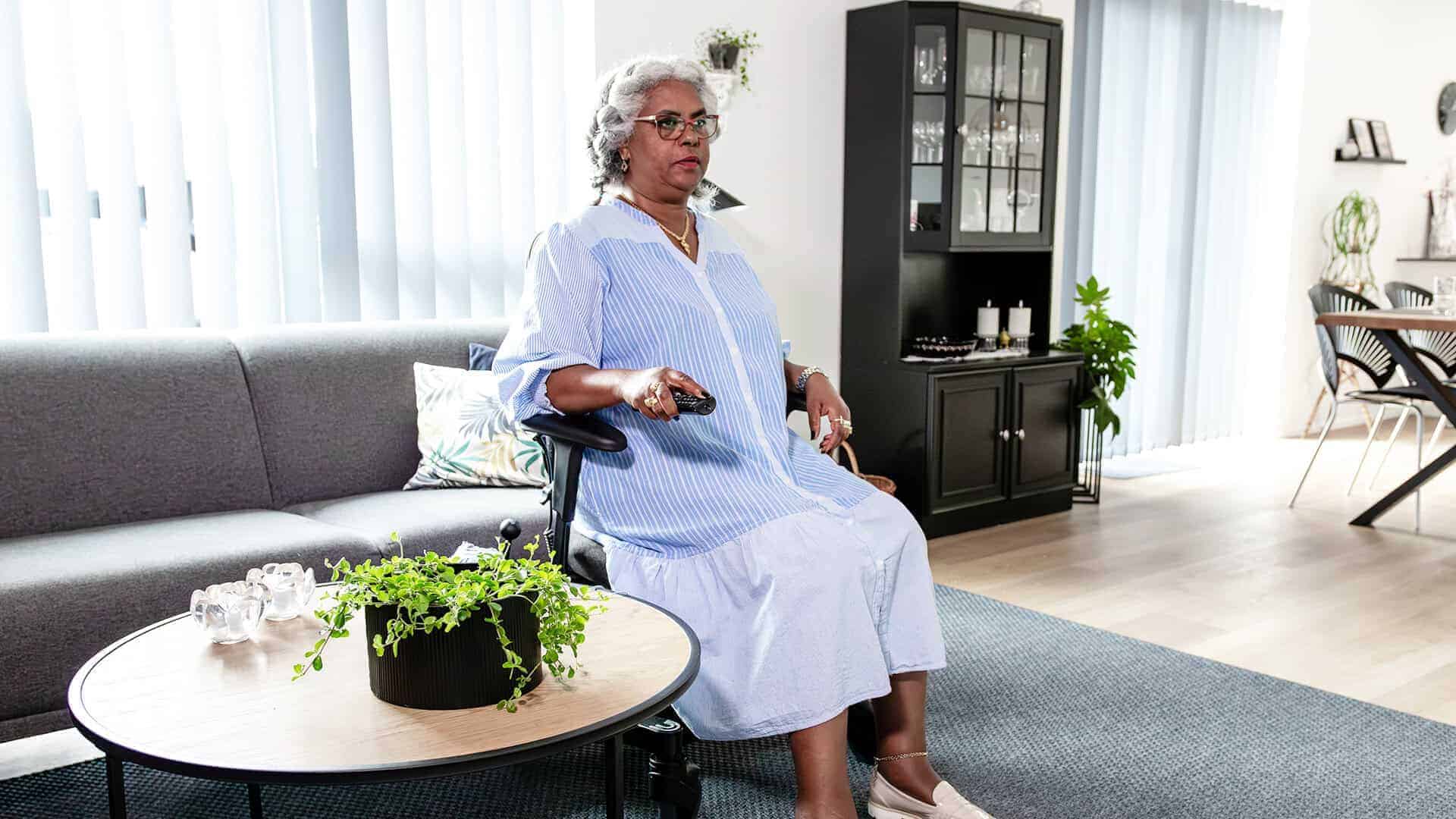
Faced with the challenges of nursing homes, older adults often seek solutions that allow them to remain independent in their own homes for as long as possible. One practical solution is the use of VELA chairs, a medically approved mobility chair designed for home use. VELA chairs provide enhanced safety and freedom of movement while seated, supporting daily activities like cooking, dressing, or transferring—each action crucial for maintaining independence. Furthermore, by alleviating the daily physical demands on informal caregivers, these chairs facilitate a supportive environment, allowing seniors to sustain a higher quality of life in the comfort of their homes.
For example, VELA chairs, equipped with lockable wheels and ergonomic seating, facilitate safer mobility and increased independence. Residents benefit from improved comfort and the ability to participate actively without constant assistance. In line with current trends, manufacturers are adopting inclusive, ergonomic design processes powered by AI, resulting in more customizable and user-centered products to address a wider variety of needs. Such advancements in assistive technology ensure that elderly individuals maintain an enhanced quality of life (Elder Care Alliance).[5]
Final Thoughts on Navigating the Assisted Living Application
Thoroughly understanding the assisted living application process is pivotal in making informed elder care decisions. By grasping the eligibility and financial requirements, families can better navigate the challenges and make sustainable choices. Notably, the integration of state-of-the-art assistive equipment, now enhanced by AI-powered technologies and multimodal systems, plays a crucial role in maintaining resident independence and improving care quality. Recent updates in regulations also emphasize the importance of deploying AI ethically, ensuring data privacy, and involving users directly in the development of assistive solutions, leading to greater empowerment and safety for residents.[3] [4]
In this journey, utilizing expert guidance and recognizing the available tools will bolster families’ confidence in making these vital decisions for their loved ones. Another real-world example includes veteran nurse Sandra Johnson, who often advises families during intake sessions, ensuring they comprehend both the procedural and emotional nuances of transitioning a loved one into assisted care, thereby highlighting her experience in family advocacy. Widespread adoption of assistive technologies—now exceeding $25 billion in global market value—further underscores the growing accessibility, especially as mainstream consumer electronics and educational environments rapidly incorporate these aids into everyday life.[2] [6]
Supporting Aging in Place: A Practical Option
Mobility solutions such as the VELA Chair empower seniors to maintain their independence at home, potentially delaying the need for a nursing home. Features like a central brake provide crucial safety, while electric height adjustability and ease of movement minimize strain during everyday tasks. Increasingly, wearables, AI-powered voice and gesture control, and smart home integration further extend safe home living possibilities. Imagine navigating life with the support of a VELA Chair: cooking becomes safer, transferring more manageable, and conserving energy for leisure activities becomes plausible. Without such aids, seniors might face increased dependency. By emphasizing dignity, freedom, and safety, VELA Chairs and modern assistive innovations stand as practical tools in aging-in-place strategies—highlighting that while not the only solution, they are proven ones to consider for enhancing daily life.[1]