

Updated September 2025: We have updated the article to reflect the latest trends in senior living architecture, including technology-integrated, wellness-centered environments, advanced assistive technologies, dynamic circadian lighting, holistic and personalized wellness models, sustainability, inclusion of ergonomic and adaptable design, and the growing importance of renovation and intergenerational community integration.
Designing the Future of Senior Living: Architecting for Dignity and Innovation
As we face an increasingly aging population, the role of assisted living architects grows in importance, crucially shaping the future of senior living communities. There is a surging demand for innovative and adaptive spaces that not only accommodate but enrich seniors’ quality of life. According to McKnight’s Senior Living, the number of Alzheimer’s cases is projected to double by 2050, underscoring the necessity for specialized architectural solutions to support this demographic.
Strategic Renovations in Assisted Living: Adapting to Future Needs
Renovations are increasingly preferred over new constructions in senior living environments. As reported by Senior Housing News and McKnight’s Senior Living, this trend offers cost-effective, adaptable solutions that address immediate needs while fostering community engagement. Practical examples include phased updates of community areas, which maintain functional spaces and promote social interactions. The challenge lies in harmonizing contemporary aesthetics with enduring utility, ensuring spaces remain user-friendly and relevant over time. Renovation strategies are also prioritized to retain flexibility for future needs, allowing communities to respond efficiently as resident expectations and regulations evolve DosePacker.
Holistic Wellness: Redefining Senior Living Environments
Modern senior living design integrates holistic wellness, with biophilic elements and communal spaces being key components. As described by the Facility Guidelines Institute, incorporating nature-inspired design can significantly improve residents’ emotional well-being. Wellness models now extend beyond physical rehabilitation to support cognitive stimulation, social engagement, and stress management as integral aspects of the environment and daily activities Juniper Communities. There is a significant move towards larger private units that offer independence and personal space, moving away from traditional shared accommodations. In addition, sustainable and biophilic design approaches are increasingly used to promote both resident health and environmental responsibility Direct Supply.
Innovative Memory Care Design: Beyond Traditional Models
Redefining memory care environments involves moving away from isolated, heavily secured spaces to more integrated community designs. Architect Magazine and Rheinlander Architects highlight that advanced assistive technologies and smart home systems are now embedded within senior spaces to support mobility, safety, and communication, adapting to individual needs in real time. In addition, ergonomic and inclusive design approaches are increasingly used, focusing on modular and flexible environments that can better accommodate physical disabilities and cognitive impairments. Lighting design innovations, such as dynamic circadian lighting, are employed to support cognitive health, reduce fall risks, and improve mood, especially in dementia care Rheinlander Architects. Designs feature multisensory experiences and homelike materials, crafting environments that are secure yet inviting.
Residential-Scale Design: Emphasizing Dignity and Comfort
Redesigning towards residential-scale environments is changing the landscape of senior living architecture. CC Architects, Environments for Aging Magazine, and Juniper Communities note that such designs emphasize dignity and comfort by creating home-like atmospheres rather than clinical settings. Facilities adopting this approach organize smaller “neighborhoods” and use residential furnishings to enhance the ambiance. Long corridors are substituted with intimate, personalized spaces that foster community and interaction. Additional design strategies now promote intergenerational programming and community integration to combat isolation, fostering connections within and beyond the senior community itself.
How Mobility Solutions Like VELA Make a Difference
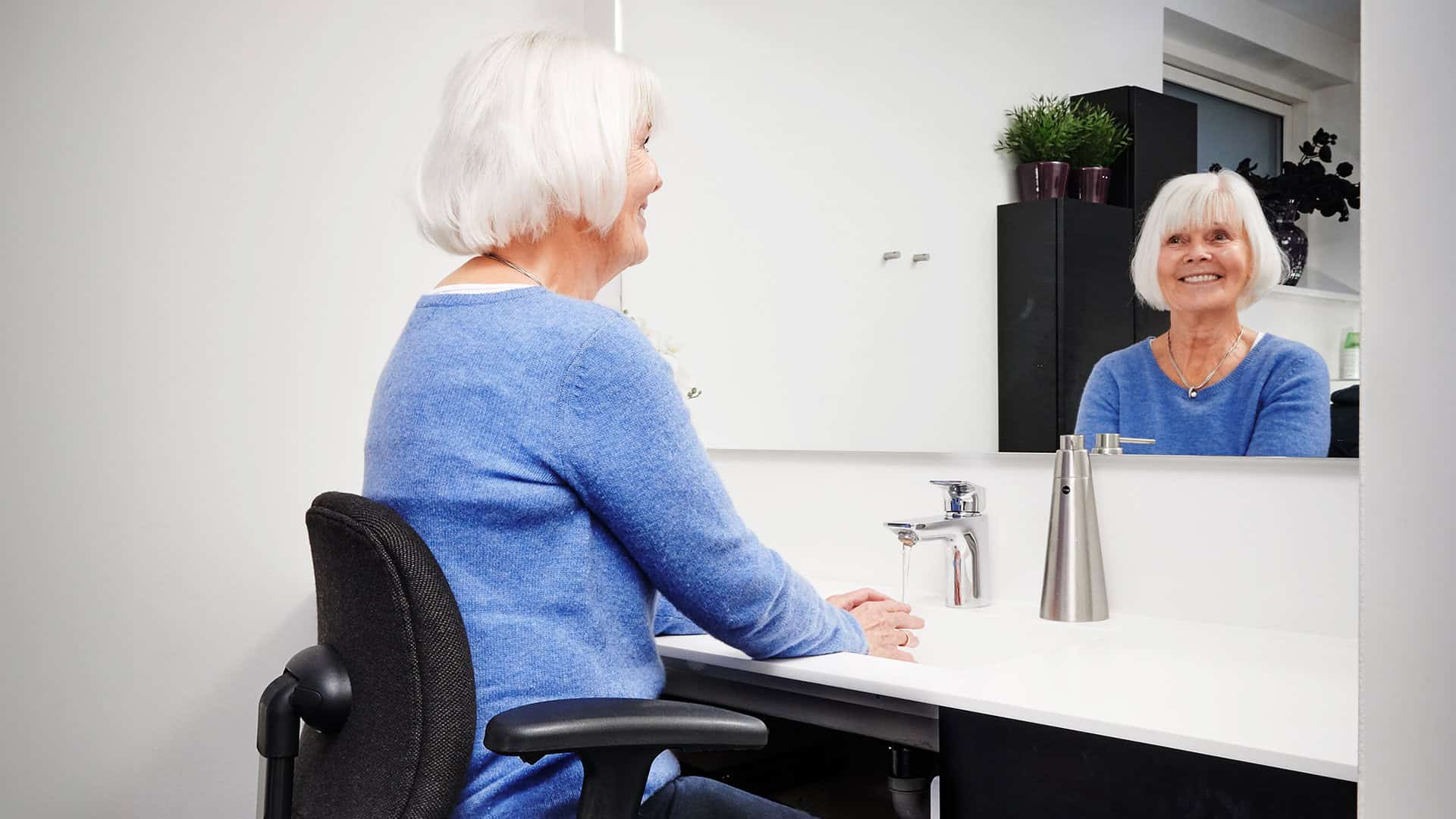
Supporting seniors in maintaining independence at home, mobility solutions like the VELA Independence Chair offer practical benefits. They are engineered with features that address common challenges faced by older adults, including a central brake for added safety, electric height adjustability for ease of transfers, and wheels for smooth movement while seated.
Imagine a typical day for a senior—engaging in activities like cooking, cleaning, or simply relaxing. With the VELA Chair, these actions become more manageable, reducing fatigue and enhancing safety. Compared to a life without such a chair, the presence of VELA helps preserve energy and maintain dignity. These chairs serve not only as a mobility aid but also as a means to delay the transition to nursing homes by mitigating falls and facilitating daily tasks. While many options exist, mobility solutions for seniors like VELA represent a thoughtful, effective component of aging in place.