

Updated February 2026: We have updated the article with the latest findings on nursing workforce improvements, staffing shortages, and trends in assisted living, including robust 2025 job gains, ongoing recruitment challenges, and regulatory changes for staffing ratios and documentation. The article now covers advanced assistive technology—such as AI-powered smart wheelchairs, compact power add-ons, and facility-based AI for fall detection—and reflects new mandates for person-centered, transparent care models in 2026.
Nursing Staff in Assisted Living Facilities: An In-Depth Analysis
When families consider assisted living facilities (ALFs) for their senior loved ones, a frequent question arises: Do assisted living facilities have nurses? Understanding the role of nursing in ALFs is crucial, especially as these facilities cater to seniors desiring assistance with daily activities while retaining independence, unlike nursing homes that offer intensive medical care. This analysis explores the presence and roles of nursing staff, state regulations, ongoing workforce challenges, the adoption of advanced assistive technologies, and the impact of staffing on residents’ quality of life.
Understanding Nursing Staff in Assisted Living Facilities
The role and presence of nursing staff in assisted living facilities vary significantly across states due to differing regulations and policies. This variance necessitates careful consideration by families to ensure appropriate care for their loved ones. According to the Compendium of Residential Care and Assisted Living Regulations and Policy, each state maintains its unique framework, affecting the composition of nursing staff, which might include:
- Registered Nurses (RNs): Primarily responsible for overseeing clinical operations and compliance with health regulations, RNs are vital in providing residents with a sense of security regarding medical care, though their presence is increasingly limited due to workforce shortages and the evolving care model.[1]
- Licensed Practical Nurses (LPNs): Integral to medication management and health monitoring, LPNs play a crucial role in the everyday medical well-being of residents, but vacancies and turnover have become persistent challenges impacting continuity of care.[2]
- Care Aides and Nursing Assistants: The majority of direct care is increasingly delivered by care aides and nursing assistants, reflecting a long-term realignment as demand for these roles grows significantly faster than for RNs.[1]
- Nurse Practitioners: In specific facilities, nurse practitioners may deliver advanced healthcare services, enhancing the medical infrastructure within the residence.
For instance, in Florida, an LPN ensures that residents’ medications are correctly dispensed by managing schedules and dosages, demonstrating the indispensable role of nursing staff in everyday resident care even as changes in staffing composition shape service delivery.
State Regulations and Staffing Requirements
State regulations heavily dictate the staffing models within assisted living facilities. Recent policy trends and 2026 regulatory changes now emphasize transparent staffing documentation and minimum staffing ratios, aiming to further improve person-centered and trauma-informed care models.[1],[9],[11] Unlike nursing homes, where CMS (Centers for Medicare & Medicaid Services) standards impose specific staffing requirements, ALFs function under varied frameworks. For example:
- States such as Oregon may demand specific staff-to-resident ratios, like one staff member for every five residents, while others might emphasize adequate staffing to meet resident needs without a fixed ratio.
According to CMS guidelines, nursing home staffing is strictly regulated to ensure comprehensive care, a requirement not uniformly extended to all ALFs. Some states, however, set rigorous requirements that compel facilities to enhance their nursing staff, consequently improving care quality. Ongoing regulatory developments at the state level are now also focused on workforce training and the integration of assistive technology in response to the growing population of residents with multiple chronic conditions.[4] As of early 2026, workforce gains are evident with a 40,700 job increase in 2025 and declining turnover, but 90% of providers still report recruitment challenges and the workforce remains 1.7% below pre-pandemic levels.[1]
Impact of Nursing Staff and Assistive Technology on Resident Quality of Life
Adequate nursing staff profoundly affects the quality of life for residents in ALFs, but current staffing shortages persist, especially among CNAs, LPNs, and RNs, often leading to limited admissions and increased operational challenges.[2],[5] The sector is seeing some relief: agency staff usage has declined by 44% since 2022, wage gains continue (+3.4% in 2025), and 62% of providers report noticeable workforce improvements, but competition for nursing talent remains a challenge.[1],[5] Innovative assistive technologies are increasingly essential for supporting resident autonomy and reducing the burden on nursing staff. Recent advances include:
- AI-powered mobility solutions: New smart wheelchairs, such as those with LUCI add-ons, provide autonomous navigation using lidar, real-time pressure monitoring, and can help reduce instances of falls and pressure injuries. All-terrain AI wheelchairs and compact power add-ons (such as WheelMove with extended range and fast manual wheelchair attachment, launching mid-2026) are expanding mobility options and user independence.[4]
- Communication and accessibility tools: Devices using voice recognition, eye-tracking, and adaptive input technology, as well as wearables like iSee smart glasses, offer greater autonomy and confidence to those with vision or dexterity limitations.[4],[11]
- Rehabilitation and cognitive support devices: Robotics and brain-computer interfaces are emerging to help with mobility and cognitive engagement, though challenges like cost and user training remain.[8]
- Wearable monitoring and AI safety systems: Facility-wide AI is now used for predictive analytics on vital signs and wounds, as well as AI-integrated nurse call and fall sensor systems. AI adoption in skilled nursing facilities rose from 3.1% to 4.5% between 2023-2025, reflecting its importance in prevention and compliance.[9]
A study published in 2024, accessible through PubMed, identifies the physical, social, and home-like environments as critical factors contributing to resident well-being. Nursing staff is pivotal in:
- Providing prompt medical attention, creating safer living environments.
- Promoting social interactions by facilitating group activities, now often supported by digital engagement tools.
- Supporting a home-like atmosphere with personalized care and technology solutions, enhancing individual resident experiences.[9]
Consider a resident in California whose lifestyle vastly improved with nursing support and the integration of advanced assistive devices that enabled active participation in community activities, illustrating the tangible benefits of adapted staffing and technology investments.
Enhancing Independence and Safety with Mobility Solutions
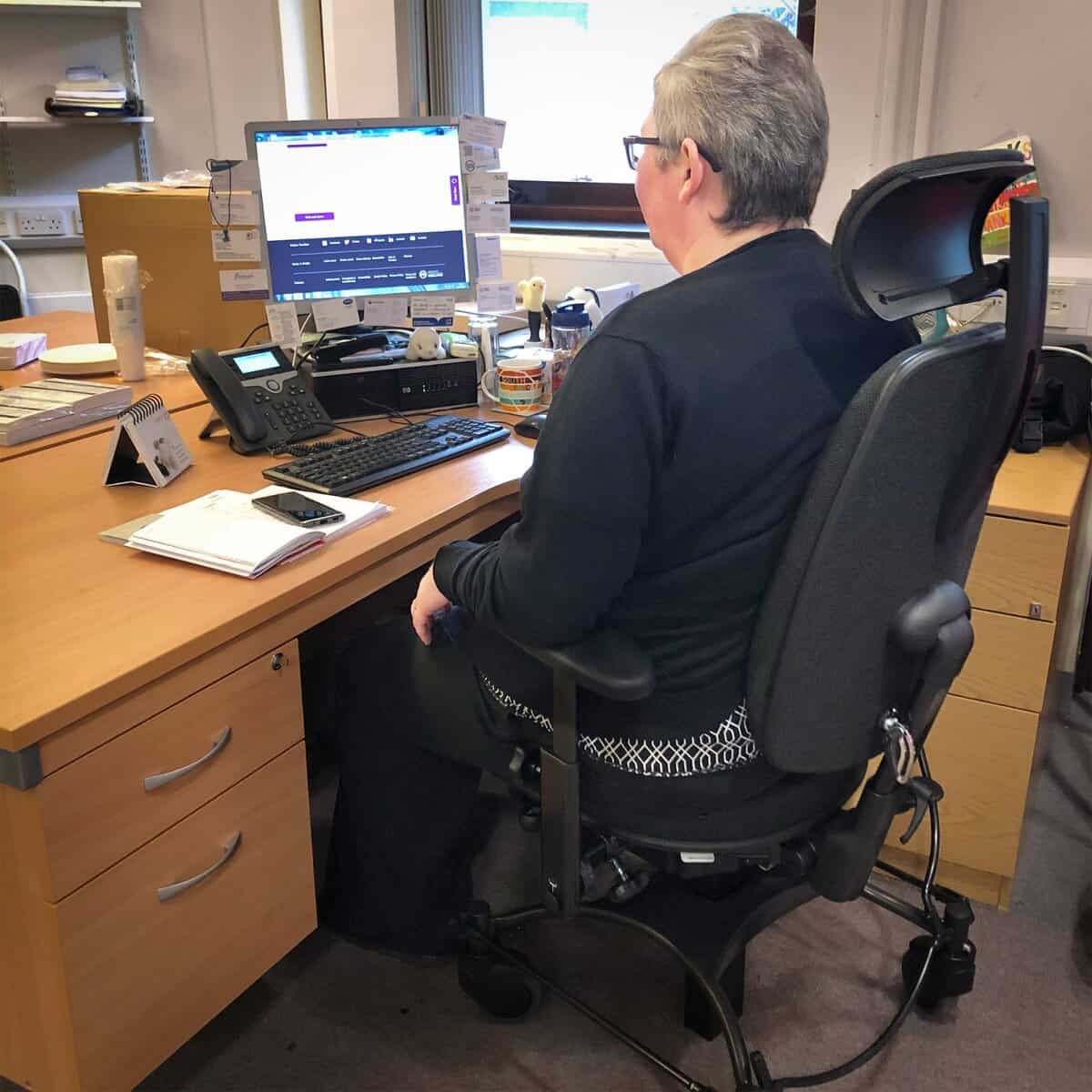
While nursing homes focus on comprehensive care, assisted living facilities often emphasize maintaining independence. In this context, equipment like the VELA Independence Chair offers a practical solution for challenges faced both by residents and caregiving staff. As a medically approved mobility chair designed for home use, the VELA Chair enhances safety and supports freedom of movement. Key features include aiding daily activities such as cooking and dressing, thus reducing the reliance on nursing support. The chair helps minimize fall risks and eases pressure on informal caregivers by allowing easier access to essential tasks and movement, thereby fostering both dignity and self-reliance among residents. These solutions exemplify broader trends in assistive technology adoption transforming care environments.[7],[4]
Supporting Aging in Place: A Practical Option
Staying independent longer at home is an achievable goal with solutions like the VELA Independence Chair. This chair addresses common aging challenges, such as ensuring safety with a central brake, enabling easy transfers with electric height adjustments, and enhancing movement while seated—critical for daily tasks like cooking and cleaning. With its design promoting dignity and freedom, the VELA Chair helps conserve energy and allows older adults to lead fulfilling lives in familiar surroundings. Though not the only option, it is a proven and practical choice. Its thoughtful design can delay the transition to more intensive care settings, ensuring seniors maintain their quality of life. Mobility Aids for Seniors can further explore how innovative solutions support independence and reduce the caregiver burden. Recent updates to World Health Organization guidelines now recognize these digital and cognitive assistive devices as crucial in enabling care and autonomy for older adults across residential and home environments.[9]
This learning empowers families to make informed decisions that balance autonomy with the necessary care, maximizing the quality of life for seniors as they age.