

Updated January 2026: We have updated the article to reflect the latest developments in AI and IoT-enabled assistive technology, advanced ergonomic mobility aids, mainstream adoption of smart wearables and remote health monitoring, and growing acceptance of digital wellness and robotic support solutions to enhance independence, safety, and caregiver relief for seniors aging in place.
Empowering Seniors Through Thoughtful Care and Advanced Mobility Solutions
Navigating the world of assisted living can be overwhelming, especially when considering the best possible environment for seniors. Home Again Assisted Living sets itself apart by offering comprehensive care in a nurturing community designed to support individuals aged 75 and older, including those with diverse health conditions like dementia and mobility issues. According to Medicare.gov, assisted living facilities typically operate on a private-pay basis, but Medicaid Home and Community-Based Services (HCBS) waivers provide long-term support for eligible individuals.
What Sets Home Again Assisted Living Apart?
Home Again Assisted Living distinguishes itself by creating a home-like atmosphere with personalized care plans. Residents are encouraged to enjoy their independence while engaging in social interactions—a crucial aspect emphasized in a National Institutes of Health study, indicating that residents who maintain social connections and access to community spaces report higher satisfaction and quality of life. This research highlights the importance of individualized care and autonomy in daily choices.
Residents at Home Again Assisted Living thrive in environments that respect and adapt to their needs and preferences. A typical day may include activities in communal spaces, fostering mental health and social connections. By allowing residents to select activities and participate voluntarily, Home Again fosters an inclusive atmosphere that respects autonomy.
Care Services and Daily Life at Home Again
Home Again Assisted Living offers a wide array of services, ranging from medical care and daily assistance to social programming. On-site registered nurses and specialized memory care programs, such as the Thrive program, are integral to their care offerings. Thrive is specifically designed to assist residents with cognitive challenges, providing targeted support that enriches their lives.
Sarah’s story exemplifies this program’s success. Benefiting from Thrive, she has shown improved cognitive engagement through curated activities, positively impacting her overall well-being. Her experience, shared by Home Again Waunakee Assisted Living, underscores the facility’s dedication to personalized, effective care.
Amenities, Security, and Social Opportunities
Amenities play a pivotal role in enhancing residents’ quality of life at Home Again Assisted Living. With chef-prepared meals, wellness centers, and various social activities, residents enjoy an enriched lifestyle within secure facilities staffed by vigilant 24-hour teams, providing peace of mind and safety.
Residents often start their day with an invigorating class at the wellness center, followed by a nourishing communal lunch that also serves as a platform for social engagement. These daily routines build a sense of community and belonging, which are further reinforced by adherence to Wisconsin Assisted Living Regulations, ensuring comprehensive safety protocols are maintained.
Memory Care and Specialized Programs
Specialized memory care programs like Thrive offer tailored support for residents dealing with cognitive challenges such as dementia or Alzheimer’s disease. These programs are meticulously crafted to enhance cognitive function and provide emotional support through engaging activities.
Consider John, a resident with dementia, who participates regularly in memory care activities. These sessions are designed to engage his memory and encourage social interaction, with a demonstrated positive impact on his daily experiences. John’s journey, detailed by Home Again Columbus Assisted Living, illustrates the tangible benefits of customized memory care programs.
Transition to Advanced Mobility Solutions
Recent years have seen seniors express an overwhelming preference to age in place, with 94% favoring this option according to a June 2025 survey.1 Meeting this demand, the industry has experienced the rapid mainstreaming of AI-driven and IoT-integrated assistive technologies. Smart mobility aids such as AI-powered walkers and wheelchairs now offer adaptive navigation, fall detection, and real-time remote monitoring, allowing both seniors and caregivers to proactively manage safety and mobility.1589 Wearable and non-wearable sensors, connected through user-friendly platforms, act as digital wellness navigators that deliver proactive health insights and customized care planning, supporting holistic healthy aging at home.59
Ergonomic advancements include adjustable supports, lightweight foldable designs, vibration features that improve circulation, and options like massage seating or all-terrain wheel accessibility—all designed to maximize comfort, participation, and independence.234 Mainstream devices now include smart glasses with integrated navigation, GPS-equipped scooters, and robotic exoskeletons, further broadening possibilities for engagement and mobility. These tools often connect seamlessly to home systems, enabling voice control or biometric authentication for personalized wellness routines.135 The widespread adoption of such AI-powered solutions is supported by industry surveys indicating that 66% of older adults see technology as enriching their lives and enabling greater independence.89
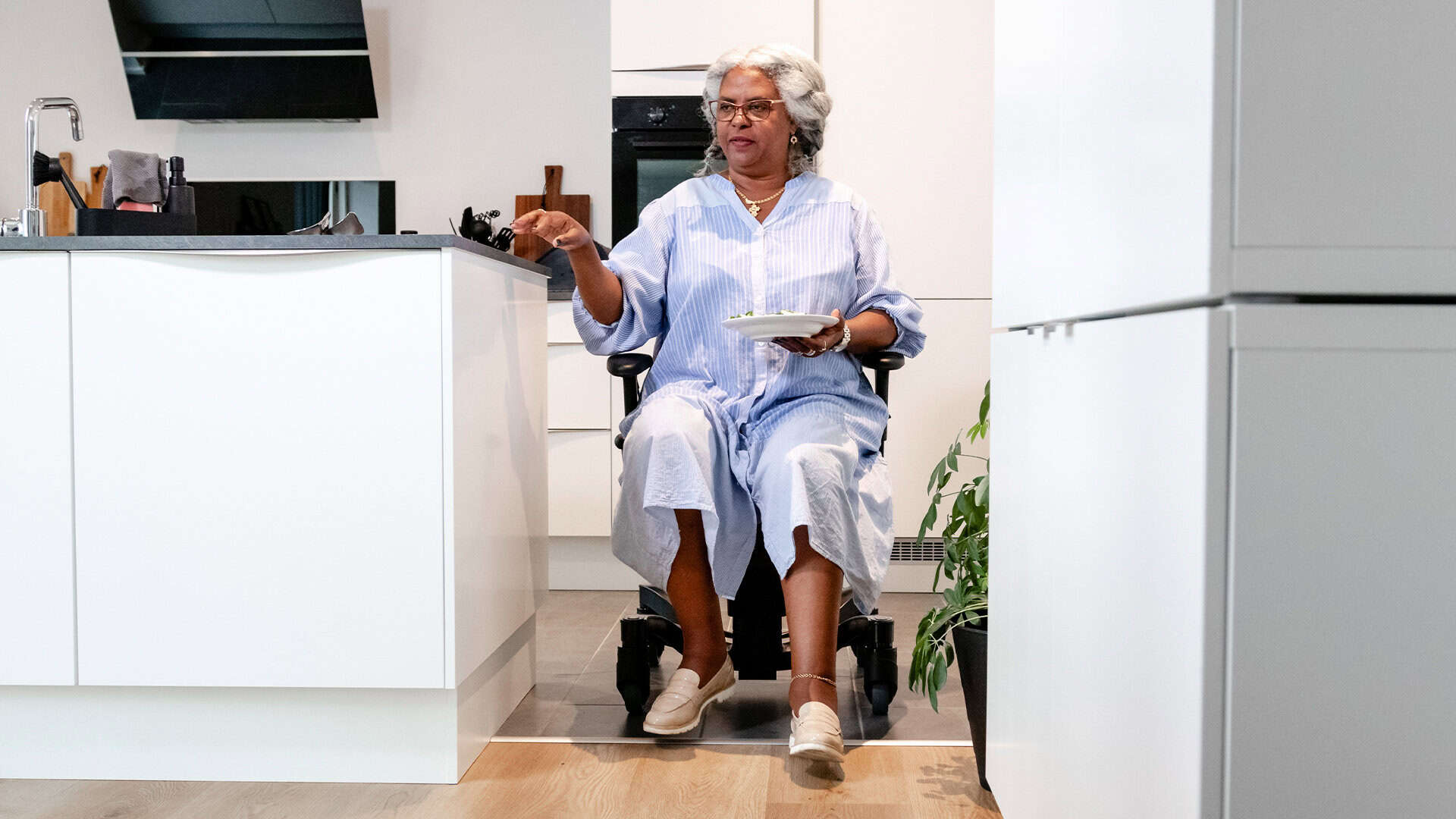
VELA is a medically approved mobility chair designed for home use, providing enhanced safety, freedom of movement while seated, and vital support for daily activities like cooking, dressing, or transferring. Innovations in ergonomic and inclusive design, intuitive touch or voice controls, and user-centric digital tools continue to reduce barriers to adoption for seniors and their caregivers.36 Recently, inclusive assistive solutions such as GPS trackers, reminder apps, communication devices like text-to-voice software, and hearing aids have gained widespread adoption for supporting cognitive function and day-to-day independence.5
Supporting Aging in Place: A Practical Option
With advanced mobility aids, smart home connectivity, and robust digital health ecosystems, aging at home remains more practical and appealing than ever. The VELA chair’s features, such as its central brake for safety and electric height adjustability, now complement broader innovations like adaptive AI navigation, predictive analytics for fall prevention, and seamless integration of remote monitoring wearables. These systems collectively address common challenges—such as balance, fatigue, transfer difficulty, and ongoing health oversight—offering independence and security for seniors.24589 Proactive digital caregiver tools and interoperability with telehealth services provide additional peace of mind, caregiver relief, and prompt intervention capabilities.
Adoption statistics underline this shift: current data show a significant rise in older adults actively engaging with such technologies for well-being, independence, and social participation, with the majority viewing AI and smart solutions as key enablers of healthy aging.89 Modern, connected mobility solutions—paired with integrated home systems and rising caregiver acceptance—support the vision of dignified, fulfilling aging in place. For more information, explore mobility chairs that support daily activities at home.
Sources
- U.S. News & World Report, June 2025: “94% of Seniors Want to Age in Place: Survey Reveals Tech’s Role” [link 1]
- MyCareConcierge.org, Feb 2025: “How Technology will Transform Senior Care in 2025” [link 2]
- WA Cares Fund, Jan 2025: “Leveraging technology to support aging in place” [link 3]
- ButterflyMX Blog, July 2025: “Senior Living Technology Trends 2025” [link 4]
- Next Market Research Report, May 2025: “Disabled and Elderly Assistive Device Market” [link 5]
- AgeInPlaceTech.com, Jan 2025: “Market Overview 2025 – Technology for Aging” [link 6]
- Envision, 2025: “What’s Next for 2025: The Future of Assistive Technology & AI Assistants” [link 7]
- AARP 2026 Tech Trends (via ageinplacetech.com summary): Highlights 66% older adult tech adoption for health/well-being, AI devices like Glasses for the Blind [link 8]
- AARP Tech Trends Series: Tracks rising device use for independence, health tools, AI awareness among 50+ [link 9]