

Updated January 2026: We have updated the article to include the latest advancements in assistive technology for seniors and assisted living facilities, such as AI integration in mobility aids, smart fall detection and prevention systems, virtual and robotic rehabilitation tools, and expanded telehealth connectivity. Emphasis is now placed on smart home integration, real-time health and safety monitoring, and innovations that support aging in place and proactive care.
Updated October 2025: We have updated the article with new trends in assistive technology, including the introduction of AI-powered wearable devices, integrated AI assistants for real-time support, expanded services like AI-based visual interpreting, and advances in user-centered design. References to immersive rehabilitation tools, multi-disability solutions, and broader integration of smart systems are now included to reflect the latest innovations in senior and assisted living environments.
Updated August 2025: We have updated the article with the latest advancements in assistive technology, including AI and IoT-integrated devices, wearable health monitoring and fall detection, user-centered ergonomic design, and technology-enabled solutions for aging in place. Insights from recent conferences and expert opinions are also included to reflect the newest trends in senior living and mobility support.
Discover the Charm of Hood River: Assisted Living in a Scenic Oasis
When seeking assisted living options, many individuals prioritize finding a setting that combines high-quality care with a pleasant environment. Hood River, Oregon, nestled in the majestic Columbia River Gorge, offers a unique blend of stunning scenery and a welcoming community, making it a compelling choice for seniors and their families. As part of Hood River County, the town is home to a population of approximately 8,200 people with a median age of 37.9 years. Notably, the median household income stands at $77,975, reflecting a relatively affluent community according to Oregon Demographics.
Exploring Assisted Living in Hood River: Facility Options and Features
Hood River features a range of assisted living facilities tailored to meet the diverse needs and preferences of seniors:
-
Hawks Ridge Assisted Living provides an inviting environment along the breathtaking Cascade Mountains and Columbia River. Positioned conveniently at the intersection of Pacific Avenue and 8th Street, this facility emphasizes supporting residents’ independence while encouraging community engagement. A key feature is their diverse accommodation options, from 1-bedroom apartments to deluxe studios, designed to provide both independence and social opportunities (Compass Senior Living).
-
Providence Brookside Manor is distinguished by its comprehensive care levels, including specialized memory care. Located a short distance from the Providence Hood River Memorial Hospital, it provides peace of mind to families. Offering seven tailored levels of care, residents receive personalized services ensuring they are well-cared for as their needs evolve (Providence Brookside Manor).
-
Parkhurst Place, operated by Trustwell Living, combines modern amenities with a homely atmosphere. Residents engage in scheduled activities such as exercise classes or card games, fostering a sense of community and belonging. Highlights include recent apartment renovations and full-service dining experiences available within the facility (Trustwell Living).
These facilities collectively offer a compelling mix of healthcare and social activities, set against the scenic backdrop of Hood River’s natural beauty.
Understanding the Diverse Care Levels in Hood River Facilities
Hood River’s assisted living facilities offer a diversity of care levels ensuring that residents receive the precise attention they require. Providence Brookside Manor exemplifies this approach with its seven-tiered care system. This model is especially beneficial for seniors needing varying degrees of assistance or specialized memory care services. According to Providence Brookside Manor’s website, proximity to essential services enhances both convenience and security for families.
Enhancing Senior Living: Amenities and Community Engagement
Facilities like Parkhurst Place prioritize community engagement as a cornerstone of improving residents’ quality of life. Amenities are robust, featuring activity calendars, inviting dining options, and social activities that encourage interaction among residents. One resident expressed the transformative power of these amenities, noting the joy derived from daily social interactions, underscoring the importance of community in assisted living environments.
Empowering Independence: Mobility Solutions in Assisted Living
The transition to assisted living often brings challenges related to maintaining independence, especially for seniors who wish to stay in their own homes. One effective way to address these challenges is through the use of advanced mobility solutions and assistive technology. Recent advancements in the field feature AI-powered and IoT-integrated mobility aids, wearable sensors for real-time health monitoring, and adaptive devices that offer personalized support. Smart mobility devices now use artificial intelligence and advanced sensors to monitor terrain, detect obstacles, and analyze stability, greatly reducing fall risks and enhancing user confidence in daily activities. Powered wheelchairs equipped with AI can automatically adjust speed and braking according to movement and environment, while voice-activated controls and smartphone connectivity allow for greater ease of use and remote caregiver involvement (Market.us).
Recent trends include smart bathroom safety features such as grab bars with pressure sensors, anti-slip flooring with embedded lighting, and adjustable shower seating that communicates with caregivers via mobile apps, offering direct support and proactive fall prevention (Market.us).
In addition, virtual and robotic rehabilitation is becoming more prevalent in assisted living. Technologies such as anti-gravity treadmills enable low-impact exercise by reducing body weight during rehabilitation, making daily movement therapy more accessible and comfortable for seniors. Virtual reality systems use AI to personalize therapy exercises, recording physiological responses and tracking progress over time (First Aid for the Blind 2025; CSUN 2025).
Wearable devices with fall detection and real-time health alert systems help ensure resident safety and enable prompt interventions. Voice-activated controls, AI assistants, and visual interpreting services, such as Aira, connect users to trained professionals for navigation and immediate support in both facilities and public spaces. This strengthens seniors’ involvement in daily life and engagement with the broader community (CSUN 2025).
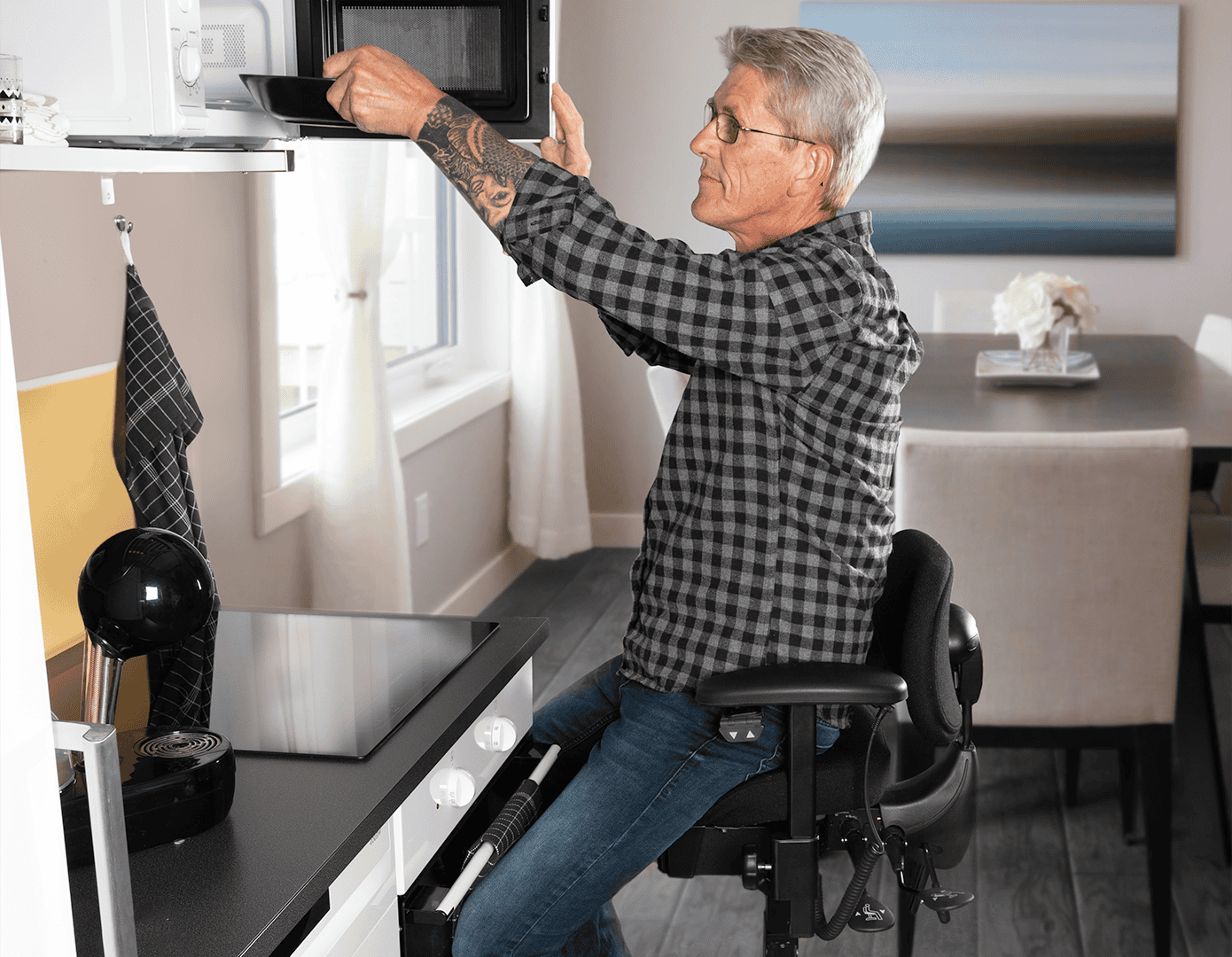
Chairs such as the VELA Independence Chair remain important, with medically approved designs that enhance safety and freedom of movement while seated. The integration of smart features, such as sensor-driven health monitoring, ergonomic, user-centered design, and real-time adaptability, further supports daily activities like cooking, dressing, or transferring with minimal strain on caregivers. Advances in telehealth integration allow professionals to remotely monitor equipment usage and resident health, providing earlier interventions and reducing hospitalizations (Cognitive Market Research; Envision).
Furthermore, a broader range of assistive tools designed for multiple disabilities—including Text-to-Speech systems, sip-and-puff devices for motor impairments, and FM listening systems for those with hearing challenges—are now part of many modern assistive environments, increasing inclusivity and accessibility (Asian College of Teachers 2025).
Supporting Aging in Place: A Practical Option
For many seniors, staying independent longer in their own homes is both an aspiration and a practical choice. VELA Chairs offer an innovative solution to this desire by addressing common challenges faced at home. Recent innovations emphasize integrated health monitoring, medication management, and adaptive living environments using smart technologies. Smart home integration and compatibility with the Internet of Things (IoT) ecosystem are becoming increasingly important for seamless device operation and proactive care (Envision).
Features such as a central brake system enhance safety, preventing falls and providing stability during activities. Electric height adjustment and sensor-based support assist with effortless transfers and reaching, while advanced ergonomic designs, developed with direct user input, prioritize comfort for long periods of sitting. Virtual and augmented reality tools support rehabilitation and orientation, providing immersive experiences that improve mobility and life skills (JVIB 2025 Special Issue; Market.us; CES 2026).
User-centered design, involving individuals with disabilities directly in product development, is now recognized as vital to producing devices that are highly usable, comfortable, and widely accepted (JVIB 2025 Special Issue).
With these updated assistive devices and technologies, seniors experience greater freedom, dignity, and energy conservation, making daily tasks like cooking and cleaning more manageable. Regulatory adaptations since the COVID-19 pandemic have sped up device access for improved home care. Proactive health monitoring and integration of devices that allow remote monitoring by caregivers and healthcare providers give peace of mind to families. The assistive technology market continues to grow significantly, reflecting both the adoption of these solutions and high interest among seniors (Helen Keller National Center; Market.us).
Industry events such as CES 2026 and ATIA conferences continue to drive innovation and adoption by advocating for advanced, integrated assistive technology systems, highlighting clinical integration and the delivery of high-quality services (CES 2026; ATIA).
While VELA is not the only high-quality option available, its effectiveness in prolonging independent living, alongside the integration of smart assistive technology and the drive toward seamless systems that connect multiple functions within unified platforms, continues to present meaningful alternatives to traditional nursing homes.