

Updated February 2026: We have updated the article to reflect Washington’s major legislative changes from Senate Bill 5337, including mandatory certification for dementia care, 24/7 staffing, staff training, and public reporting requirements for assisted living facilities effective July 2026. The article also addresses enhanced oversight, expanded staff education rules following 2025’s national regulatory review, and the integration of innovative assistive technologies such as smart and all-terrain wheelchairs, robotic transfers, and advanced mobility aids in assisted living environments.
Washington Assisted Living Regulations: Ensuring Safety and Well-being
As Washington State’s population ages, ensuring the safety, health, and well-being of residents in assisted living facilities is increasingly critical. Projections indicate that adults aged 60 and over will account for over 23% of the state’s population by 2025 and 29% by 2050. Particularly, the population of adults aged 85 and older is expected to quadruple in the coming decades, emphasizing the need for stringent regulatory measures. According to Washington State Plan on Aging, these statistics underscore the importance of effective regulations.
Regulatory framework and oversight in Washington
In Washington, an assisted living facility is defined as a home accommodating seven or more residents. These facilities are regulated under Chapter 18.20 RCW, which mandates housing, basic services, and resident safety. The Washington State Department of Social and Health Services (DSHS) enforces these regulations, covering aspects such as care standards, building safety, sanitary conditions, and staff training. For detailed legal guidelines, see Chapter 18.20 RCW.
Washington has responded to nationwide trends by increasing infection control and quality measurement regulations in assisted living facilities, as noted in the 2024 NCAL Assisted Living State Regulatory Review and NCAL State Regulatory Resources. These measures enhance resident safety by establishing higher state-mandated standards in response to evolving health care needs.
Practical Example: After a facility implemented DSHS guidelines on staff training, it significantly reduced resident falls. This proactive regulatory approach prioritizes resident safety, demonstrating the impact of thorough training protocols on maintaining high safety standards.
Recent developments in memory care certification
Major changes in Washington were introduced by Senate Bill 5337, passed in 2025. Effective July 1, 2026, all assisted living facilities offering dementia care must obtain dementia care certification. This law requires:
- 24/7 staffing in dementia care units
- At least six hours of annual staff education focused on dementia care
- Regular DSHS inspections for compliance
- Facilities to be publicly listed in a state registry for transparency and safety
Facilities failing to comply may be subject to stop placement orders or removal from the public list. These new standards aim to provide safer and higher-quality care for Washington’s assisted living residents with Alzheimer’s disease and related dementias. For more information, see Washington Senate Bill 5337, OpenStates – SB 5337, and WHCA Regulatory Guidance.
Practical Example: A facility enhanced its dementia care services by obtaining proper certification. This transformation underscored the practical effect of the regulations, ensuring that dementia patients received specialized care that aligns with their unique needs.
Workforce stability and retention initiatives
Reflecting national trends, 18 states (20% of the US) updated their assisted living regulations in 2025, focusing on staff training, administrator education, and scheduling. In Washington, updates continue to prioritize workforce stability. Efforts include:
- Streamlining certification and background checks for staff
- Increasing licensing fees to support enhanced oversight
- Providing partial reimbursement for Medicaid-covered residents to offset costs
- Expanding staff and administrator training requirements, in line with national movement toward improved direct care staff education
- Offering retention and supervisory resources, such as the CareLearnWA Retention Toolkit
These initiatives are now bolstered by national findings reported in the NCAL 2025 Regulatory Review and ongoing advocacy for adequate Medicaid rates and workforce supports. For additional legislative updates, see Washington Health Care Association 2025 Legislative Session Overview and Adult Family Home Council – Advocacy Update May 2025.
Encouraging facility conversion and special provisions
Regulations encourage nursing homes to convert into facilities offering enhanced residential care by allowing modifications to certain building standards, easing the transition to an assisted living model. This is explained in detail by ASPE guidelines.
Practical Example: By adapting portions of its facility, a nursing home installed new safety systems and complied with modified requirements, demonstrating the tangible benefits of regulatory flexibility.
Financial considerations for assisted living in Washington
Navigating the financial landscape can be challenging. State assistance programs, along with long-term care insurance, play key roles. However, awareness of Medicare and Medicaid limitations in covering all assisted living costs is crucial. Medicaid Long Term Care (Apple Health) updated its eligibility and income limits for Home and Community Based Services (HCBS) waivers for 2025, directly impacting access for residents seeking assisted living services. Licensing fees for facilities have increased, though there is partial reimbursement for residents covered by Medicaid, helping maintain accessibility for those most in need. For current eligibility requirements, see Washington Medicaid Long Term Care Eligibility. A family recently explored these financial options and highlighted the importance of thorough research and planning to ensure affordable care. For additional insights, see AHCA NCAL Report and Adult Family Home Council – Advocacy Update May 2025.
By understanding these comprehensive insights into Washington’s assisted living regulations, individuals and families can make informed decisions, prioritizing quality care and safety. As the elderly population continues to grow, these regulations are vital to ensuring that assisted living facilities provide the highest level of care and support needed for maintaining a dignified and independent lifestyle for residents.
Technology and assistive device integration
Recent developments nationally in 2025 and 2026 have emphasized integration of innovative assistive technologies in assisted living and rehabilitation settings. Across the United States, facilities are increasingly adopting smart mobility aids, such as:
- Smart wheelchairs equipped with LUCI pressure-monitoring and collision-avoidance sensors
- Autonomous navigation solutions including Robooter X40 and AI-powered all-terrain chairs like XSTO X12
- Advanced wheelchair attachments (e.g., WheelMove) for better maneuverability
- Transfer robots (such as ReviMo Niko) that support safe, independent repositioning for people with limited mobility
These advances reflect recent demonstrations at CES 2026 and support improved safety, mobility, and independence for residents. In addition to national trends in staff and care requirements, updated reviews highlight the importance of assistive technology adoption to align with changing resident needs and expectations [3].
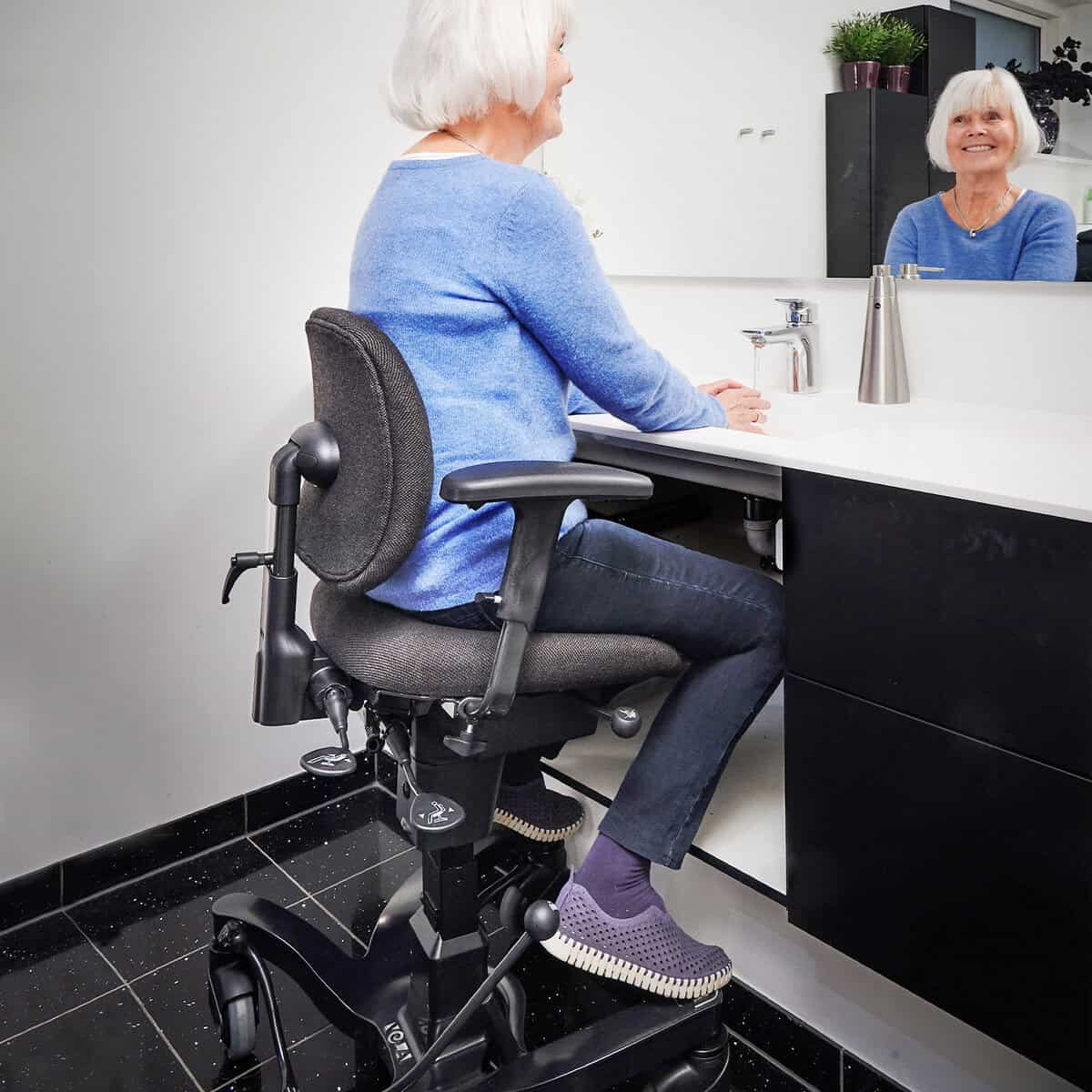
In light of these challenges, exploring innovative solutions is essential for supporting older adults who prefer to maintain independence at home. The VELA Independence Chair, a medically approved mobility aid, exemplifies such innovation. Designed for home use, this chair enhances safety and freedom of movement throughout daily activities like cooking, dressing, or transferring, alleviating the load on informal caregivers. Its thoughtful design supports aging in place, providing the much-needed assistance for those aiming to stay out of nursing homes longer.