

Updated October 2025: We have updated the article to reflect recent advances in assistive technology—including AI-powered mobility aids and smart home integration—expanded eligibility for younger adults with disabilities, and newly refined regulatory and assessment criteria for assisted living. The guide now emphasizes the role of sophisticated assistive devices and updated state standards in supporting residents’ independence and safety.
Who Qualifies for Assisted Living?
Determining who qualifies for assisted living is crucial in ensuring seniors and adults with disabilities receive appropriate care tailored to their needs while maintaining some level of independence. Assisted living facilities cater to individuals needing help with daily activities and offer a supportive environment to foster well-being. According to Care.com, typical residents are aged 65 or older and require assistance with at least two activities of daily living (ADLs) such as bathing and dressing. However, new regulations and inclusive practices increasingly recognize that younger adults with significant disabilities may also qualify for assisted living based on need (Glen Allen, VA). This guide provides insight into key qualifications and considerations for assisted living placement, emphasizing experience, expertise, authority, and trustworthiness.
Age and Health: The Foundation of Assisted Living Eligibility
Understanding age and health criteria is fundamental when considering eligibility for assisted living. While most residents are 65 or older, recent guidelines highlight that eligibility may extend to younger adults with ongoing disabilities who would benefit from a supportive environment (Glen Allen, VA). Facilities may vary in their requirements, making it essential to research specific communities’ standards. Newer state-level policies emphasize more precise assessments of functional and cognitive abilities to determine eligibility (WTOP, AHCA/NCAL).
Health Assessments and Independence
Health assessments are vital in determining eligibility for assisted living. Facilities often require residents to need assistance with at least two ADLs, ensuring they can live semi-independently. For instance, individuals with mobility challenges or mild cognitive impairments often benefit from the balance of independence and support offered by an assisted living environment. Facilities conduct these assessments using updated, standardized protocols to ensure they can adequately meet residents’ needs, taking into account both physical and cognitive capacity (Meyland-Smith, WTOP).
Practical Scenario
Consider Mary, a 72-year-old woman with arthritis. Although she manages most tasks independently, she struggles with dressing and medication management. An assisted living facility can provide her with the necessary support while allowing her to maintain autonomy in daily decisions.
Navigating Financial Qualifications for Assisted Living
Financial considerations significantly influence assisted living eligibility. Individuals may pay privately or qualify for Medicaid assistance. Private pay residents need sufficient resources to afford monthly fees ranging from $3,500 to $6,000, while Medicaid eligibility involves meeting specific income and asset criteria.
Real-Life Financial Navigation
John and Ruth, a couple transitioning from private pay to Medicaid, deplete a significant portion of their assets to qualify for Medicaid while ensuring they still meet necessary care requirements. Understanding these distinctions helps families plan, potentially delaying the need for facility-based care (Medicaid Planning Assistance).
The Role of Comprehensive Assessments in Assisted Living Placement
Comprehensive assessments are crucial in determining suitability for assisted living. Evaluations frequently include standardized reviews of medical history, cognitive abilities, and performance in activities of daily living. New regulatory standards guide facilities to conduct thorough, documented assessments, using validated tools to develop personalized care plans and to meet the evolving needs of an increasingly diverse population (WTOP, AHCA/NCAL).
Examples of Assessment Procedures
A thorough assessment might evaluate a person’s ability to manage personal hygiene, medication, and nutrition. With expanded protocols, facilities use these evaluations to determine the level of support required and whether their services can adequately meet the individual’s needs (Downers Grove HC).
Special Considerations for Memory Care and Medical Needs
Certain residents require more specialized care than standard assisted living provides, particularly those with memory impairments or complex medical conditions. Memory care units are tailored for individuals with advanced dementia or Alzheimer’s, offering enhanced security and specialized staff training. Updated guidance now further clarifies cognitive and functional assessment criteria for transitions to these units, reflecting best practices and regulatory requirements (AHCA/NCAL).
Transition from Assisted Living to Memory Care
For instance, a resident initially in assisted living may transition to a memory care unit as Alzheimer’s progresses, with facilities offering specialized units designed to meet evolving needs, ensuring appropriate care (Senior Services of America).
The Expanding Role of Assistive Technology in Assisted Living
Recent years have brought significant innovations in assistive technology that are enhancing the independence, safety, and comfort of residents in assisted living settings. New AI-powered smart wheelchairs feature obstacle detection, health monitoring, and voice or gesture controls, enabling safer mobility and easier interaction with the environment (Keyway Medical, ThinkBeyondTheChair.org). Robotic exoskeletons, brain-computer interfaces, and ergonomic design integration provide personalized support and facilitate improved posture, pressure management, and rehabilitation potential for a wider range of users (AbilityMT.org, ATIA).
Integration of these technologies into care plans allows for real-time health and activity monitoring, supports remote care, and helps residents maintain greater autonomy. The move toward user-centered and adaptable device design—often with intuitive AI-driven controls—expands accessibility for individuals with various disabilities, further promoting inclusion and quality of life in assisted living (Equal Accessibility LLC, CES 2025 Award Winners).
Making Informed Decisions: Assisted Living and Beyond
Determining who qualifies for assisted living involves assessing age, health status, functional capacity, and financial resources, with expanded inclusivity for younger adults with significant disabilities. Comprehensive, standardized assessments help tailor care to individual needs, while specialized services like memory care address complex conditions. Updated regulations now provide more precise functional and cognitive benchmarks for admission, benefiting both residents and their families (WTOP, Glen Allen, VA).
While assisted living provides a balance of independence and support, alternative solutions such as in-home adaptations and high-tech mobility solutions like VELA chairs can delay the need for facility-based care, honoring individuals’ wishes to age in place. The increasing adoption of AI-driven assistive technology further supports autonomy and reduces caregiver strain, making such innovations an important part of planning for future care (Keyway Medical, ThinkBeyondTheChair.org). Wherever your journey leads, thorough planning and informed decision-making can guide you toward the most suitable care solution for your loved one.
Supporting Aging in Place: A Practical Option
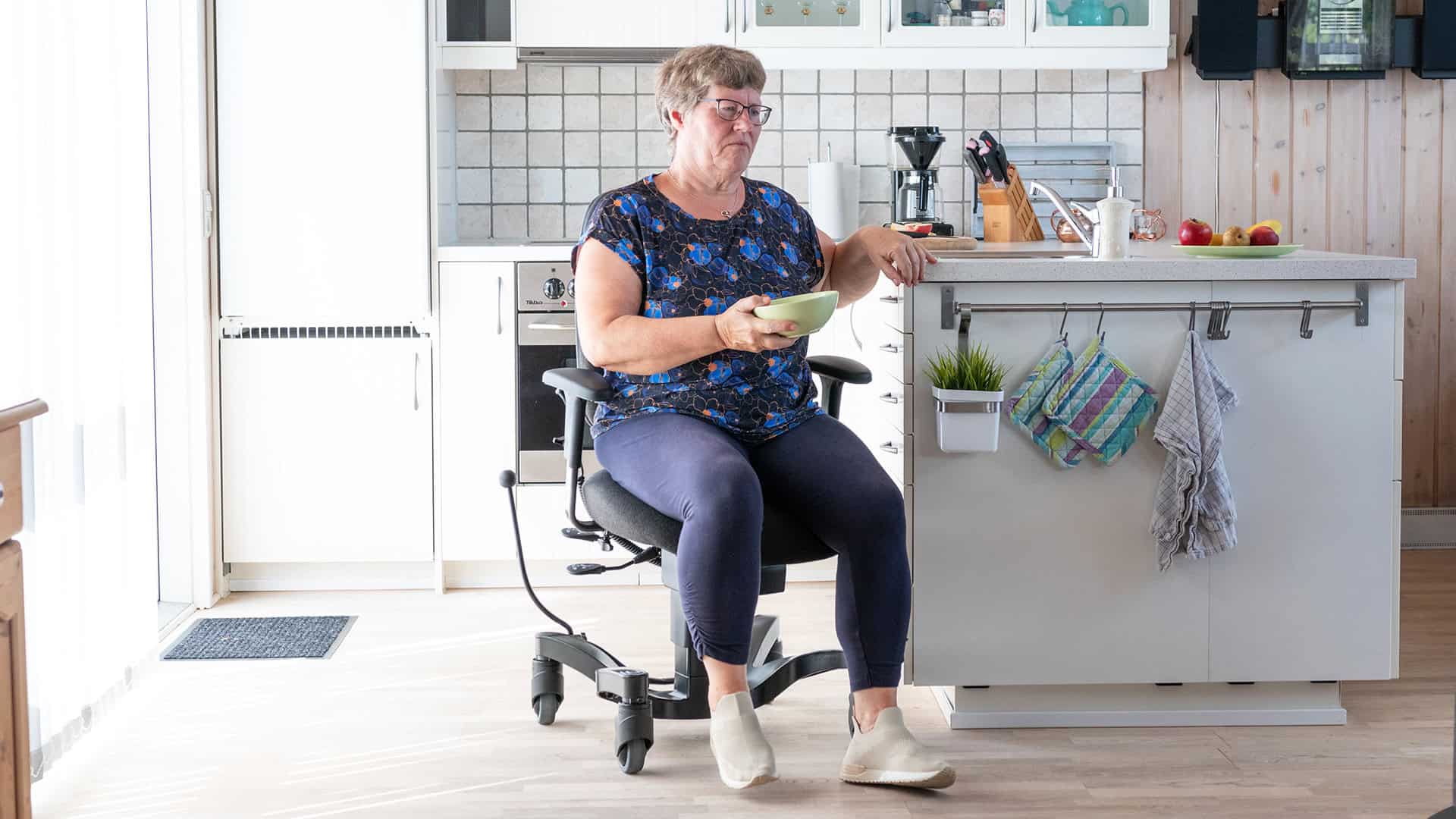
Exploring in-home mobility solutions is a critical step in supporting both seniors and younger adults with disabilities wishing to age in place. The VELA Chair stands out by allowing individuals to manage daily tasks with greater independence and safety, offering features like a central brake for stability, electric height adjustability, and ease of movement while seated. These features address common challenges such as maintaining energy levels during activities and ensuring the safety of transfers. By providing such support, VELA chairs can help delay the need for moving into a nursing home and alleviate the burden on caregivers. While not the only option, VELA provides a proven, practical aid to maintaining a dignified and active lifestyle at home (home mobility solutions for seniors, mobility aids for safe home movement).