

Updated September 2025: We have updated the article to include the latest advances in AI-powered assistive technologies, smart wheelchair enhancements, user-technology integration, and robotics, reflecting new research on personalized solutions, rehabilitation devices, and market trends in senior home care.
Access Senior Home Care: Comprehensive Analysis and Insights
As the global population ages, the way we care for our elderly is evolving rapidly, with an increasing preference for aging in place. This article provides a comprehensive analysis of senior home care, offering insights to empower families and caregivers navigating this complex landscape effectively.
Rising Preference for Aging in Place: Demand and Dynamics
The desire to remain at home as individuals age is strong and well-documented. According to Ultimate Care NY, approximately 15 million Americans currently utilize in-home care services. A staggering 90% of adults over 65 express a preference for aging at home rather than moving to an institutional setting. This preference is exemplified by real-life scenarios, such as Mrs. Thompson, a senior managing chronic arthritis with the support of a home healthcare aide, who assists her with mobility exercises and medication management, enhancing her quality of life within her own home.
Overcoming Barriers: Access and Availability in Senior Home Care
Despite increasing demand, access to senior home care is fraught with obstacles. Facility closures, staffing shortages, and proposed Medicare payment cuts constrain the availability of these services. According to Partnership for Quality Home Healthcare, many families face long waits for services, as illustrated by the Johnsons, who spent months on waitlists before securing a caregiver for Mr. Johnson, a veteran requiring post-operative care. This example underscores the critical role of underfunded government assistance programs, which provide necessary support but often fail to meet demand.
Harnessing Technology: Innovations in Home Care Solutions
Technological advancements offer promising solutions amidst these challenges. Telehealth and remote monitoring technologies are making inroads in senior home care, offering seniors effective health management while maintaining independence. A case study from Market.us highlights Ms. Garcia, who successfully utilizes remote health monitoring to manage her diabetes, significantly reducing hospital visits and healthcare costs. Such innovations not only enhance patient care but provide peace of mind to families and caregivers, ensuring that seniors like Ms. Garcia can live fulfilling lives in their own homes.
Recent advances go well beyond remote monitoring. AI-powered smart glasses such as VisionX now offer real-time object and facial recognition, text-to-speech capabilities, and navigation assistance for visually impaired seniors, supporting significantly greater independence. Brain-computer interface prosthetics represent a breakthrough in assistive mobility, enabling thought-controlled limb movement for a more natural and intuitive user experience.
ThinkBeyondTheChair.org
User-technology integration continues to improve, especially in powered wheelchairs, prosthetic devices, and exoskeletons. Modern systems emphasize mechanical and physical ergonomics, as well as shared control technologies, to foster intuitive control and responsive mobility.
PubMed (PMC)
EqualAccessibility.co
For mobility-aid users, upgrades such as smart wheelchair modules now provide autonomous navigation, obstacle detection, pressure monitoring, and app-based controls. Retrofit solutions like LUCI systems or advanced chairs such as Robooter X40 allow for increased comfort, safety, and autonomy—often without needing to replace current equipment.
AbilityMT.org
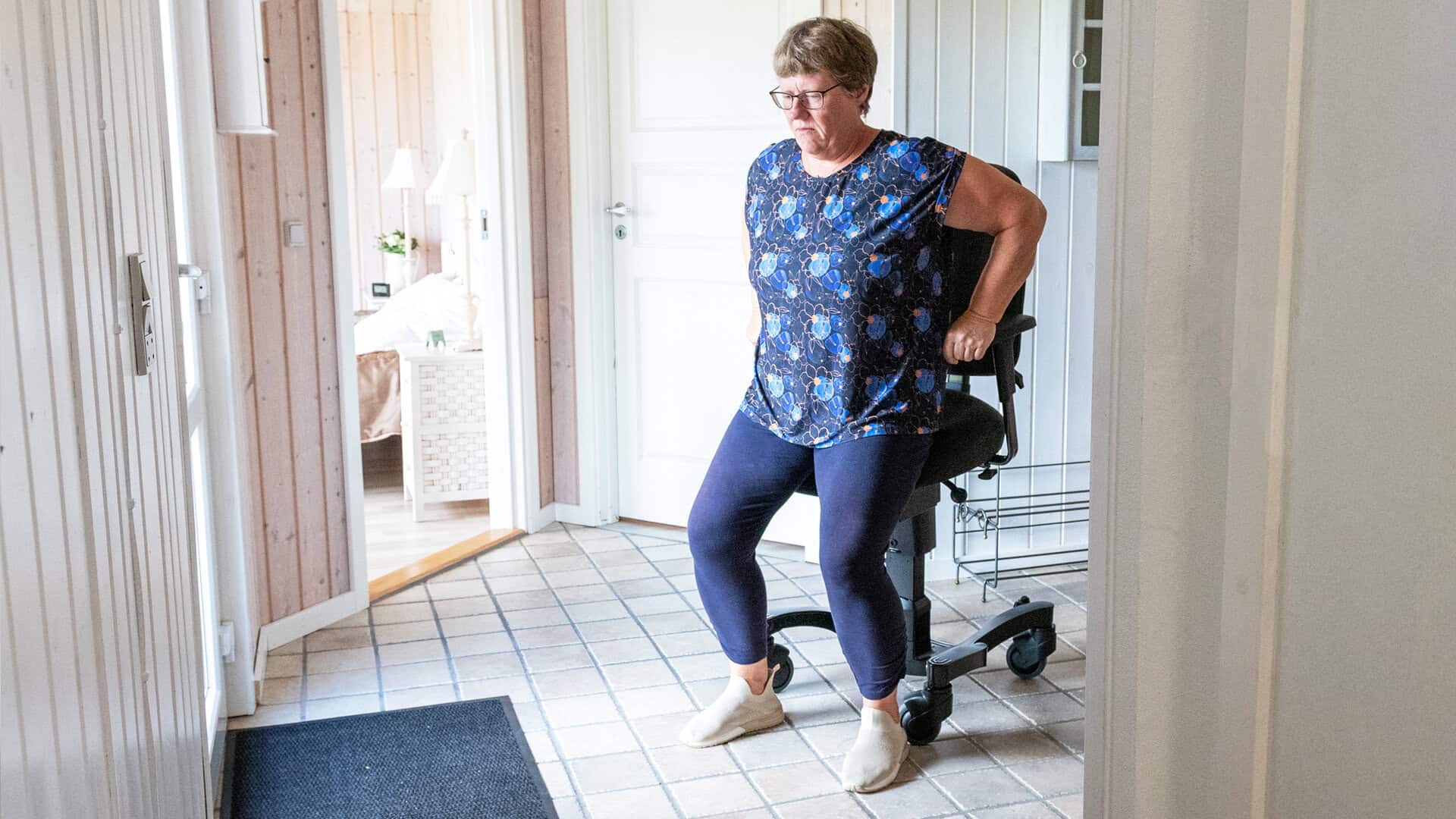
Moving beyond medical functions, innovative mobility solutions like the VELA Independence Chair remain essential in promoting dignified and independent aging. The VELA chair is a medically approved mobility chair designed for use at home, providing enhanced safety, freedom of movement while seated, and support for daily activities like cooking, dressing, or transferring. It significantly eases the burden on informal caregivers by enabling seniors to manage more tasks independently.
AI-driven technology is now utilized for personalized assistive solutions, including communication aids and socially assistive robots. These emerging technologies are especially valuable for individuals with intellectual and developmental disabilities.
H2HHC.com
Rehabilitation practices have also advanced, highlighted by robotic self-feeding devices—such as the Obi robot—that help individuals with upper extremity loss regain daily autonomy. Additionally, new wearable obstacle detection eyewear has been developed for those with severe vision impairments, enhancing safe mobility at home.
ATIA.org
Strategizing for Sustainable Senior Home Care Access
A coordinated effort among families, healthcare providers, and policymakers is crucial in ensuring broad access to senior home care. Strategic planning, comprehensive policy reforms, and the integration of technology are vital to bridge the gaps left by traditional care models. According to Senior Living, understanding current trends and proposed policy changes is essential for advancing a future where every senior can access the care they need.
The assistive technology market is growing rapidly, with an estimated USD 6.3 billion increase expected from 2025–2029. This growth is largely driven by rising orthopedic and neurological disorders, and the widespread adoption of AI-driven devices. However, significant challenges with affordability, awareness, and adoption continue, reinforcing the necessity for user-centered design and strong regulatory support.
PRNewswire
Staying Independent at Home with Support
Reducing reliance on institutional care starts with solutions like the VELA Independence Chair, which empower seniors to stay at home longer. This chair’s features, such as a central brake for enhanced safety and electric height adjustability, directly address issues like fall prevention and ease of movement while seated. By facilitating daily activities—from cooking and cleaning to leisurely pursuits—VELA supports both independence and dignity. While not the sole option available, it presents a viable alternative amid the challenges of senior home care, illustrating how smart design and the latest technology—such as AI-enhanced and robotic devices—reduce caregiver burden and improve quality of life. With the right tools, aging in place can remain a reality, fostering both freedom and security.