

Updated September 2025: We have updated the article to include the latest advancements in AI-powered assistive devices, brain-controlled prosthetics, robotic self-feeding aids, and smart wheelchair technologies. The update also highlights new trends in inclusive design, market growth, and practical guidance for integrating these innovations to enhance senior independence and wellness.
Tailored Care Solutions for Seniors in Central Texas
With a growing aging population, the demand for specialized geriatric care has become critical. Among healthcare providers, ARC Senior Care stands out by addressing the multifaceted needs of older adults aged 55 and above with chronic health conditions. According to the Austin Regional Clinic, ARC exemplifies excellence in elderly care by offering comprehensive, individualized services that significantly improve the quality of life for seniors in Central Texas.
Understanding ARC Senior Care’s Comprehensive Approach
ARC Senior Care employs a dedicated team of healthcare professionals specializing in geriatric care, including physicians and nurse practitioners with expertise in family medicine and internal medicine. Led by specialists like Dr. Gowrishankar Gnanasekaran, who is renowned for his work in Internal Medicine and Geriatrics, the team operates under the “4Ms” framework of age-friendly health systems. This approach focuses on:
- What Matters: Understanding patient goals and preferences to deliver truly personalized care.
- Medication: Optimizing medication management to reduce risks and improve health outcomes.
- Mentation: Addressing cognitive and mental health to enhance emotional well-being.
- Mobility: Supporting physical function and movement to maintain independence (Austin Regional Clinic).
A compelling case study highlights how a personalized approach at ARC Senior Care transformed a patient’s management of diabetes and heart disease, leading to significant quality-of-life improvements. This scenario demonstrates ARC’s practical experience and the effectiveness of its methods, as patients frequently offer positive feedback regarding their care experiences.
Navigating Medicare Wellness Assessments at ARC
ARC Senior Care performs essential Medicare Wellness visits, crucial for early detection and prevention of health issues. These assessments are meticulously tailored to identify early disease signs, enabling timely interventions and better long-term outcomes. They encompass:
- Comprehensive screenings for cancer, heart disease, diabetes, and osteoporosis.
- Vaccination reviews and updates.
- Evaluations focusing on mental health and fall prevention (ARC Senior Care Pflugerville).
There have been instances where early detection during these visits prevented serious health complications, underscoring the preventive healthcare value offered by ARC.
Expanding Options: Long-Term Care Considerations for Seniors
Long-term care planning is integral to ARC Senior Care, helping families navigate options like home health care, adult day centers, Continuing Care Retirement Communities (CCRCs), and nursing homes. Each offers benefits tailored to different needs:
- Home Health Care: Provides personal care and therapeutic services, ensuring comfort at home while assisting with daily activities.
- Adult Day Centers: Offer structured environments with social activities and essential day services.
- CCRCs: Enable seniors to transition smoothly between varying care levels, typically offering comprehensive services.
- Nursing Homes: Deliver round-the-clock supervision and medical care for those requiring full-time assistance (Austin Regional Clinic).
Real-world transitions, like a family moving their loved one from home care to a CCRC, demonstrate ARC’s ability to ensure continuous support as health needs evolve.
Enhancing Independence with the Latest Assistive Technology
Recent advances in assistive technology offer seniors innovative solutions that complement traditional mobility aids. ARC Senior Care is guided by emerging evidence showing that devices such as AI-powered smart glasses provide real-time environment descriptions, reading support, and obstacle detection. These features significantly increase independence for individuals with visual impairments, empowering them to navigate daily life more confidently (ThinkBeyondTheChair.org; Assistive Technology Industry Association Journal).
For those with severe mobility limitations, wearable robotic exoskeletons and brain-computer interface (BCI) controlled prosthetics have become more intuitive and user-friendly. These innovations offer new levels of autonomy for seniors with upper extremity disabilities or significant strength loss, addressing needs that traditional aids may not fully meet (ThinkBeyondTheChair.org; PubMed Central).
Robotic self-feeding devices, such as the Obi robot, stand out for helping those with limited arm function to eat independently, improving nutritional outcomes and dignity at mealtime (Assistive Technology Industry Association Journal).
Meanwhile, smart wheelchair technologies are now equipped with autonomous navigation via lidar sensors, app integration, and comfort-monitoring adaptive sensors. These features enhance user experience and safety, enabling seniors to access advanced functions without a full replacement of their current mobility device (Ability Montana).
Ergonomic and Inclusive Design for Better Daily Living
Inclusive design and improved ergonomics are at the forefront of current assistive technology trends, offering seniors customizable and adaptive device controls, intuitive voice recognition, and hands-free options. These enhancements allow users to optimize comfort and independence regardless of specific physical needs (Equal Accessibility LLC).
Alongside product development, there is a growing focus on providing proper user training, practitioner education, and funding support to address barriers such as learning complexity and cost. Foundations and insurance programs are gradually expanding access to these devices, helping more seniors benefit from the latest technology (Ability Montana).
Enhancing Independence with VELA Mobility Solutions
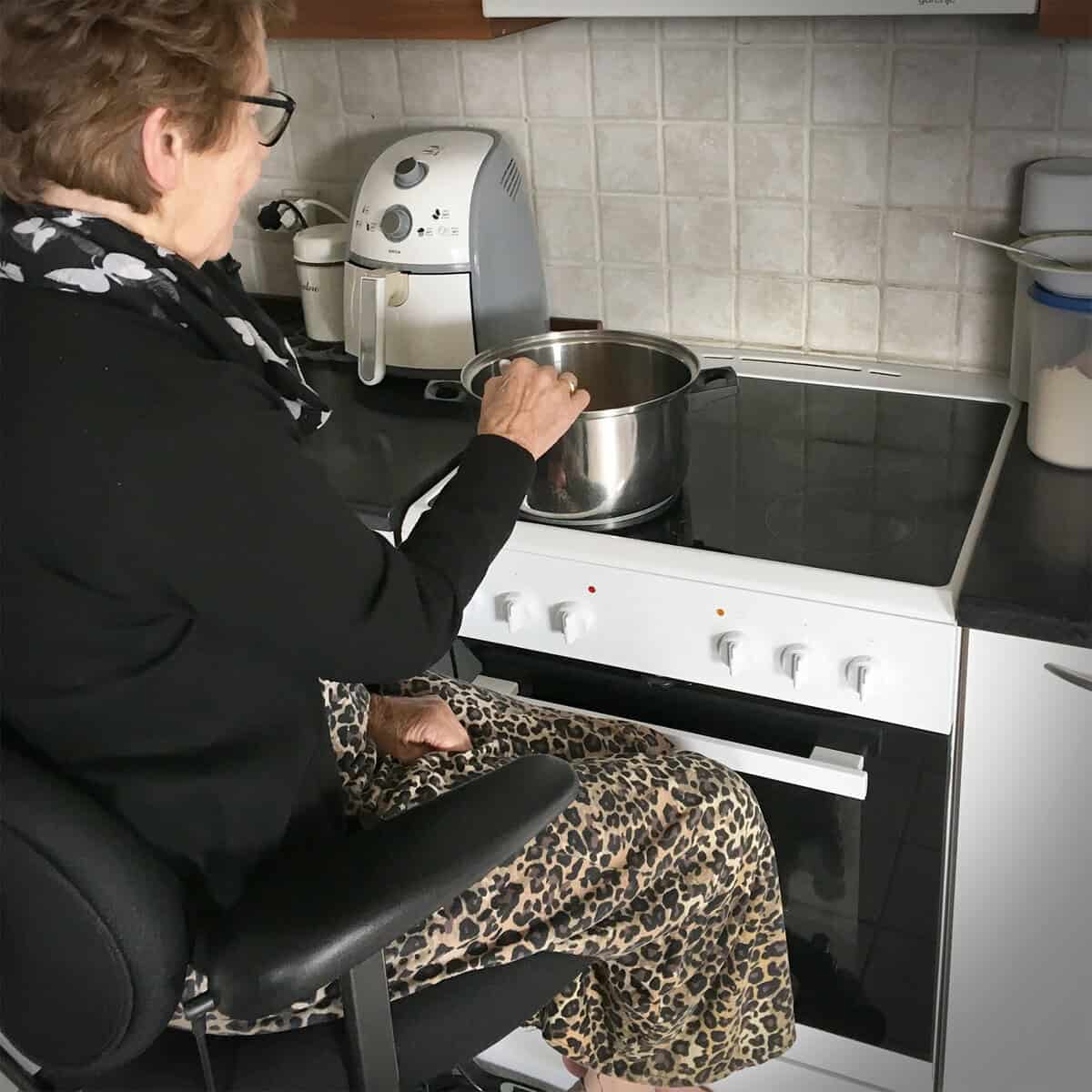
While nursing homes provide essential care for those who need it, many older adults aspire to remain independent in their own homes for as long as possible. In exploring mobility solutions to support this desire, the VELA Independence Chair presents a valuable option. This medically approved mobility chair is designed for home use, offering enhanced safety, greater freedom of movement while seated, and vital support for daily activities such as cooking, dressing, or transferring. By alleviating some burdens on informal caregivers, it empowers seniors to maintain their independence longer.
New innovations show how pairing traditional mobility devices like the VELA chair with AI-enabled wearable technology and robotic self-feeding aids can further improve safety, autonomy, and comfort in the home environment (ThinkBeyondTheChair.org; Assistive Technology Industry Association Journal).
Supporting Aging in Place: A Practical Option
How can mobility solutions like supportive mobility chairs for seniors help individuals stay independent at home? VELA Chairs are distinguished by features tailored to the needs of older adults, such as an easy-to-use central brake for enhanced safety, electric height adjustability for personalized comfort, and smooth-rolling casters for effortless movement while seated. These features not only mitigate fall risks but also conserve energy, enabling users to perform daily tasks with greater ease. In contrast, the absence of such mobility aid often leads to increased reliance on additional care or premature transitions to assisted living facilities. While VELA is not the sole solution for aging in place, it represents a proven approach, helping seniors live with dignity, freedom, and safety by making everyday activities like cooking and cleaning more accessible.
References
- ThinkBeyondTheChair.org, “The Best Assistive Tech Gadgets in 2025”
- PubMed Central, “Recent trends in assistive technology for mobility”
- H2HHC.com blog, “The Role of Technology in Supporting Individuals with Developmental Disabilities” (Aug 2025)
- Equal Accessibility LLC, “Innovations In Assistive Technology”
- Ability Montana, “Exciting Assistive Technology for People with Disabilities” (Aug 2025)
- PR Newswire, “Assistive Technology Market to Grow by USD 6.3 Billion from 2025–2029”
- Assistive Technology Industry Association Journal, Volume 19, Spring 2025