

Updated September 2025: We have updated the article with the latest advancements in assistive technology for blind elderly individuals, including the introduction of AI-powered smart glasses, autonomous mobility aids, and integrated behavioral rehabilitation approaches. The article now highlights new user-centered design trends, improved policy regulations on accessibility, and recent research findings supporting enhanced safety and independence.
Navigating Life with Vision Loss: Challenges Faced by the Blind Elderly
The journey into elderly care, particularly for those who are visually impaired, presents unique challenges that demand specialized attention and care strategies. Vision impairment is a significant issue among older adults, with more than one in four U.S. adults aged 71 and older experiencing some form of vision loss. According to Vision Monday, the aging population and lack of access to care are key contributors to increasing rates of blindness. This statistic underscores the critical need for enhanced care for the blind elderly.
Understanding these challenges is crucial for developing effective support systems. Older adults with vision loss often face emotional and social isolation, increased risks of depression, and a loss of independence. As noted by the Centers for Disease Control and Prevention, these psychological impacts can exacerbate navigation and communication difficulties, necessitating a comprehensive approach to their care.
Empowering Independence: Strategies for Supporting the Blind Elderly
Creating empowering and safe environments is paramount for supporting independence among blind elderly individuals. Home modifications form the backbone of these strategies, as simple changes can dramatically improve quality of life. Implementing tactile markings and voice-activated devices can assist daily navigation and tasks, enhancing safety and autonomy. A study published in JAMA Ophthalmology highlights the effectiveness of these adaptations, emphasizing their role in reducing accidents at home.
Recent advancements now offer even greater support through AI-driven assistive technology. Cutting-edge smart glasses such as Envision Glasses and OrCam MyEye 3.0 incorporate real-time object recognition, facial expression detection, and multilingual support, communicating discreetly via bone conduction audio. These devices excel in indoor environments by leveraging Bluetooth beacons, LiDAR mapping, and AI-enhanced audio guidance, addressing traditional GPS limitations and improving everyday navigation for the visually impaired elderly [1] [2].
AI-powered autonomous mobility aids like the Glide provide self-guided indoor and outdoor navigation, featuring advanced obstacle avoidance, scene description, and landmark identification. Smart canes and wearable haptic navigators now offer intuitive vibration cues, heightening spatial awareness and safety [3] [4]. Innovations in design ensure these solutions are ergonomic, discreet, and socially accepted, increasing user confidence and adoption rates [5] [6].
Additionally, rehabilitation approaches now emphasize combining behavioral strategies with these assistive technologies, enabling a practical path to greater independence. The design and development of these technologies increasingly involve visually impaired engineers and accessibility consultants, ensuring solutions adapt to users’ unique lifestyles and preferences [7].
For example, consider the case of Mrs. Johnson, an 84-year-old woman with vision loss. After her family installed voice-activated devices to control lights and appliances, she maintained a sense of independence and significantly reduced her risk of accidents. Caregivers play an essential role here, providing needed support while respecting the individual’s autonomy.
Building a Supportive Network: Resources Available for Blind Seniors
To navigate the intricate landscape of care for blind elderly individuals, it’s imperative to leverage available community and governmental resources. Programs like Medicare provide valuable benefits designed specifically for those with vision impairment, such as coverage for annual eye exams for glaucoma, diagnostic tests, and certain vision rehabilitation services.
Community resources further enhance this support network. Organizations like the American Foundation for the Blind offer services such as vision rehabilitation, orientation and mobility training, counseling, and support groups. According to research from Research on Disability, these resources significantly impact the lives of seniors by providing tools needed to adapt and thrive in their daily environments.
Policies and regulatory standards in 2025 increasingly require accessibility to be integrated by default, especially in public infrastructures such as kiosks and ATMs. Modern standards embed tactile and audio navigation features from the outset, reflecting the global shift toward inclusive product design and affirming the rights of visually impaired individuals to access information and services independently [5].
Enhancing Mobility and Safety: The Role of VELA Chairs
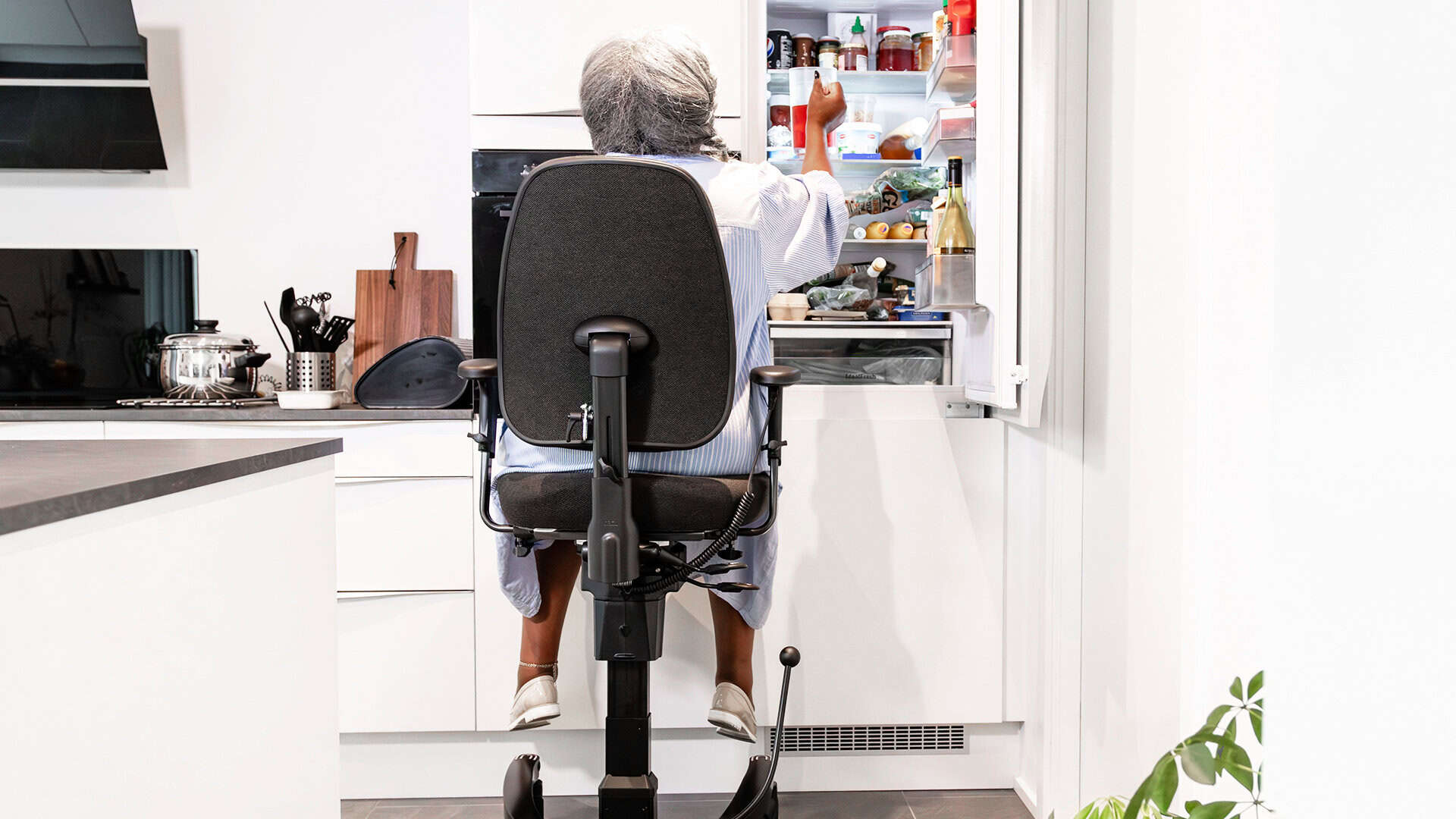
In considering solutions that empower the visually impaired elderly to remain in their homes safely, we recognize the importance of addressing mobility challenges. Nursing homes often provide resources to manage mobility and safety; however, independence in the home is increasingly viable due to advances in assistive technology. A prime example of this is the VELA Independence Chair; a medically approved mobility chair designed specifically for home use. It offers enhanced safety, freedom of movement while seated, and support for daily activities such as cooking, dressing, or transferring — all while reducing the load on informal caregivers.
In practice, integrating VELA chairs into homes has resulted in significant improvements for seniors: reducing fall risk and enabling greater freedom. Such innovations ensure that elderly individuals can maintain their routines while minimizing dependence on caregivers. These solutions echo the broader trend in assistive product design, where ergonomics and safety are prioritized, and usability is driven by user experience and feedback, leading to high acceptance rates as shown in recent clinical research [6].
Supporting Aging in Place: A Practical Option
VELA Chairs serve as a practical tool to support aging in place, offering features tailored to the needs of seniors with vision impairments. With attributes such as a central brake for safety, electric height adjustability, and ease of movement while seated, these chairs address critical issues like fall prevention and energy conservation. As emphasized in Fall Prevention Solutions and Assistance for Seniors at Home, these features help extend the duration seniors can safely and independently live in their own homes. By minimizing the risk of injuries and supporting daily tasks, such mobility solutions may delay the necessity of transitioning to a nursing home, allowing seniors to enjoy a life marked by dignity, freedom, and safety. While VELA is not the only solution available, it stands out as a proven, practical option for enhancing the quality of life among the visually impaired elderly community.