

Updated February 2026: We have updated the article to include California’s latest senior care laws from 2025 and 2026, including new requirements for public disclosure of staffing and census data at Medi-Cal–funded facilities, non-discrimination protections for Medi-Cal recipients, eviction restrictions based on payment method, mandatory geriatric and dementia continuing education for healthcare providers, law enforcement training for wandering incidents, and reinforced Adult Day Program licensing standards under CDSS.
Optimizing E-E-A-T in Elderly Care
Navigating the landscape of elderly day care requirements in California is crucial for ensuring that seniors receive the care and support they deserve. As per UCLA Center for Health Policy Research, by 2040, a substantial 22% of Californians will be 65 or older. This demographic shift makes it essential to understand how to cater to this growing population effectively by mastering legal, staffing, and financial considerations that govern elderly day care services within the state.
Navigating the Legal Framework for Elderly Day Care in California
As of January 1, 2025, California’s regulations for Residential Care Facilities for the Elderly (RCFE) have been updated to include integrated dementia care standards throughout various operational areas, promoting a more holistic and person-centered care model (ECP Blog)[1]. According to the California Department of Public Health, California sets rigorous standards for Adult Day Health Centers (ADHCs) to ensure the safety and well-being of its seniors. ADHCs are defined by California Health and Safety Code §1570.7 as organized programs providing therapeutic, social, and skilled nursing care. Centers must acquire a license from the California Department of Public Health, emphasizing compliance with health and safety regulations (CDSS)[5][3].
Starting in 2025 and strengthened by new legislation signed in mid-2025, Adult Day Programs (ADPs) and Adult Day Health Care (ADHC) centers accepting Medi-Cal are now required to publicly disclose daily resident census and nursing staff data, enhancing transparency and accountability (McKnight’s Long-Term Care News)[1]. Providers are strictly prohibited from discriminating against Medi-Cal recipients or evicting individuals solely due to changes in their payment methods. These laws took effect immediately after signing and reinforce equal access and stability for vulnerable populations. Effective January 1, 2026, as mandated by SB 639, physicians, nurse practitioners, and physician assistants who treat a senior-heavy patient base must dedicate 20% of their continuing education to geriatric and dementia care. AB 2541 also requires law enforcement personnel to receive annual training on responding to wandering incidents involving individuals with Alzheimer’s disease (Office of Gov. Newsom)[5][1].
Licensing processes for Adult Day Programs remain under the jurisdiction of the California Department of Social Services (CDSS), focusing on accessibility, appropriate staffing ratios, background checks, and ongoing compliance inspections. While there have been no fundamental regulatory shifts since 2025, there is a reinforced focus on health and safety standards, transparent operation, and prompt enforcement of compliance through regular CDSS reviews (CDSS; DJ Holt Law)[3][2]. Guidance for starting or operating an ADP includes detailed plan submissions, proof of safe and accessible facilities, evidence of staff competency, and compliance with local ordinances and inspections[3][2][7].
In 2025, recent state legislation and regulatory updates require Adult Day Programs (ADPs) and Adult Day Health Care (ADHC) centers to adopt comprehensive person-centered care plans, enhanced community integration, and stronger technology integration throughout their services[3][6][7]. Licensing requirements now include mandates for the use of advanced assistive devices and staff training in both dementia care and technology utilization. There is also a moratorium on new enrollment in ADHC centers under Medi-Cal, as the state transitions towards Home and Community Based Services (HCBS) waiver programs such as the Community-Based Adult Services (CBAS) initiative[3][4]. These changes aim to expand access to home-based models and ensure care is delivered in the least restrictive, most inclusive setting in alignment with California’s strategic goals.
The licensing process is complex, requiring detailed operational plans demonstrating adherence to health standards. This often necessitates expert guidance to ensure all criteria are met effectively and efficiently.
Who Qualifies for Elderly Day Care in California?
Eligibility extends to individuals over 55 with disabilities or functional impairments, as specified by the California Department of Aging. Given that more than 22% of this population is low-income, accessibility is a key concern. The new 2025-2029 State Plan on Aging emphasizes expanding home and community-based services and supporting aging in place as system-wide priorities[2]. The current policy trend is to support elders and adults with disabilities through personalized, technology-enabled care plans within HCBS programs like CBAS, with an increased focus on avoiding unnecessary institutionalization and promoting inclusion[3][4].
Imagine a scenario where Maria, a 70-year-old senior with mobility issues and a limited understanding of English, seeks day care services. Navigating this system can be daunting due to the complex eligibility requirements, often necessitating additional support for non-English speakers.
Ensuring High Standards in Elderly Day Care: Staff and Safety Requirements
Staffing is a core component of quality care, with mandatory qualifications and ratios in place to assure adequate support (referenced from DJ Holt Law). Recent regulatory changes stress person-centered care and integrated dementia support as essential elements of staff training and programming[1][6][7]. Additionally, by January 2026, all physicians, nurse practitioners, and physician assistants with a population consisting of at least 25% seniors aged 65 and older must earn 20% of their required continuing education credits in geriatric and dementia care, under SB 639 (McKnight’s Long-Term Care News)[1]. Annual law enforcement training is now also required on responding to wandering incidents involving patients with Alzheimer’s disease (AB 2541)[1]. Facility safety protocols have expanded to ensure that environments are ergonomically adaptive and supportive of those with fluctuating abilities, incorporating safe transfer equipment and multi-sensory adaptations. Staff training and facility safety protocols are integral to prevention measures, such as falls—the leading cause of injury among seniors.
A day care center could initiate a fall prevention program, incorporating practical training for staff and regular facility inspections to ensure safety. These measures are crucial for maintaining high standards of care and aligning with legal requirements.
Exploring Costs and Financial Assistance for Elderly Day Care
Costs in California vary, influenced by medical needs and location, with typical daily rates between $85 and $120 (Waiver Consulting Group). However, there is increasing concern over the planned elimination of Adult Day Health Care (ADHC) as a Medi-Cal optional benefit, scheduled for late 2025. A state-wide moratorium on new ADHC enrollments through Medi-Cal is now in effect, as California prioritizes transition into HCBS programs like CBAS[3][4]. Advocates warn that this will limit affordable care options for vulnerable seniors, potentially leading to increased costs from higher rates of institutionalization (Family Caregiver Alliance)[3]; (CalMatters)[8]. Many families are encouraged to explore a mix of state aid and private contributions, but the evolving funding environment presents new challenges.
Families, for example, might explore a combination of state aid and private contributions to bridge these financial gaps, ensuring that quality care remains accessible.
Advances in Assistive Devices and Rehabilitation Strategies
Recent clinical evidence underscores the value of integrating smart assistive technologies and advanced ergonomic aids in elderly day care and home-based settings[3][6]. Devices such as AI-powered mobility aids—smart walkers, powered wheelchairs with obstacle avoidance, and wearable health monitors synced with telehealth platforms—improve rehabilitation outcomes and day-to-day independence. Customizable ergonomic seating and dynamic transfer devices, responsive to changes in the user’s condition or posture, increase both usability and safety. This adaptive approach reduces secondary injuries and extends the usefulness of assistive devices for clients with conditions like arthritis or sensory impairments[3]. California regulation now encourages (and in some licensing contexts, requires) providers to integrate these technologies as part of care planning, and to implement routine staff training on their use[6][7].
Current rehabilitation protocols favor interdisciplinary, holistic approaches that combine occupational therapy, individualized exercise regimens, virtual reality cognitive stimulation, and real-time health monitoring through connected devices. This multifaceted method supports both physical and cognitive well-being, strengthening California’s commitment to inclusive, community-centered elder care.
Enhancing Elderly Independence at Home
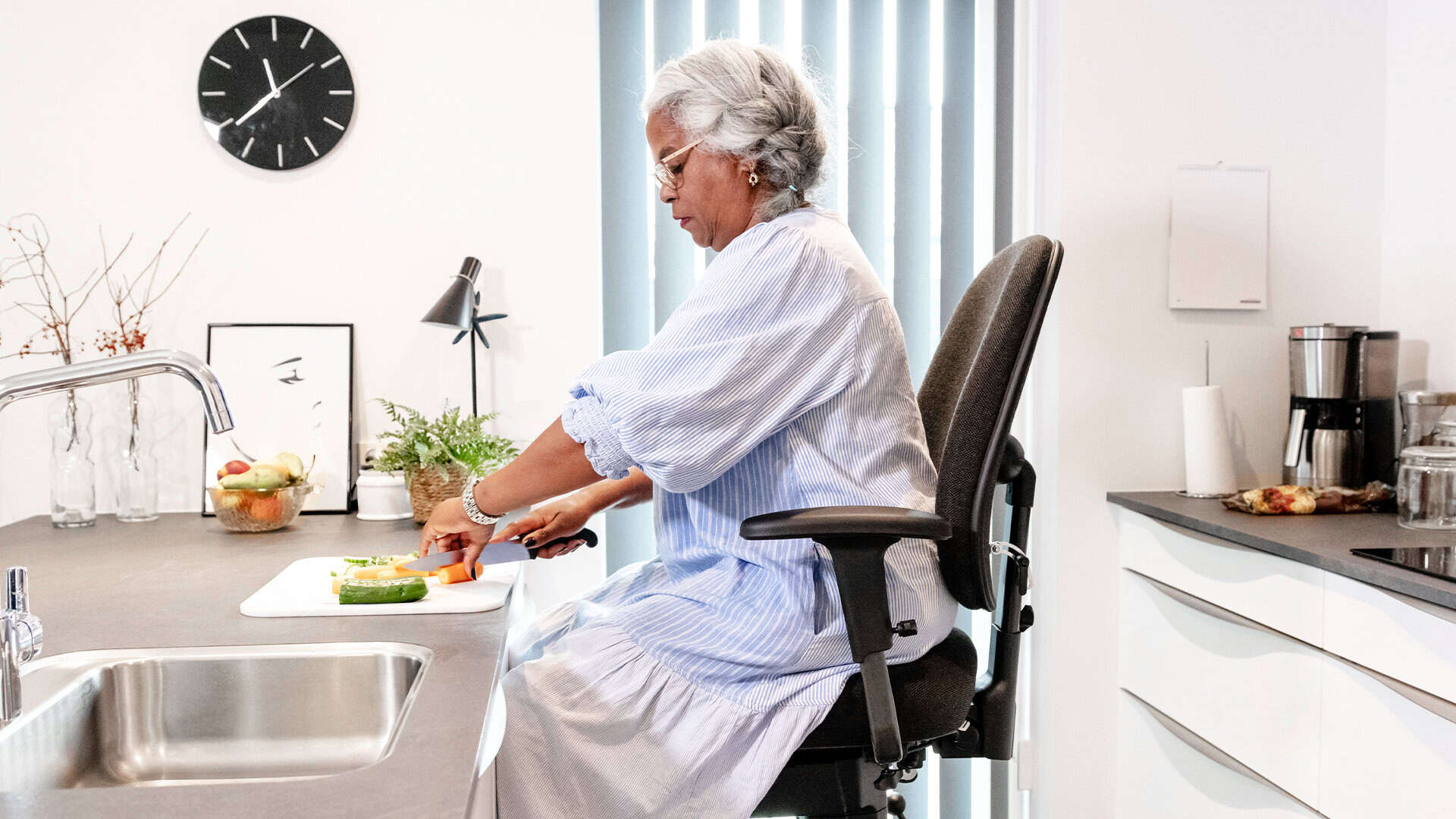
As the challenges of nursing homes and institutional care become more apparent, it’s critical to explore solutions that foster independence for older adults in their own homes. Supporting seniors in maintaining their autonomy directly aligns with California’s emphasis on dignity and quality of life, as well as the state’s broader strategic focus on accessibility, inclusion, and preventing social isolation[2]. Medically approved options like the VELA Independence Chair provide one such solution. These chairs promote enhanced safety and freedom of movement while seated, aiding in daily activities like cooking and dressing, which can also reduce the caregiver’s workload significantly.
How Mobility Solutions Like VELA Make a Difference
Mobility solutions, such as the VELA Independence Chair, empower seniors to remain independent longer in their homes. Designed with features like a central brake for safety, electric height adjustability, and ease of movement while seated, these chairs address fall risks and reduce the physical strain on both users and caregivers. In line with new best practices, adult day care and home-based care providers are increasingly integrating digital care management technologies—enabling real-time communication between staff and families, tracking rehabilitation goals, and supporting truly individualized care planning (StoriiCare)[6]. These innovations align with California’s expanded standards for the adoption of smart assistive technology and person-centered support. Envision a senior navigating daily tasks — with a VELA Chair, cooking, cleaning, and relaxing become more manageable, supporting not only their safety and comfort but also preserving dignity and energy. While not the only option, VELA represents a practical, person-centered mobility solution that aligns with the broader goal of aging in place gracefully and securely. For more insights, explore Supportive Mobility Chairs.