

Updated September 2025: We have updated the article with new findings on AI-powered mobility devices, advanced health monitoring wearables, smart home adaptation systems, the latest ergonomic guidelines for assistive equipment, and recent trends in regulatory and user-centered approaches to elder care.
The Struggle with Elder Care: Navigating Responsibilities and Options
Caring for aging parents can be overwhelming, leading to feelings of guilt and frustration. For many individuals searching with introspective terms like “I don’t want to care for my elderly parents,” it’s important to recognize that these emotions are common. Conflicts often arise between personal responsibilities, capabilities, and societal expectations on adult children. Understanding the prevalence of caregiver burden helps contextualize these emotions. According to the CDC, about 1 in 5 adults in the U.S. are caregivers, with nearly 1 in 3 committing over 20 hours a week to caregiving. This highlights the substantial commitment required, often without sufficient support.
Understanding Your Elder Care Responsibilities and Options
The decision not to provide direct hands-on care is complex, entailing both ethical and practical considerations. It’s essential to acknowledge, as geriatrician Dr. Leslie Kernisan notes, that “It’s common and not shameful to feel unable to care for aging parents.” Legally, there is no federal requirement mandating individuals to provide personal care for their elderly parents, although this varies by state. It’s more important for families to explore alternatives that suit both their abilities and their parents’ needs. As highlighted by the National Institute on Aging, professional caregiving options can provide the necessary support for families to ensure well-being for both seniors and caregivers.
Professional Home Care: Costs, Providers, and What to Expect
Professional home care offers diverse services tailored to specific needs, offering a viable solution for families opting out of hands-on caregiving. Services range from companionship and help with daily activities to advanced medical care. According to A Place for Mom, national median rates for in-home care range between $24 to $43 per hour. Companies such as Home Instead and Right at Home receive positive reviews for their flexibility and reliability, helping families balance personal and professional obligations without sacrificing care quality. For instance, one user reported, “My mom’s caregivers were exceptionally patient, allowing me to maintain my job without worry.”
Assisted Living and Nursing Homes: When Home Care Isn’t the Solution
In some cases, the level of care required surpasses what can be provided at home, necessitating a move to assisted living or nursing homes. This significant decision involves emotional and financial considerations. Financially, facilities can range from $4,500 to over $9,000 monthly, based on care level and location, with Medicare covering limited custodial care aspects. As per Medicare.gov, most nursing home care is custodial. Medicaid waivers and local programs may provide financial assistance, but navigating this landscape requires careful research and planning.
Transitioning Solutions: Empowering Senior Independence at Home
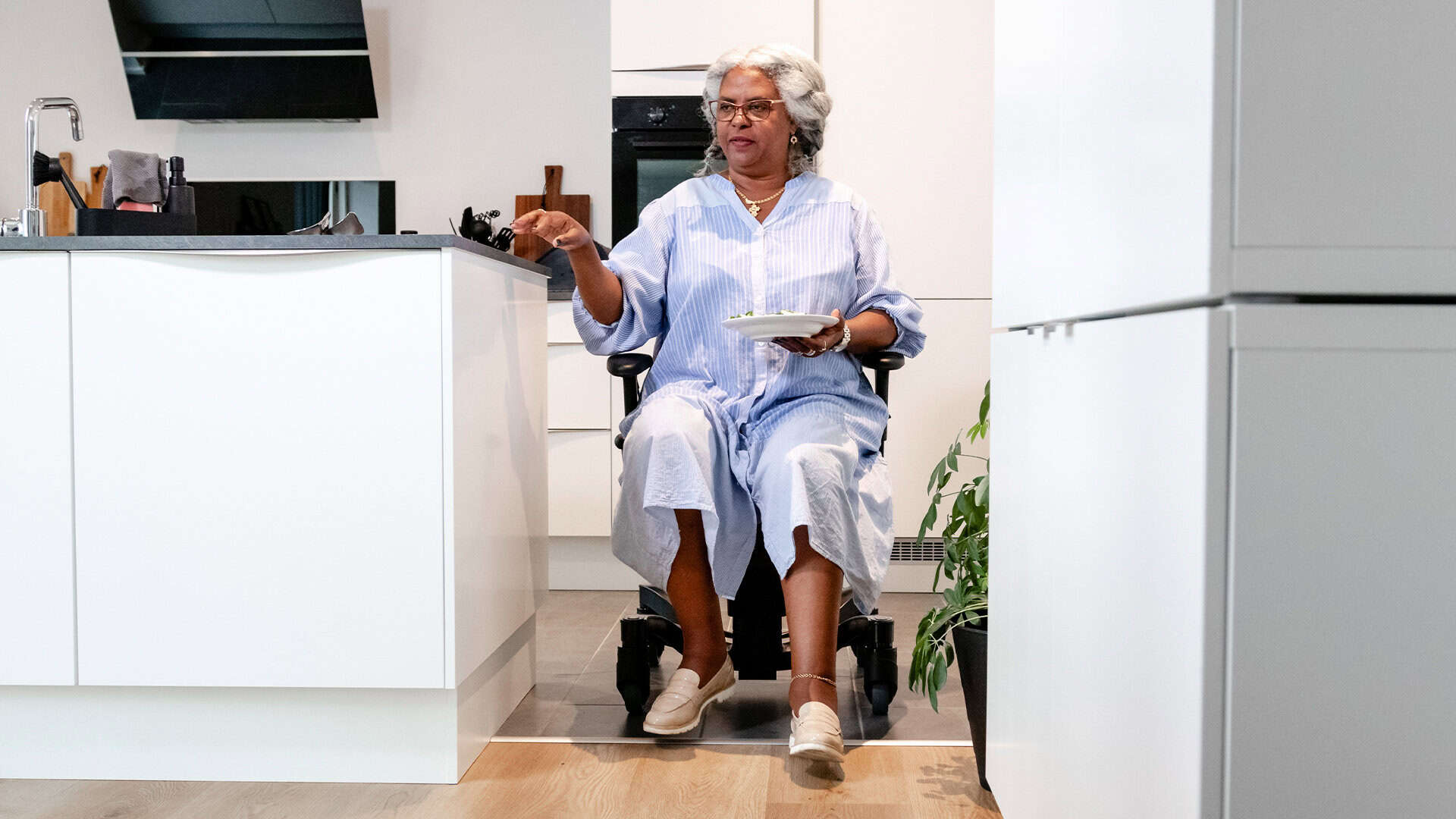
When nursing homes aren’t the preferred option, solutions like the VELA Independence Chair offer an opportunity for seniors to remain safely in their homes. Designed as a medically approved mobility chair, VELA provides enhanced safety and freedom of movement while seated, supporting daily activities such as cooking, dressing, and transferring. Its features are specifically crafted to reduce the physical and emotional load on informal caregivers, allowing seniors to live independently and extend the time they can remain at home.
Recent innovations in assistive technology provide additional options to support safe and independent living. Clinically tested AI-powered exoskeletons now offer up to 45% better walking stability for people with reduced mobility, significantly reducing the risk of falls when compared to traditional walkers or canes.[1] Next-generation health monitoring wearables continuously track vital signs, cognitive cues, and physical activity, enabling earlier intervention and reducing emergency hospitalizations by 30% in elderly populations.[1] Smart home adaptation systems, utilizing AI and IoT, now automatically adjust lighting, temperature, and provide real-time risk alerts, fostering safe “aging in place.”[1][3] Ergonomic and inclusive design advances mean modern mobility aids and bathroom supports offer customizable features, improved materials, and aesthetics, all while meeting updated installation guidelines tailored to individual needs.[4]
In addition to medical equipment, broader regulatory trends and clinical guidelines increasingly encourage cocreation approaches—inviting users and caregivers to participate in the design and selection of assistive technologies.[5] Projected market growth and tech convergence with AI underline a rapidly evolving landscape, expanding the choices available to aging adults and their families.[6]
Balancing Elder Care Needs and Personal Boundaries
Ultimately, determining the best care approach for elderly parents involves balancing personal boundaries with their care needs. This path isn’t uniform, and it’s crucial to respect both the caregiver’s capabilities and the senior’s comfort and safety. Experts like Dr. Leslie Kernisan stress the importance of crafting individualized care plans to maximize everyone’s quality of life. By remaining informed about available resources and support systems, caregivers can alleviate some pressure, ensuring that chosen solutions serve both the caregiver’s and care recipient’s best interests. Being proactive about these choices helps to maintain family harmony and the well-being of all parties involved.
Sources:
- INTCO Medical, “Top 5 Cutting-Edge Equipment for Seniors in 2025,” including studies from Nature Digital Medicine and JAMA Network Open about AI-enabled exoskeletons and wearables [1].
- Healthline, “Some of the Best Assistive Devices for Elderly People — Updated August 2025,” with WHO statistics and expert considerations for device selection [2].
- University of Florida’s online Aging Research, “Assistive Technology Devices: Helping Seniors Age In Place,” detailing smart home safety and monitoring technologies [3].
- SeniorSite.org, “15 Best Assistive Devices for Elderly [Tested & Rated for 2025],” providing detailed ergonomic and installation guidelines for mobility and bathroom aids [4].
- Journal of Medical Internet Research, 2024, “The Role of Assistive Technology in Enabling Older Adults to Age Independently,” discussing cocreation and future research trends [5].
- PR Newswire / Technavio Market Report 2025, “Assistive Technology Market to Grow by USD 6.3 Billion from 2025-2029,” analyzing AI impacts and market dynamics in orthopedic and neurological assistive devices [6].