

Updated January 2026: We have updated the article with new findings on AI-powered mobility aids, wearable monitoring technologies, smart home integration, robotics, VR/AR for rehabilitation, and extended telehealth policies now standard in senior care. The article also reflects trends in proactive, personalized, and preventive support powered by the latest assistive technology research.
Senior Care in Medford, Oregon: Meeting the Needs of an Aging Population
As Medford’s elderly population grows, understanding and improving the existing senior care framework becomes increasingly critical. According to the U.S. Census Bureau, approximately 19.11% of Medford’s residents are aged 65 and over, outpacing the national average of 16.84%. This demographic statistic highlights an urgent need to optimize senior care resources and planning in Medford.
Demographic Insights into Medford’s Growing Senior Population
The senior demographic in Medford shares attributes seen across broader society but bears unique local characteristics as well. A higher female representation among seniors mirrors a global trend, explained partly by females’ longer life expectancy. The racial composition of Medford’s senior populace reflects the overall city demographics with predominantly White residents, alongside smaller segments of Hispanic and other racial groups. Studies from the American Community Survey and Oregon Demographics reveal socioeconomic challenges faced by this cohort, exacerbated by the 12.54% poverty rate among the general population despite the median household income reaching $70,497.
In Medford, elderly residents actively engage in community life, regularly participating in events arranged by the Medford Senior Center. This active involvement underscores the importance of community integration for seniors, providing a much-needed support network that enhances their quality of life.
Exploring Senior Care Options in Medford
Medford boasts a variety of senior care avenues designed to address different needs. Independent living facilities offer a community environment for seniors who require minimal assistance—these are ideal for those who prioritize independence but enjoy the social benefits of community living. For seniors needing moderate help with ADLs, Assisted Living Facilities (ALFs) provide a blend of residential living with necessary support services. Meanwhile, Skilled Nursing Facilities (SNFs) cater to individuals requiring intensive medical care and have become essential resources for families dealing with complex health issues.
Case studies of families in Medford show that the decision-making process often revolves around evaluating service offerings such as social activity opportunities and on-site medical facilities. For example, Jane Smith, a Medford resident, describes her calculation in choosing the facility closest to family while emphasizing the need for social activities and reputable health care services.
Navigating Financial Aspects of Senior Care in Medford
Affordability represents a substantial consideration for Medford families exploring senior care. The local economic climate, marked by median and average household incomes of $70,497 and $87,627 respectively, dictates the availability and accessibility of these services. According to the Oregon Population Forecast Program, financial planning demands careful attention, though numerous assistance programs can help families in need.
Testimonials from local residents like Bob Johnson highlight the pressures faced when balancing quality care against financial constraints. His experience suggests that early consultation with financial advisors and service providers can lead to pragmatic and sustainable solutions.
Enhancing Mobility and Independence for Medford Seniors
Recent advances in assistive technology have greatly expanded mobility, independence, and safety for Medford seniors. Smart mobility aids now include powered wheelchairs equipped with GPS, obstacle-detecting sensors, and health monitoring that connects directly to healthcare providers through mobile apps. These features increase independence and contribute to a safer environment for seniors, both at home and outside (AANP, 2026; AARP, 2026).
Wearable technologies now offer clinical-grade monitoring, allowing for the detection and even prediction of falls, continuous tracking of vital signs, and notification of healthcare teams about changes in health status. AI-powered systems support proactive care by integrating personalized health assessments and reducing caregiver burden. App-based tracking and integration with telehealth services further contribute to timely interventions and lower hospital readmissions (University of Florida, 2025; Age in Place Tech, 2026).
The rise of voice-activated home assistants and robotics for daily tasks enables increased autonomy, supports medication reminders, automates household routines, and enhances social engagement. VR and AR solutions are increasingly used for rehabilitation and cognitive therapy, delivering immersive experiences that help maintain or improve wellness and support recovery. These technologies are rapidly becoming standard in both residential and community settings, reflecting the movement toward proactive and personalized care (AANP, 2026).
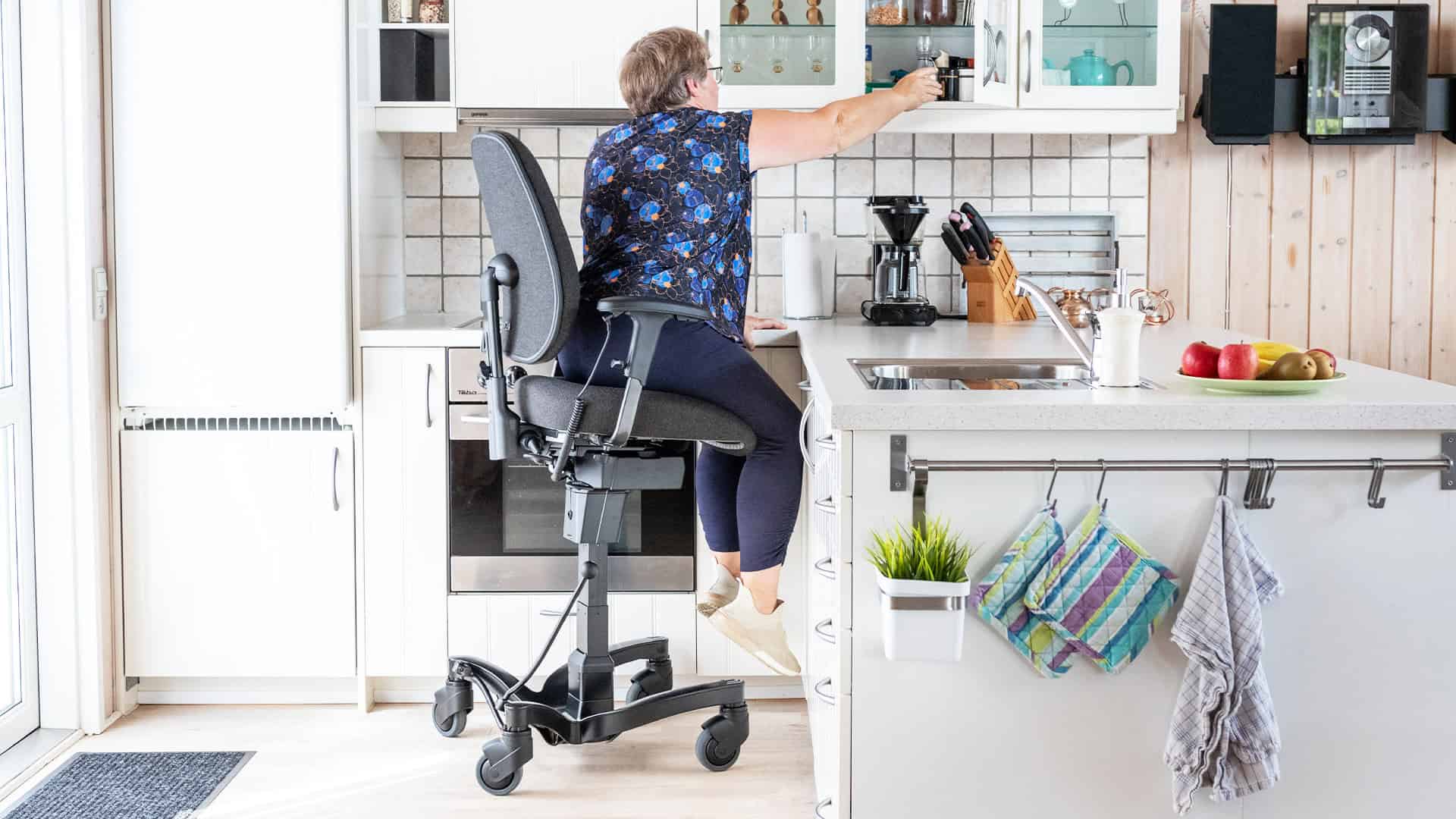
Navigating the challenges of institutional care does not necessarily mean leaving one’s home, as resources now exist to support older adults in maintaining their independence domestically. This is where innovation such as the VELA Independence Chair becomes invaluable. The VELA chair is a medically approved mobility solution designed for home use, providing enhanced safety and freedom of movement while seated. It supports daily activities like cooking, dressing, or transferring, all while reducing reliance on informal caregivers. With its ergonomic design, adjustable height, and central braking, the VELA chair enables seniors to lead more autonomous lives without shifting to a nursing home environment.
Supporting Aging in Place: A Practical Option
Older adults in Medford seeking to extend their independence at home now benefit from a new generation of solutions. In addition to advanced seating options like the VELA chair, wearable rehabilitation devices—such as lightweight robotic exoskeletons and AI-powered gait trainers—help improve mobility, coordinate therapy, and support recovery from injury or illness. Home environments can be adapted with smart systems that use voice-activated controls for lighting, door locks, thermostats, and emergency alerts, enabling seniors to manage their own spaces with minimal effort and increased safety. Privacy-conscious motion monitoring systems, which provide detailed activity tracking without intrusive surveillance, are also facilitating safer aging in place (Let’s Envision, 2024; SeniorSite, 2025).
Smart technology enables voice control and automation of home devices, facilitating daily routines and minimizing the physical burden on both seniors and caregivers. Inclusive product designs and adaptive furnishings that incorporate sensing technology are supporting increased safety and user-centered customization for wellness and independence. These advances are closely linked to the expansion of telehealth policies, allowing continued access to home-based medical and wellness services through at least January 2026 (AANP, 2026; AARP, 2026).
User and caregiver involvement in the design and testing process continues to shape developments in assistive technologies, focusing on personalized features and ergonomic safety. The integration of predictive AI, advanced rehabilitation, and connected real-time health management creates new opportunities for healthy aging in place (Age in Place Tech, 2026; University of Florida, 2025).
Among various options, the VELA chair continues to offer a practical and proven solution, blending freedom, safety, and support for older adults who wish to age in place. Combined with new categories of assistive technologies, families now have a richer set of solutions to preserve wellbeing and independence for their loved ones at home.
References
- Channel Point Village. “How assistive technologies are shaping senior care in 2025.” 2025-04-15.
- AssistiveTechHub.com.au. “Top Assistive Tech Innovations in 2025 You Need to Know.” 2025-06-06.
- Let’s Envision. “What’s Next for 2025: The Future of Assistive Technology & AI Assistants.” 2024-12-28.
- SeniorSite.org. “15 Best Assistive Devices for Elderly [Tested & Rated]” 2025-04-30.
- AskSamie.com. “Innovative Assistive Technology For Seniors in 2025.” 2023-12-11.
- CSUN Assistive Technology Conference 2025 Highlights. “Top 5 Assistive Technologies Showcased at CSUN 2025.” 2025-03-28.
- ConnSense Report. “13 CES 2025 award-winning assistive tech innovations for healthcare professionals to know about.” 2025-02-03.
- Assistive Technology Industry Association (ATIA). “Assistive Technology Outcomes and Benefits, Volume 19.” 2025.
- American Association of Nurse Practitioners. “Top Five Health Care Trends for 2026: How New Technology is Transforming Patient Care.” 2026.
- AARP. “Tech Trends and Older Adults Series.” 2026.
- Age in Place Tech. “What’s Now and Ahead: AI and Older Adults 2026.” 2026.
- University of Florida. “Assistive Technology Devices Helping Seniors Age in Place.” 2025.