

Updated January 2026: We have updated the article to include the latest advances in AI-powered and sensor-equipped assistive technologies, smart home and telehealth integration, IoT-connected mobility aids, and new trends in affordable, compact, and user-adaptive devices. Additional sources now reflect the market’s shift toward proactive, tech-enabled care enabling seniors to age independently and safely.
Choosing the Right Path with Merry Heart Senior Care Services
Merry Heart Senior Care Services has served as a cornerstone in geriatric healthcare in Morris County, NJ, for over 67 years. Known for its 5-star Centers for Medicare & Medicaid Services (CMS) rating, it is ranked among the top 10% of reviewed facilities, providing reassurance to families seeking a reliable care option for their loved ones. For more information, you can visit Merry Heart. They offer a comprehensive range of care services, including nursing home services, assisted living, memory care, and independent living, making it a one-stop solution for seniors at various stages of care needs.
Comprehensive Care Options at Merry Heart Senior Care Services
Merry Heart is a versatile facility offering several care options tailored to residents’ needs. Whether residents are fully independent or require comprehensive nursing attention, Merry Heart caters to varied needs with:
- Nursing Home Services: Provides 24/7 care with a dedicated nursing staff, offering an average of 3.7 hours of nursing care per resident daily, which includes care from RNs, LPNs, and nurse aides. Learn more from Family Assets.
- Assisted Living: Combines housing, support services, and healthcare personalized to each resident’s needs.
- Memory Care: Tailored programs for residents with Alzheimer’s or dementia, ensuring a secure environment that helps manage symptoms effectively.
- Independent Living: For those who desire an active, engaged lifestyle with supportive services available as needed.
The facility is both Medicare and Medicaid certified, which can ease the financial burden on families. Further details are available from Merry Heart and Caring.com. A typical resident’s journey at Merry Heart might start with independent living, enjoying amenities like activity centers and clubs, transitioning to memory care as health needs change, reflecting the facility’s adaptive approach to healthcare.
Resident Experiences and Family Feedback
Residents and their families have shared varied experiences at Merry Heart. Positive reviews, such as one from Karin Goldsmith, praise the attentive and caring staff. “The staff was wonderful and did their best. Every time I had a problem, they were on top of it and couldn’t have been more helpful,” she notes, as shared on Caring.com. In contrast, a 2013 review expressed concerns about the facility’s cleanliness, which can be further explored at Merry Heart Testimonials. Such feedback reflects the necessity for potential residents to consider firsthand testimonials and visit the facility before making a decision.
Employee Insights and Work Environment at Merry Heart
The work environment significantly influences the quality of care residents receive. Employee reviews of Merry Heart reveal a mixed but generally positive work culture. Employees note high ratings for work-life balance and benefits, although some cite management challenges. Testimonials highlight the long-term dedication of employees who value the impact of their work. “Many workers have stayed at this company for years because they understand why the work is so important,” an employee reflects in reviews shared on Indeed. Satisfied employees often translate to better resident care, underscoring the facility’s commitment to maintaining a positive workplace culture.
Enhancing Independence with VELA Mobility Solutions and Emerging Assistive Technologies
While Merry Heart addresses a broad spectrum of care needs, supporting independence in a nursing home setting remains challenging due to inherent risks like falls. For those seeking to remain independent longer, solutions that enhance mobility and autonomy at home are vital. New developments in assistive technology are making it increasingly possible for seniors and those with disabilities to achieve greater independence and safety.
The latest generation of mobility aids now incorporates advanced technologies such as AI integration, IoT connectivity, and smart sensor systems that enhance independence and safety for seniors. Innovations include voice-activated wheelchairs, smart bathroom grab bars, exoskeletons for mobility restoration, and devices that integrate with telehealth platforms to promote aging in place (AllSeniors.org; iHealthcareAnalyst). AI-powered mobility aids feature obstacle detection, navigation support, personalized health monitoring, and real-time alert systems that can immediately notify caregivers of safety concerns. Additionally, compact and foldable designs cater to seniors who wish to remain socially engaged while benefiting from discreet support technology. Wearable devices track mood and daily activity, enabling a holistic, proactive approach to wellness (Advanced Nursing Care; Medtronic).
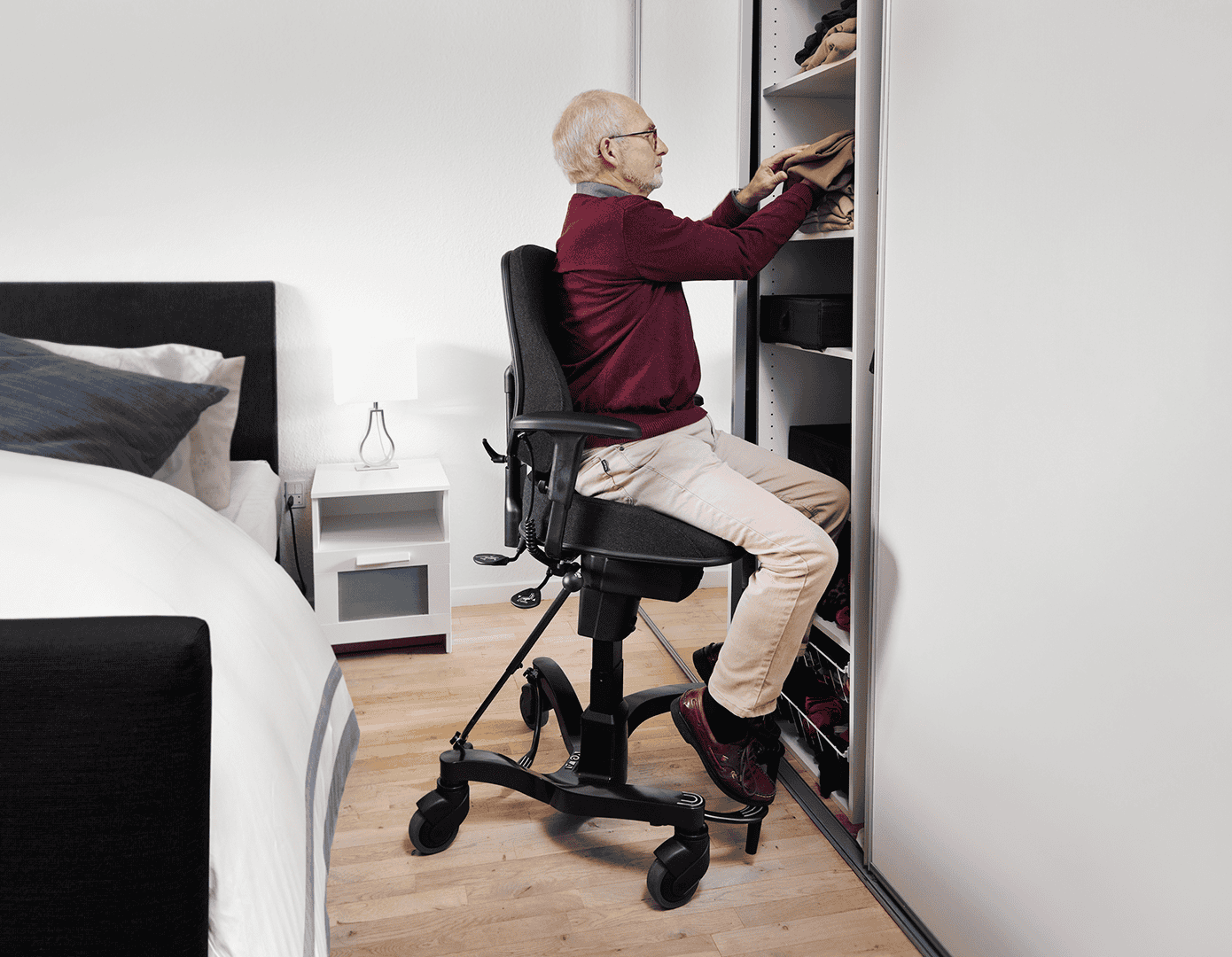
One such solution remains the VELA Independence Chair, a medically approved mobility chair designed for home use. It offers critical safety features like a central brake, and its electric height adjustability allows effortless transfers and activities like cooking or dressing. By reducing the physical burden on caregivers, the VELA Chair enhances freedom of movement while seated, supporting daily life activities without constant supervision. These evolving solutions—combined with behavioral strategies and smart product design—help seniors maintain their preferred lifestyle. Additional information is available from current studies and industry reviews (Mobility Solutions for Seniors; Ability Montana).
Supporting Aging in Place: A Practical Option
With the right support, many seniors can remain in their homes longer, enjoying the privacy and comfort they value. The VELA Chair promotes such independence by addressing key challenges like safety, ease of movement, and energy conservation, crucial for effective daily living. Features such as a central brake enhance security, while electric height adjustability aids in seamless transitions and activities. This combination can substantially delay the need for nursing home care, allowing seniors to continue engaging in tasks like cooking and cleaning with dignity and freedom.
Current trends emphasize that assistive technologies have advanced toward smart home integration, customizability, and connectivity. Devices now commonly feature modular upgrades, IoT links, and remote health integration for real-time monitoring and caregiver notification (AllSeniors.org; iHealthcareAnalyst). Favorable insurance expansions and policy-driven initiatives in 2025 have increased access and affordability, making these features more widely available and reducing hospital visits by supporting inclusive, proactive care at home (Advanced Nursing Care). Inclusive product development incorporates user and caregiver input and focuses on ergonomic, lightweight, and stigma-free device designs. Global policy and WHO guidance continue to prioritize universal access, workforce training, and the evaluation of safety and impact for widespread adoption.
Recent data highlights strong investment in AI, IoT, and telehealth-compatible assistive devices, supporting a significant market expansion from 2025 to 2029 (AllSeniors.org; iHealthcareAnalyst). As these intelligent, user-led technologies become the new standard in assistive care, more seniors can maintain independence and well-being in the comfort of their homes, supported by evidence-based practices and up-to-date industry innovation.
Although the VELA Chair is a practical and proven option for many, it is just one among several innovative solutions now available. These options work together—backed by evidence from clinical research and shaped by evolving policy—to help seniors maintain a rich, independent life at home for as long as possible.