

Updated January 2026: We have updated the article with the latest 2026 trends in assistive technologies for seniors in Milford, focusing on AI-driven wearables, IoT-integrated smart homes, real-time adaptive mobility devices, brain-computer interfaces, and enhanced support for aging in place. The update also addresses new regulatory standards, user-centered design practices, and the expansion of inclusive, personalized solutions as highlighted at CES 2026 and in current market research.
Navigating Senior Care Choices in Milford: Informed Decisions for Quality Living
With Connecticut’s senior population projected to increase by 57% over the next two decades, the demand for senior care in Milford, CT, is rapidly growing. According to the Connecticut State Plan on Aging (2024–2027), there is an urgent need to develop dementia-friendly and livable communities to accommodate this demographic shift. This necessity is evident as Milford’s aging population, representing 17.4% of Connecticut’s residents over 65, surpasses the national average and underscores the critical need for tailored senior care options.
Overview of Senior Care Options in Milford, CT
Milford offers a variety of senior care choices, including assisted living facilities, in-home care services, and skilled nursing facilities. Each option provides unique benefits depending on the level of care needed. For instance, Carriage Green at Milford excels in comprehensive assisted living with a focus on memory care. Families commend its engaging activities and exceptional staff. Conversely, Golden Hill Rehab Pavilion is noted for its skilled nursing and rehabilitation services, particularly lauded for its effective post-surgical care according to reviews on Medicare.gov, where facility ratings and inspection reports are available to help families select high-quality care.
In practice, Milford residents often transition from home care to assisted living as their needs evolve. For example, Sandra, a Milford resident, moved from in-home care to an assisted living community when daily activities became too challenging. Her family’s decision involved thorough research and multiple visits to facilities, highlighting the importance of exploring all available options.
Understanding the Needs of Milford’s Aging Population
Chronic health conditions such as hypertension and cognitive impairments pose significant challenges for Milford’s seniors. According to the CDC Older Adult Data Portal, 62% of Connecticut’s seniors experience hypertension, with cognitive decline also prevalent. Socio-economic factors such as Milford’s higher median household income facilitate access to quality care services. For instance, John, a local senior managing diabetes with community support programs, exemplifies how tailored care and socio-economic resources positively influence health outcomes.
How to Choose the Right Elderly Care Provider
Selecting the right care provider requires careful evaluation. According to the Connecticut Department of Public Health, guidelines on staff ratios and resident rights offer regulatory insights that should guide families. Utilizing tools like Medicare’s star ratings is essential for assessing care quality. When visiting potential facilities, families are encouraged to inquire about staff credentials, daily activities, and resident satisfaction to ensure a supportive environment.
For example, the Thompson family, when considering assisted living for their father, executed a structured plan: visiting several facilities, engaging directly with staff and residents, and reviewing inspection reports—a process that informed their decision.
Aging in Place: Home Care and Assistive Devices
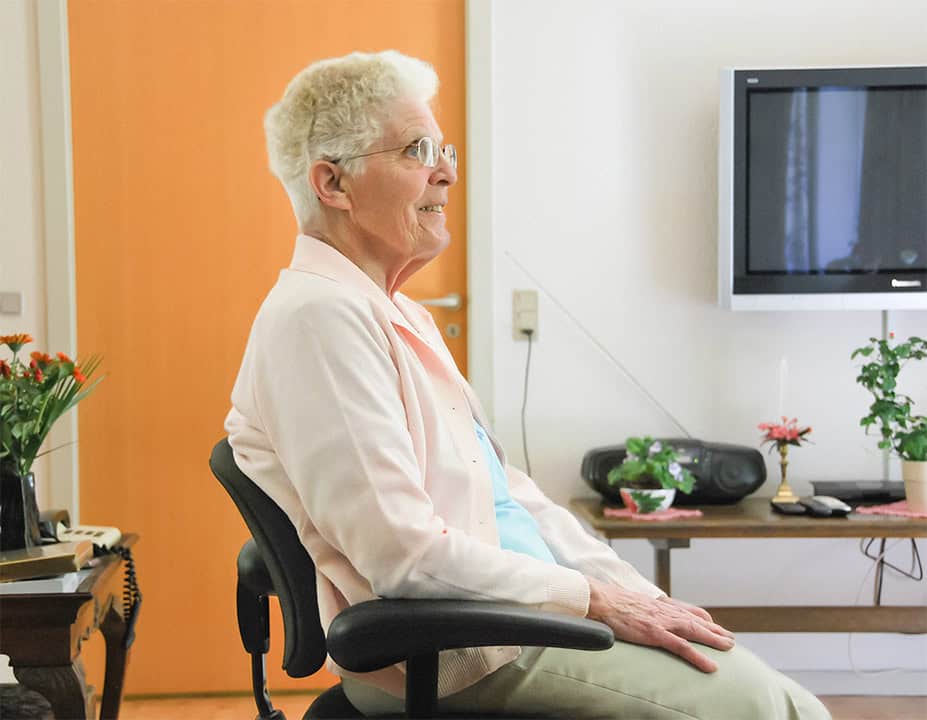
Aging in place remains a preferred choice for many Milford seniors aiming to maintain independence in their homes. This often involves home modifications and the adoption of assistive technologies. A notable solution includes specialized mobility devices like VELA chairs, known for their ergonomic support and height adjustability, enhancing seniors’ independence and safety within their homes.
In 2026, assistive technology has seen significant advances in supporting aging-in-place for seniors. Innovations now include AI-powered wearables such as smart glasses (e.g., Meta Ray-Ban with integrated Live AI) that give hands-free environmental descriptions, real-time object recognition, facial identification, text-to-speech conversion, and GPS navigation for users with visual or cognitive impairments.
IoT-integrated smart home technologies automate safety and comfort, featuring adaptive lighting, remote monitoring, automated fall detection, and intelligent reminders—enabling families and healthcare providers to track well-being and environmental risks. For reduced mobility, delayed haptic mobility aids (like Glide), brain-computer interfaces (BCIs), and multimodal input systems (e.g., sip-and-puff controls) make assistive devices more intuitive and customizable.
AI assistants, voice-activated home systems, and real-time adaptive furniture are now widely used in North America for evidence-based rehabilitation and daily support, while more advanced rehabilitation technologies increasingly inform the design of these tools. New regulatory standards, including stricter accessibility laws and ethical AI guardrails in the US and EU, are shaping development toward inclusive and cognitive design for seniors. Direct community feedback, informed by continuous user input, drives the refinement of wearable assistive devices for optimal comfort and usability, furthering independence at home.
Cognitive Market Research, 2026, McKnight’s Home Care, 2026, Level Access, 2026, First Aid for the Blind, 2025, Accessibility.com, 2026, CES.tech, 2026, Assistive Technology Industry Association (ATIA), 2026
Transitioning from institutional care to home-based solutions represents a vital strategy for seniors and their families in Milford. As assisted living may not suit everyone, particularly those valuing the comfort of their residence, alternative support mechanisms enhance quality of life. Among these, VELA chairs offer a medically approved mobility solution tailored for home use. These chairs increase safety and freedom of movement while seated, supporting activities such as cooking, dressing, or transferring—all while easing the demand on informal caregivers. Additional advances now include AI-driven accessibility tools—such as real-time sign language translation, adaptive input systems, and sophisticated haptic feedback—that further support communication, dexterity, and inclusivity for older adults. Current evidence-based standards underscore the importance of user-centered, inclusive, and personalized design as essential to maximizing comfort and effectiveness of all assistive technologies.
Cognitive Market Research, 2026, Level Access, 2026, First Aid for the Blind, 2025, Accessibility.com, 2026, Assistive Technology Industry Association (ATIA), 2026
Enhancing Home Safety and Mobility: Where VELA Chairs Fit In
For seniors wishing to age in place, VELA chairs offer practical solutions. These chairs provide stability with locking wheels, reducing fall risks and promoting self-reliance. Their adjustable features cater to various mobility needs, enabling seniors to perform daily tasks with minimal assistance. Often recommended by occupational therapists, VELA chairs contribute to comprehensive aging-in-place strategies by preventing falls and supporting independent living.
In addition to established solutions like VELA chairs, the most recent advances feature ergonomic products with modular upgrades and shared-control (collaborative) features, enhancing comfort, usability, and autonomy for users with differing abilities. These developments are the outcome of multidisciplinary collaboration among users, clinicians, and engineers, and reflect the adoption of automation, AI, and continuous user-informed iteration as outlined at CES 2026. New funding approaches and evolving accessibility policy—such as stricter guardrails for AI and updated US/EU accessibility laws—are accelerating access to advanced, personalized assistive technologies. This includes AI-powered wearables, IoT-integrated home supports, smart wheelchairs, and brain-computer interface prosthetics, which are increasingly incorporated into rehab clinics, hospitals, and private homes.
Cognitive Market Research, 2026, Level Access, 2026, Accessibility.com, 2026, CES.tech, 2026, Assistive Technology Industry Association (ATIA), 2026
Information about these beneficial mobility solutions for seniors aging in place is particularly valuable to Milford’s senior care goals, enhancing the quality of daily life for many residents.
Staying independent longer at home is a goal shared by many seniors, and solutions like VELA chairs help make this possible. These chairs address common challenges such as safety, by having a central brake system to prevent falls; energy conservation, through features like electric height adjustability; and ease of movement, owing to their ergonomic design. By providing this level of support, VELA chairs can potentially postpone the need for more intensive nursing home care. Life with a VELA chair means greater dignity and freedom in everyday activities like cooking and relaxing, helping seniors preserve their energy and independence. Although not the only solution, VELA chairs represent a proven, practical tool for enhancing life quality at home.