

Updated February 2026: We have updated the article to reflect the latest advancements in AI-powered and smart assistive technologies for elderly care, including AI-integrated walkers, exoskeletons, smart canes, remote monitoring, advanced hospital beds, sustainable materials, personalized rehabilitation tools, and expanded telehealth approaches. Coverage now includes new trends in wearable devices for both seniors and caregivers, policy shifts improving access, and eco-friendly, user-centric design best practices.
The Importance of Nursing Care for the Elderly
As the American population ages, the demand for comprehensive nursing care for the elderly is increasing significantly. According to Cypress Homecare, there are currently 55.8 million Americans aged 65 and older, a figure projected to swell to 95 million by 2060. Furthermore, 70% of these seniors will require long-term care services at some point in their lives, highlighting the essential role of nursing care in maintaining their health and wellbeing.
Evolving Preferences in Elderly Care
A significant trend in elderly care is the preference for aging in place. As noted by Premier HC, 77% of baby boomers and adults over 50 prefer to remain in their homes rather than relocate to institutional settings. This strong inclination has fueled innovation in home-based care services, such as advanced health monitoring technologies and in-home nursing care, allowing seniors to live independently and safely. In recent years, integration of AI-powered wearable devices offering fall detection, cardiovascular, and sleep monitoring has provided both seniors and caregivers with real-time data for proactive health management. Smart home systems—incorporating voice-activated controls and connected care platforms—are increasingly used to support aging in place by enhancing safety, communication, and autonomy.[1][3][5][6] The latest generation of assistive technology also includes AI-powered assistants that provide real-time, intuitive support, and smart mobility aids that adapt to user behavior and health status. Major advances now encompass AI-powered walkers and rollators with gait analysis, fall detection, and GPS tracking, as well as wearable exoskeletons and smart canes with obstacle alerts, empowering more seniors to maintain independence at home.[1][2][5][6] In addition, telehealth-enabled devices allow for remote monitoring and intervention by healthcare providers, further enhancing the ability of seniors to successfully age in place. There are numerous real-life examples of seniors benefiting from personalized care delivered by agencies that integrate these new technologies and leverage eco-friendly, ergonomic materials in mobility devices.[2][4][5][6]
Institutional Care: An Essential Component
Despite the preference for aging in place, institutional care facilities remain a pivotal part of the solution for those requiring more intensive care. Approximately 15,600 nursing homes are currently operating in the United States, according to Makeshift. These facilities cater to a varied demographic of elderly individuals, with women constituting around 70% of nursing home residents. Families often resort to nursing homes for loved ones when the required care level surpasses what can be provided at home, thus ensuring access to comprehensive nursing support and care services. Modern institutional care now prominently features smart assistive technologies including robotics, AI-powered fall detection systems, wearable exoskeletons for rehabilitation, and advanced hospital beds with integrated health tracking.[1][2][3][5][6] These innovations contribute to safer environments, improved mobility, and individualized health management. New AI analytics and adaptive solutions—such as pose estimation tools demonstrated at CES 2026—offer clinicians and caregivers real-time risk prediction and more personalized, proactive interventions. Community-driven engagement labs and expanded use of telehealth-enabled devices are further transforming the care experience within nursing facilities, supporting both physical and cognitive rehabilitation through technology.[2][4][5][6]
Economic and Staffing Challenges in Elderly Care
The elderly care sector’s economic landscape is both promising and fraught with challenges. Market.us reports that the market is expected to reach $2,168.1 billion by 2032, propelled by the rising demand for diverse care services. Globally, the assistive device market itself is expanding rapidly and is projected to nearly double from $61.59 billion in 2025 to $112.76 billion by 2034 as demand for advanced solutions grows.[1][2][4][5][6][8] However, challenges remain regarding the high cost of certain advanced equipment—especially AI-powered walkers, wearable exoskeletons, robotic aids, and intelligent hospital beds—and inconsistent reimbursement policies worldwide, which impact the adoption and accessibility of the latest innovations.[1][2][8] There is growing movement toward broader insurance coverage for durable medical equipment (DME), reflecting both government initiatives and industry advocacy for equitable access to smart assistive technologies.[2][5] Staffing also continues to pose a significant challenge. With an aging nursing workforce and increasing demand for specialized care, facilities and agencies are focused on offering caregiver training in advanced technologies, using wearable monitors to support caregivers themselves, and implementing policy initiatives designed to improve accessibility and foster innovative care models. Programs like India’s ADIP scheme and Singapore’s Enabling Village continue to set examples by enhancing community participation and improving the discovery, delivery, and affordability of assistive devices for seniors.[2][4][8]
Mobility Solutions Enhancing Independence
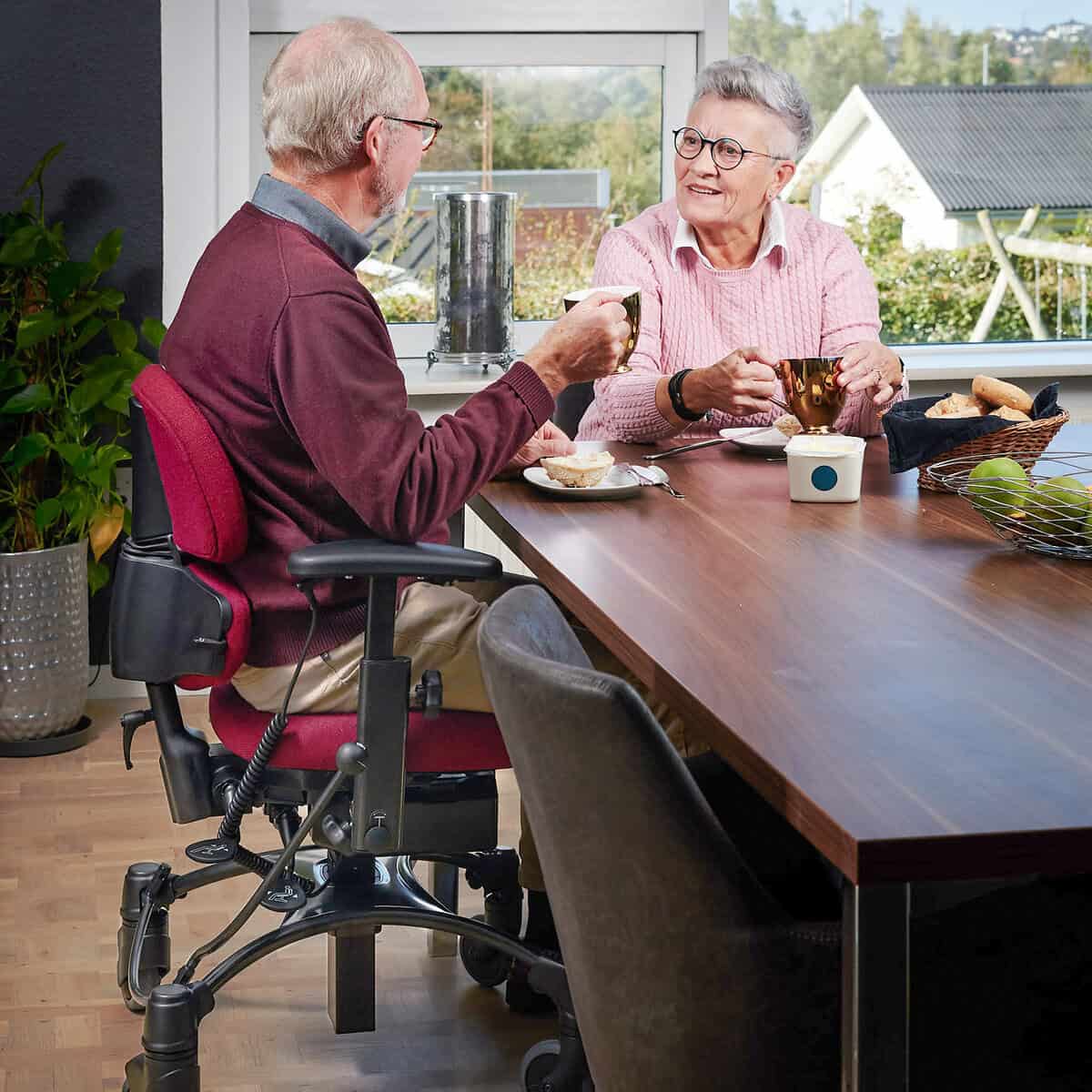
Mobility solutions are crucial in promoting the independence of elderly individuals. Products like VELA chairs provide ergonomically designed seating that caters to the safety and mobility needs of seniors. Today’s landscape is shaped by powerful advances: AI-integrated walkers with automated fall detection and voice assistant features, adaptive sensor-based rollators, smart canes with obstacle warning, and wearable exoskeletons for gait training have transformed mobility and made daily activities safer.[1][2][5][6] The adoption of sustainable and lightweight biomaterials in assistive devices reflects the move toward eco-friendly, ergonomic design.[2][6] New rehabilitation practices also emphasize AI-driven personalization: devices track progress, detect gait changes, and personalize exercise routines, while connected apps and vision-enhancement wearables further support healthy aging.[5][6] Solutions are increasingly integrated with telehealth systems, enabling remote monitoring, pressure relief, and individualized guidance for both mobility and cognitive health. The use of advanced, AI-powered devices and clinical wearables in rehabilitation accelerates functional recovery and improves overall outcomes.[1][2][5][6] By integrating such cutting-edge mobility solutions, healthcare providers can significantly enhance the living experiences and safety of their elderly clients.
While institutional care facilities play a vital role in providing necessary support, solutions that empower seniors to safely age in place are increasingly important. One such innovation is the VELA Independence Chair, a medically approved mobility chair designed specifically for home use. This chair enhances seniors’ safety and freedom of movement while seated, allowing them to engage in daily activities like cooking, dressing, or transitioning between tasks with ease. By easing the physical demands on informal caregivers, the VELA chair supports families striving to keep their loved ones independent within their cherished home environments. Inclusive product development, cocreation with end users, and user-centered design—now also prioritizing environmentally responsible materials and digital integration—are becoming core principles in developing mobility solutions that meet the diverse needs of older adults.[1][2][4][5][6]
How Mobility Solutions Like VELA Make a Difference
The VELA Independence Chair stands out as a valuable tool for promoting senior independence at home. Equipped with features such as a central brake system for enhanced safety, electric height adjustability, and easy maneuverability while seated, the chair addresses key challenges faced by the elderly. Using the VELA Chair can help prevent falls—a common concern among aging individuals—by providing stability and support during daily life activities like cooking or cleaning. Preventing falls becomes more manageable, potentially delaying the move to a nursing home. While VELA is not the sole answer, its design promotes dignity, freedom, and a safer living environment. By reducing the physical burden on caregivers and empowering seniors to complete everyday tasks comfortably, the VELA Chair exemplifies practical support for those determined to age in place. New trends show increasing satisfaction among seniors and caregivers as they use advanced mobility solutions featuring instant voice query, AI-driven fall detection, smart sensor alerts, and real-time feedback.[1][2][5][6] Future developments will likely continue to improve personalization, safety, and sustainability in mobility aids. For more information on enhancing senior independence, explore Supporting Senior Independence.
References
- [1] Top Durable Medical Equipment for Seniors 2026 — AllSeniors
- [2] DME Trends 2026-2027 — AllSeniors
- [3] 2025 AgeTech Showcases the Latest Technology for Seniors — The Good Life SV
- [4] Disabled and Elderly Assistive Technology Market Size — Custom Market Insights
- [5] AANP: Top Five Health Care Trends for 2026 — American Association of Nurse Practitioners
- [6] Ten Technologies from CES 2026 — AgeInPlaceTech
- [8] U.S. Assistive Technologies for Older Adults Market Analysis — GlobeNewswire
- [9] XanderGlasses Connect at CES 2025 — AgeInPlaceTech