

Updated September 2025: We have updated the article to reflect the latest 2025 regulatory changes to PACE programs, including new participant rights, expanded care plan requirements emphasizing home safety and independent living, and current funding challenges related to Medicare risk score adjustments. The article also highlights recent trends in PACE program growth and the continued integration of rehabilitation and mobility support for seniors.
Senior Care Partners PACE: A Holistic Approach to Elder Independence
In an era where maintaining independence and dignity is paramount for aging adults, Senior Care Partners PACE emerges as a vital program supporting seniors with complex healthcare needs. With a mission to enable older adults to live independently at home rather than resorting to nursing home placements, this innovative model demonstrates significant effectiveness. According to Senior Care Partners PACE, participants have experienced a 40% reduction in emergency room visits, underscoring the program’s impact. The essence of this program lies in combining top-notch healthcare with comprehensive support services, ensuring seniors thrive in familiar surroundings.
Empowering Independence Through Comprehensive Care
At the heart of Senior Care Partners PACE is an interdisciplinary approach that fuses physical, mental, and social care within Adult Day Health Centers. Implementing this comprehensive care model, the program exemplifies its effectiveness through narratives like that of Mrs. Johnson. Her integrated care plan involves a team of dedicated professionals—including physicians, nurses, and social workers—who work collaboratively to manage her chronic conditions, thus enhancing her quality of life. This level of integrated care aligns with insights from National PACE Association and ongoing updates from CMS PACE Overview.
The holistic approach ensures that all aspects of an individual’s well-being are addressed. Seniors benefit from personalized care plans, regular health monitoring, and access to diverse service options. In 2025, new regulations require that care plans explicitly consider home safety, the ability to live in the community, and the appropriate use of assistive devices. PACE teams now integrate rehabilitation and ergonomic assessments to support participants’ independence and mobility within their homes (see sources Myers and Stauffer, 2025; MWE Law, 2025). These enhancements are crucial in maintaining independence and preventing unnecessary medical emergencies.
Navigating Financial Pathways for Elder Care
One of the significant barriers to senior healthcare is financial accessibility. Senior Care Partners PACE addresses this through strategic funding mechanisms involving Medicare and Medicaid. For individuals like Mr. Smith—a Medicare-only participant—the program’s model provides an affordable solution to accessing necessary services. By managing monthly premiums for long-term care coverage, participants like him can benefit from the superior care that PACE offers without overwhelming financial burdens. This aspect is further detailed by the Michigan State Government.
In 2025, however, PACE providers are facing new funding challenges due to changes in Medicare risk adjustment models. These adjustments may affect program funding, particularly for conditions common to PACE participants such as mental health needs. Providers are adapting by improving data submission to minimize financial impacts as these changes phase in through 2029 (Wakely Actuarial Consulting, 2025; National PACE Association News, 2025).
Families often find navigating the financial maze of elder care challenging. PACE ensures transparency and assistance in managing these financial aspects, relieving stress from families and allowing them to focus on the care and well-being of their loved ones.
Expanding Care Through Strategic Service Areas
Senior Care Partners PACE strategically extends its services across Michigan, notably in Calhoun and Kalamazoo counties. This geographic reach is fundamental in delivering care to seniors in these areas, as demonstrated by Mrs. Lee’s transition to PACE services. Her experience underscores the importance of comprehensive assessments to evaluate eligibility and service needs. The process, guided by attentive staff, ensures each participant receives care tailored to their specific circumstances. Full details are available in the Senior Care Partners 2021 Annual Report.
The relevance and demand for PACE are rising: the number of PACE organizations in the U.S. grew by 14% in the last two years, with participant enrollment now exceeding 86,000 in 33 states, reflecting widespread success and adoption (NORC, 2025; MACPAC, 2025).
The program’s impact is profound, with elderly individuals reporting enhanced service accessibility, thereby supporting their autonomy and ability to remain in a familiar environment.
Enhancing Mobility and Safety with VELA Chairs
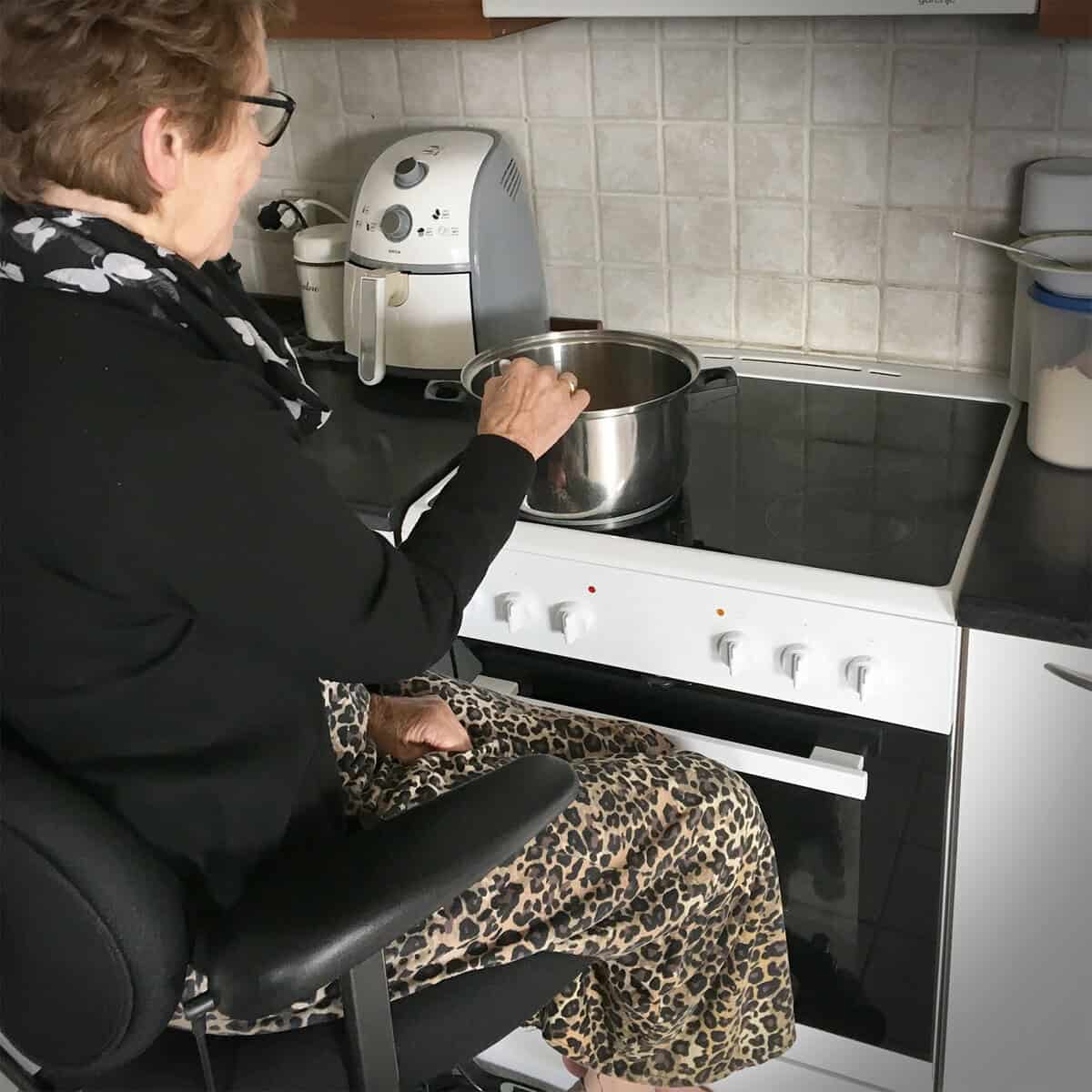
Today, many seniors face the challenge of preserving independence as they cope with the risks associated with mobility limitations. Addressing these challenges effectively can significantly reduce the likelihood of transitioning to nursing homes. VELA chairs emerge as a practical solution for this, being medically approved mobility chairs designed for home use. They provide enhanced safety, allow freedom of movement while seated, and support daily activities such as cooking, dressing, or transferring—all while reducing the load on informal caregivers.
Recent regulatory changes encourage PACE interdisciplinary teams to evaluate the need for assistive devices and ergonomic supports as part of every participant’s care plan. By integrating mobility solutions and rehabilitation strategies, PACE aims to optimize each senior’s safety and independence in their own home (Myers and Stauffer, 2025; MACPAC, 2025).
Redefining Elder Care with Senior Care Partners PACE
In conclusion, Senior Care Partners PACE emerges as a beacon of hope for elder care, advocating for an integrated, person-centered approach that prioritizes independence and quality care. Through a pioneering model of holistic healthcare, financial assistance, geographic accessibility, and innovative mobility solutions, the program paves the way for a dignified aging process in the comforts of home. Certified insights by the National PACE Association’s Advisory and national studies underline the tangible impact this innovative model brings.
For seniors and families exploring options for aging in place, Senior Care Partners PACE undoubtedly offers an unmatched blend of care, compassion, and community-centric healthcare solutions. National PACE Month 2025’s theme, “Your Health. Your Journey. Our Support.,” highlights this continued commitment to equitable, personalized care, particularly in underserved communities (National PACE Association News, 2025).
Supporting Aging in Place: A Practical Option
Exploring alternatives to nursing homes can provide seniors with the comfort and dignity of remaining in their own homes. Mobility solutions like VELA Chairs are pivotal in this journey, offering practical tools that promote independent living. Designed with features such as a central brake for enhanced safety, electric height adjustability for ease of transfers, and facilitated movement while seated, these chairs can significantly reduce strain on caregivers. For seniors, this means a higher degree of comfort and autonomy during daily activities like cooking or relaxing in their favorite spot. While supporting elderly independence, these chairs also delay the necessity of entering a nursing home by boosting the confidence and safety of seniors remaining in their familiar environments, ultimately supporting an active and dignified lifestyle at home.