

Updated September 2025: We have updated the article to reflect the latest advances in assistive technology for seniors, including AI-powered smart glasses, brain-computer interface prosthetics, autonomous smart wheelchairs, and personalized ergonomic solutions. The article also incorporates recent trends in user-centered design, interdisciplinary collaboration, and regulatory support, highlighting how Always Best Care Senior Services is positioned within this evolving landscape.
Understanding Always Best Care Senior Services: What Sets Them Apart?
Navigating the myriad options for senior care can be overwhelming for families seeking the best support for their loved ones. Always Best Care Senior Services stands out in this crowded arena by offering a comprehensive array of senior care solutions. Their services range from non-medical in-home care and transitional care to assisted living placement, all designed to meet the diverse needs of seniors. They operate through a franchise model, ensuring flexibility and personalized care suited to each community they serve, allowing each franchise to adapt its services to the unique needs of its local clientele.
A distinctive feature of Always Best Care is their focus on client-centered care, a core principle endorsed by geriatric experts. As Dr. Leslie Kernisan emphasizes on her blog, “The best senior care programs prioritize client-centered care planning, ongoing caregiver training, and adaptive support to maintain quality of life and safety for older adults.” Such an approach is vital for tailoring services to individual needs, illustrated by cases where personalized care plans, supported by ongoing caregiver training, have significantly improved seniors’ quality of life.
Types of Senior Care Provided: In-Home, Transitional, and Placement Services
Always Best Care Senior Services is committed to offering diverse care options that cater to the unique circumstances of every senior. Their services include:
- In-Home Care: Personalized care plans focusing on companionship, medication management, and daily living activities, crucial for seniors struggling with mobility or chronic conditions such as arthritis and diabetes.
- Transitional Care: Support for seniors moving from hospital to home, ensuring a smoother recovery process and reducing the risk of relapse or complications—a critical service as highlighted by numerous studies including one published in the Journal of the American Geriatrics Society, which emphasizes the effectiveness of managed transitions in reducing hospital readmissions.
- Assisted Living Placement: Assistance in finding residential care facilities that match the individual’s needs and preferences, facilitating a comfortable and community-oriented living arrangement.
According to the Journal of the American Geriatrics Society, effective senior care strategies involve personalized care plans and comprehensive caregiver training. A user review on A Place for Mom praises the positive experiences with caregivers, highlighting the compassionate and adaptive support provided to seniors.
Navigating Costs and Payment Options for Senior Home Care
The financial aspect of senior care is a crucial consideration for many families. Always Best Care offers a broad understanding of average costs and various payment options. Typically, in-home care costs range from $25 to $30 per hour, influenced by factors such as location and care level. According to Medicare.gov, while Medicare doesn’t generally cover non-medical home care, it may provide limited coverage for medically necessary services, making financial planning essential for families.
A notable scenario involves a middle-income family that managed to find a cost-effective care solution by availing of free consultations offered by Always Best Care. These consultations help families navigate financial planning by exploring all available payment avenues, including insurance considerations, which sometimes include leveraging long-term care insurance or Veterans’ benefits for eligible families.
Safety and Technology in Home Care: Fall Prevention and Monitoring
Safety remains a top priority in senior care, especially given the statistic from the Centers for Disease Control and Prevention: “One out of four older adults falls each year—fewer than half tell their doctor.” Integrating modern technology into home care services is crucial in mitigating such risks. Always Best Care employs various safety measures, including remote monitoring and fall prevention programs, which are vital in fostering a safer environment for elderly clients.
The National Institute on Aging highlights the importance of these strategies in supporting seniors’ wishes to age in place safely. A successful fall prevention program not only decreases the risk of hospitalizations but also fosters independence among seniors, as demonstrated by personal accounts of seniors who have benefitted from these initiatives. For example, Emily, a 76-year-old living independently, credits her improved mobility and reduced fear of falling to the insurer’s fall prevention program, enabling her to continue residing in her cherished home.
Bridging the Gap to Independent Living with Innovative Solutions
Recent advances in assistive technology are transforming how seniors maintain independence and safety at home. AI-powered devices such as smart glasses (for example, NeuroVision Pro and VisionX AI Glasses) now provide real-time environmental awareness and facial recognition, enhancing mobility and confidence for users with vision impairment or cognitive challenges. Brain-computer interface prosthetics, like the NeuroGrip Arm, are enabling more natural limb movement for people with disabilities, empowering greater autonomy in daily tasks. Smart wheelchairs with autonomous navigation and adaptive seat adjustment, including models such as LUCI, Adventus Robotics, and Robooter X40, further increase safety, ease of movement, and comfort in home and community settings. Improved ergonomics and intuitive user interfaces developed using user-centered design principles ensure technology adapts to evolving needs and abilities. These innovations are supported by growing funding and regulatory support, making advanced technology more accessible to seniors and people with disabilities. Ongoing collaboration among technologists, healthcare professionals, and users remains key to ensuring that solutions are inclusive and responsive to individual requirements.
Carr, Dawn. Nabroward.com, 2024;
ThinkBeyondTheChair.org, 2025;
Equal Accessibility LLC, 2025
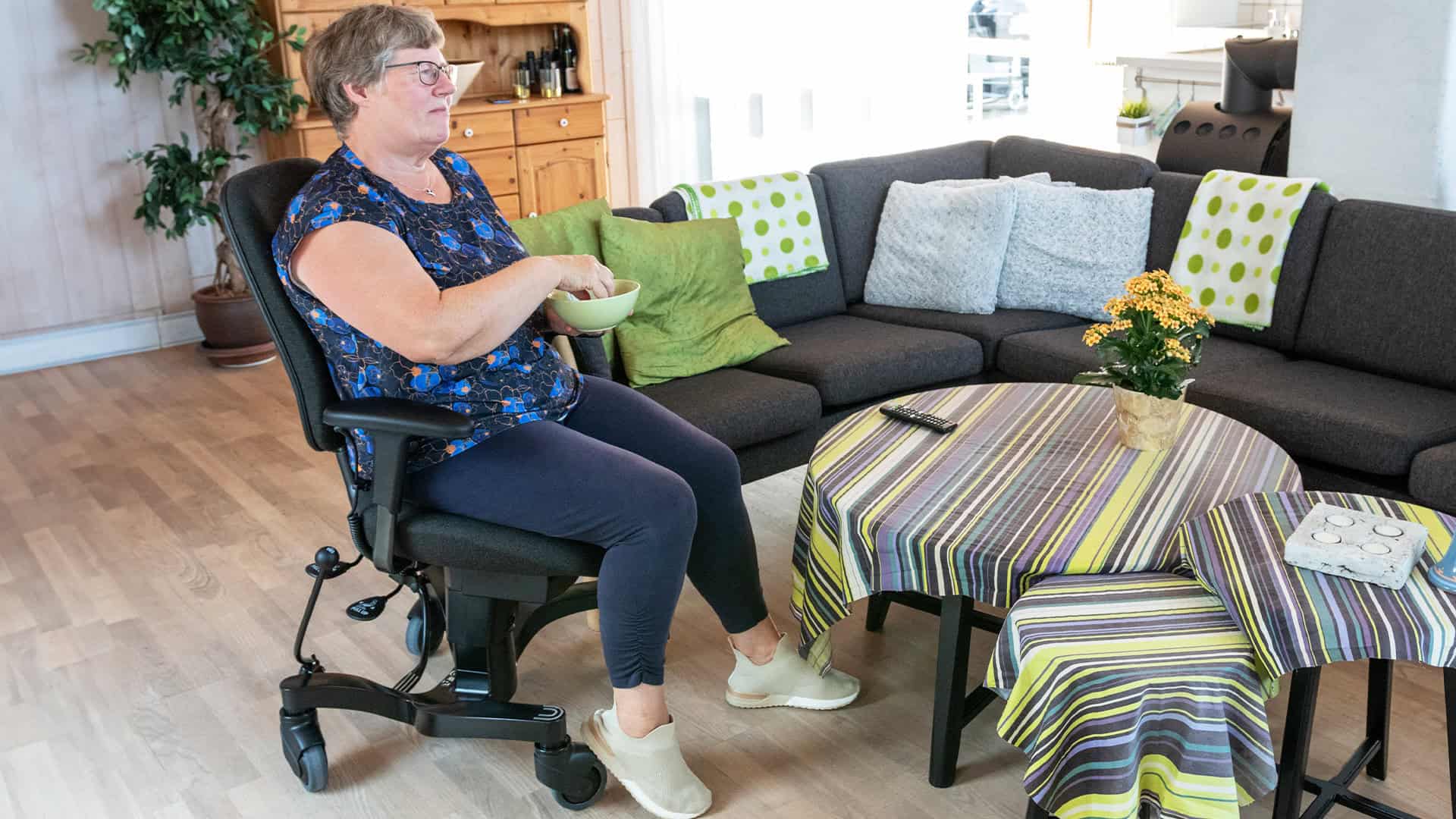
As families grapple with the challenges of maintaining independence and safety for aging loved ones, solutions like the VELA Independence Chair emerge as invaluable tools. The VELA chair, a medically approved mobility chair designed for home use, enhances safety and offers freedom of movement while seated. It supports various daily activities such as cooking, dressing, or transferring, thereby reducing the burden on informal caregivers. These features make VELA a practical option for those who wish to remain in the comfort of their own homes, aligning with the growing trend of aging in place.
Maintaining independence at home is a widely preferred choice among seniors, and mobility solutions like the VELA Chairs can play an essential role in achieving this. These chairs provide enhanced safety with features such as a central brake and electric height adjustability, allowing seniors to perform daily tasks with ease. For example, while preparing meals, seniors can adjust the seat height to comfortably reach kitchen counters, reducing fatigue and potential fall risks. The chair’s mobility allows seamless transition around the home, contributing to a sense of freedom and confidence. Furthermore, by delaying the potential need for nursing home care, VELA Chairs not only support personal autonomy but also ease the emotional and financial load on families. Although VELA is not the only solution, it represents a proven, practical choice that emphasizes safety, dignity, and preserving independence at home. For a more comprehensive look at improving senior safety, explore fall prevention strategies, which can be particularly beneficial.
Sources:
Carr, Dawn. “Revolutionizing Accessibility The Latest Innovations In Assistive Technology 2025.” Nabroward.com, Dec 31, 2024.
https://www.nabroward.com/2024/12/31/517401/revolutionizing-accessibility-the-latest-innovations-in-assistive-technology-2025
“The Best Assistive Tech Gadgets in 2025: Enhancing Independence Through Innovation.” ThinkBeyondTheChair.org, 2025.
https://thinkbeyondthechair.org/the-best-assistive-tech-gadgets-in-2025-enhancing-independence-through-innovation/
Evmenova, AS et al. “Volume 19, Spring 2025.” Assistive Technology Outcomes and Benefits Journal.
https://www.atia.org/wp-content/uploads/2025/06/ATOB-V19_Final.pdf
“Exciting Assistive Technology for People with Disabilities (And How to Get It).” Ability Montana Blog, Aug 2025.
https://abilitymt.org/blog/assistive-technology-people-disabilities
“Innovations In Assistive Technology.” Equal Accessibility LLC, 2025.
https://equalaccessibility.co/resources/innovations-assistive-technology/
“Assistive Technology (AT) Market to Grow by USD 6.3 Billion from 2025-2029.” PR Newswire, 2025.
https://www.prnewswire.com/news-releases/assistive-technology-at-market-to-grow-by-usd-6-3-billion-from-2025-2029–driven-by-rising-orthopedic–neurological-disorders-with-ai-impact—technavio-302371177.html