

Updated January 2026: We have updated the article with new findings from CES 2026 and leading industry conferences, highlighting AI-driven assistive devices, autonomous wearable technologies, all-terrain mobility solutions, and advances in resilient, hybrid service delivery for post-COVID independent living. Additional emphasis is placed on user-centered, inclusive design trends, the growing role of startups in accessible innovation, and micromobility systems that promote greater independence for seniors and people with disabilities.
Exploring Avenues of Independent Living for Seniors
As the population ages, the demand for independent living options among seniors has grown significantly. According to A Place for Mom, more seniors are choosing independent living communities due to their blend of autonomy and community engagement. This article delves into the various avenues of independent living, highlights the differences from assisted living, and explores how innovations like VELA chairs and recent advancements in AI and smart technologies can support enhanced mobility, independence, and quality of life.
Understanding the Spectrum of Independent Living Options
Independent living is a broad concept, encompassing several types of communities tailored to different preferences and lifestyles. These include traditional independent living communities, continuing care retirement communities (CCRCs), active adult communities, and naturally occurring retirement communities (NORCs). Each type offers unique benefits.
- Traditional Independent Living: Offer age-restricted settings often with comprehensive amenities and services to enhance quality of life. These communities typically offer various housing options ranging from apartments to single-family homes, designed to meet the lifestyle needs of seniors who are capable of living independently without assistance for daily activities. Insights from Tutera highlight that residents enjoy maintenance-free living with access to social activities, fitness centers, and on-site dining.
- Continuing Care Retirement Communities (CCRCs): Provide a continuum of care, allowing residents to transition seamlessly to higher care levels if needed. This option provides long-term stability, as evidenced by WesleyLife. CCRCs are ideal for seniors who want a single location to age in place, starting with independent living and transitioning to more intensive care options if health needs change over time.
- Active Adult Communities: Focus on fostering active lifestyles through recreation and social interaction. These communities are often designed around amenities such as golf courses, clubhouses, and pools, catering to seniors who prioritize leisure activities and social engagements as part of their retirement lifestyle.
- Naturally Occurring Retirement Communities (NORCs): Develop organically in neighborhoods with a high concentration of seniors. According to the Long Term Care Federation, these are not planned senior living communities but evolve as a significant number of seniors choose to reside in the same area, often with local services adapting to meet their needs.
For instance, Mr. Johnson, a senior transitioning from his family home to a CCRC, reported experiencing a sense of long-term security by being part of a supportive community while maintaining his independence. Conversely, many prefer active adult communities for their recreational emphasis, although they lack some comprehensive services seen in more traditional setups.
Distinguishing Independent Living from Assisted Living
Choosing between independent living and assisted living requires understanding their fundamental differences. According to Hebrew SeniorLife, the primary distinction lies in the level of care provided. Assisted living encompasses various levels of aid with basic daily activities, such as dressing and medication management, contrasting with the self-sufficiency expected in independent living.
- Level of Care: Independent living requires no caregiver assistance. Residents are expected to perform activities of daily living on their own.
- Cost Structure: Independent living typically incurs lower costs, with national median monthly fees around $3,100 compared to assisted living’s $4,995, as noted by National Church Residences.
- Resident Lifestyle: Residents in independent living are active, needing little to no daily assistance. They engage in social and recreational activities within the community, fostering an independent lifestyle focused on personal growth and social interaction.
One scenario highlights a senior couple who selected independent living to benefit from the vibrant social atmosphere without needing daily assistance. In contrast, another senior, requiring regular aid, selected assisted living.
Financial Landscape of Independent Living
Considering the financial implications of independent living is vital in decision-making. The cost structures can vary, including entrance fees, monthly fees, or all-inclusive packages. According to National Church Residences, monthly fees typically cover housing, maintenance, and access to common amenities, but personalized healthcare services often come at an additional cost.
- Housing and Utilities: Typically included in monthly fees
- Meals and Housekeeping: Often available but may incur extra charges
- Healthcare and Personal Care: Managed separately from community fees
An example of prudent financial planning involves Ms. Smith, a senior analyzing her budget to ensure sustainability in an independent living setting, evaluating initial enrollment fees against long-term benefits.
Embracing Technology and Design in Independent Living
The landscape of independent living is rapidly evolving with recent breakthroughs in assistive technology and the integration of advanced AI and user-centered design. AI-driven and ecosystem-integrated solutions, featured at CES 2026, now power wearable devices and smart glasses for real-time environment navigation, enabling independent living for users with reduced mobility and disabilities.[8] [9] [10] Wearables like .lumen’s Glasses for the Blind utilize autonomous driving-like navigation with vibration feedback, and devices such as WheelMove wheelchair attachments and XSTO all-terrain power chairs extend the boundaries of accessible mobility on slopes and stairs.[9]
- AI-integrated Assistive Devices and Wearables: CES 2026 showcased innovations like AI-powered smart glasses that enable real-time 3D navigation, and micromobility systems such as MaaS-Bridge for secure, seamless transport between vehicles and pedestrian environments. These devices, including SEERU for senior mobility awareness, offer more dynamic, adaptable support than previous static aids.[8] [9]
- Hybrid and Remote Assistive Technology Delivery: Conferences like ATIA 2026 and ICCHP emphasized post-COVID advances, such as hybrid models for remote assessment, training, and support. These enable ongoing, flexible access to services and professional guidance, reinforcing user resilience and broadening access in both high- and low-resource communities.[10] [11]
- User-Centered and Inclusive Design Trends: The latest solutions increasingly involve end users in design processes and leverage AI personalization, as seen with new event tools and navigators like those launched at ATIA 2026. These efforts foster more effective, accessible adaptive devices and inclusive environments for seniors and people with various disabilities.[10] [13]
- Startup Trends and Expanding Market Solutions: Growth in startup activity—such as Aira, OrCam, eSight, and others—has improved funding for vision and mobility aids, signaling greater market adoption and accelerated delivery of evidence-based rehabilitation tools. These include wearable exoskeletons that reduce metabolic strain and voice/vision AR for daily independence.[9]
- Inclusive Policy and Community Integration: New technologies now align with policy initiatives, such as implementing tactile paving within micromobility corridors, supporting safe, accessible movement for all ages and abilities.[13]
For example, Mr. and Mrs. Lee, residents of an independent living community utilizing wearable health monitors and AI-powered smart glasses, can manage health and safety while fully engaging in community activities. Remote, hybrid, and AI-powered services allow users to access personalized assessment and training, while immersive VR, AR, and robotic rehabilitation assist with daily independent tasks and social connection.[10] [11]
How Mobility Solutions Like VELA Make a Difference
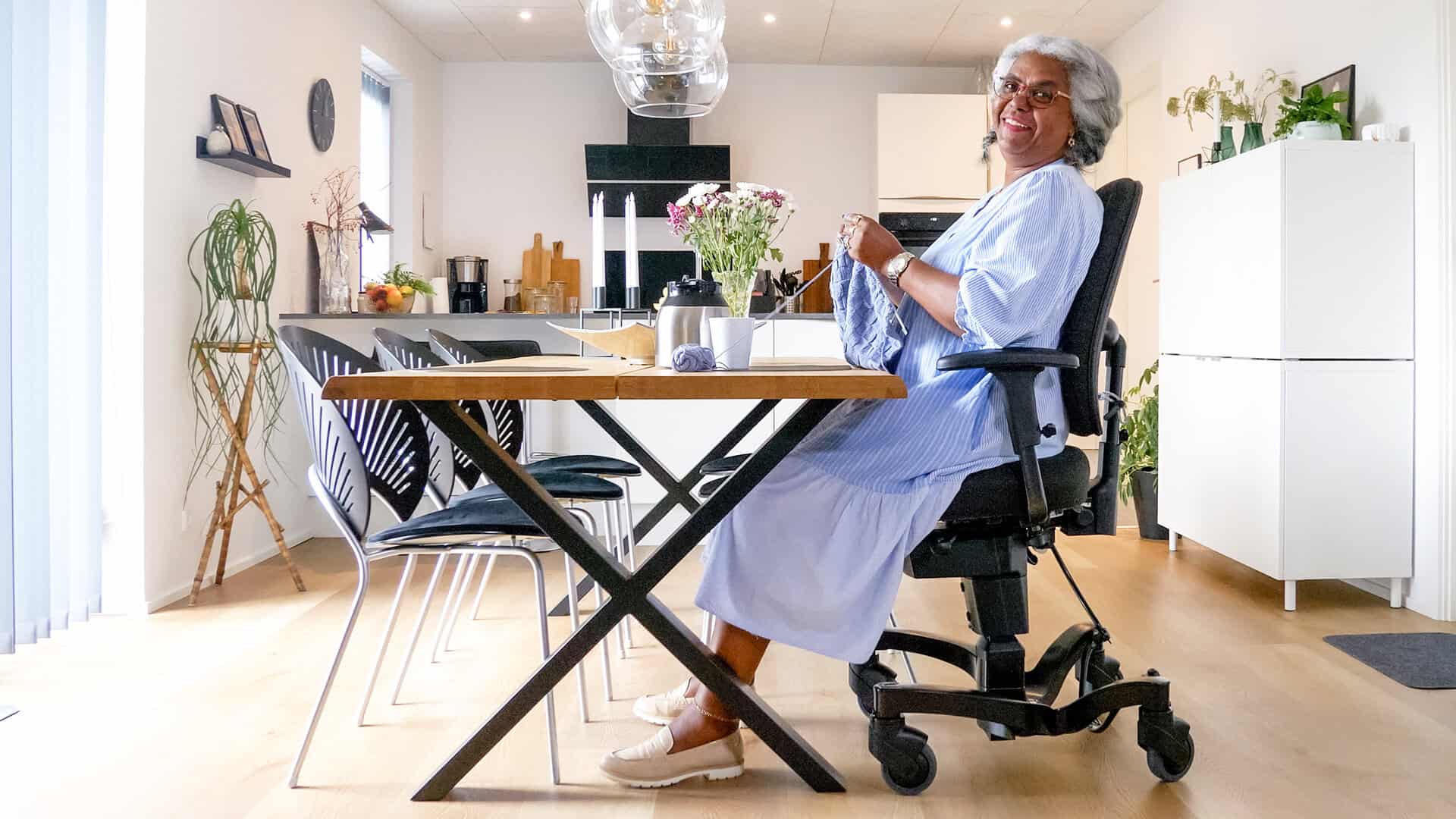
Staying independent at home becomes more feasible with adaptive solutions designed to address common problems faced by the elderly. The VELA Independence Chair, for instance, helps seniors maintain autonomy by offering enhanced safety features, such as a central brake, and electric height adjustability for seamless transfers. This adaptability allows users to perform everyday tasks like cooking, cleaning, or simply relaxing with greater ease and confidence. Increasingly, mobility solutions are also being designed with user-centered feedback and advanced technologies to interact with other smart devices in the home.
With a VELA Chair, seniors can sit comfortably while maneuvering easily around their homes, minimizing the risk of falls, conserving energy, and preserving their dignity—all critical aspects in delaying the transition to a nursing home. While VELA is not the only solution, it represents a practical and proven approach to promoting mobility solutions for independent living. User feedback and ongoing innovation are central to product development, resulting in increasingly effective, inclusive, and accessible tools. By enhancing safety and reducing the physical demands on both seniors and their caregivers, VELA and similar technologies facilitate a more dignified and independent living experience.[1] [3]
References
- Cognitive Market Research, Assistive Technology Market Report 2025
- Envision Community Blog – Future of Assistive Technology with Integrated AI Assistants (2025)
- Accessibility.com and WIPO – Assistive Technology Innovations and Consumer Integration (2023-2025)
- CSUN Assistive Technology Conference 2025 – Top Assistive Technologies and Real-Time Visual Interpretation (Aira, etc.)
- First Aid for the Blind – Meta Ray-Ban Smart Glasses with Live AI for Real-Time Assistance (August 2025 update)
- Journal of Visual Impairment & Blindness (JVIB) – 2025 Special Issue on Assistive Technology Innovations, User-Centered Design & VR/AR (Upcoming Nov-Dec 2025)
- SenTeachersTraining.com – Assistive Tech Trends for 2026: Text-to-Speech, FM systems, Sip-and-Puff, and More (2025-2026)
- CES 2026: Ten Technologies for Senior Self-Care and Independent Living
- CES 2026: 4 Assistive Technology Exhibitors to Watch (WheelMove, MaaS-Bridge, SEERU, XSTO)
- ICCHP Session: Innovation in Assistive Tech Delivery – Post-COVID Hybrid Models and User Case Studies, 2026
- ATIA 2026 Conference – AI Navigator, Professional Development, Consumer Tech and AT Services
- CES Accessibility Topics – AI-Driven Inclusive Design, Micromobility, and Policy Initiatives for 2026