

Updated September 2025: We have updated the article with new insights on the latest AI-powered and smart wearable assistive devices, integration of remote health monitoring technologies for aging in place, recent advances in user-centered design, and current global trends in access to comprehensive assistive care solutions.
Beyond Independent Living: Understanding and Embracing Comprehensive In-Home Care
With an aging population steadily increasing, the need for care that goes beyond independent living has never been more crucial. Many seniors, specifically those aged 75 and above, are seeking ways to continue living at home comfortably and safely. According to the Journal of Geriatric Care, 83% of older adults prefer to age in place, and outcomes improve significantly with in-home assistance for Activities of Daily Living (ADLs) and Instrumental Activities of Daily Living (IADLs), resulting in fewer hospitalizations and a reduced risk of falls. To address these growing needs, credible sources such as Medicare.gov and NIH/NIA offer valuable insights into navigating the world of comprehensive home care.
Understanding the Transition: Beyond Independent Living
Moving beyond independent living involves recognizing when a senior requires more comprehensive support due to chronic illnesses or mobility limitations. For instance, individuals with heart disease or dementia may find it increasingly difficult to live independently as these conditions progress. Resources like A Place for Mom provide detailed insights into these transitions, highlighting the importance of adapting care levels to meet changing needs. For example, John, an elderly man experiencing increasing mobility issues, transitioned from assisted living to in-home care. This shift allowed him to maintain his quality of life with compassionate support tailored to his needs.
Comparing Care Options: Home Care vs. Assisted Living vs. Nursing Homes
Determining the best care option requires understanding the differences between home care, assisted living, and nursing homes. Home care offers personalized attention and allows seniors to remain in their familiar surroundings, making it a preferred choice for many families. As described by the NIH/NIA, home care typically includes services such as skilled nursing, physical therapy, and companionship. The Miller family, for instance, after reviewing various options, decided on home care for its customized approach and the comfort it brought their loved one, reflecting the peace of mind achieved through thoughtful decision-making.
State and Federal Support Programs: Navigating Financial Assistance
Financial constraints often play a significant role in care decisions. Various state and federal programs, such as Home and Community-Based Services (HCBS) waivers and Medicaid, help alleviate these burdens by covering some home care costs. The Commonwealth of Pennsylvania – HCBS outlines the specifics of these waivers, highlighting the application process and eligibility criteria. Mary, a lower-income senior, successfully obtained financial assistance through a waiver, underscoring the accessibility and importance of these programs in enabling seniors to age at home.
Choosing a Local Provider: What to Look For
Selecting a reliable home care provider requires careful consideration of several factors, including certifications, user reviews, and the range of services offered. In Pennsylvania, top-rated providers like Comfort Home Care and Home Instead Senior Care exemplify professional and compassionate care. Cost considerations are also crucial, and comparing them against service offerings ensures that families choose providers that align with their financial and care needs. Testimonials from families praise these providers for their reliability and personal attention, evidencing the peace of mind they provide.
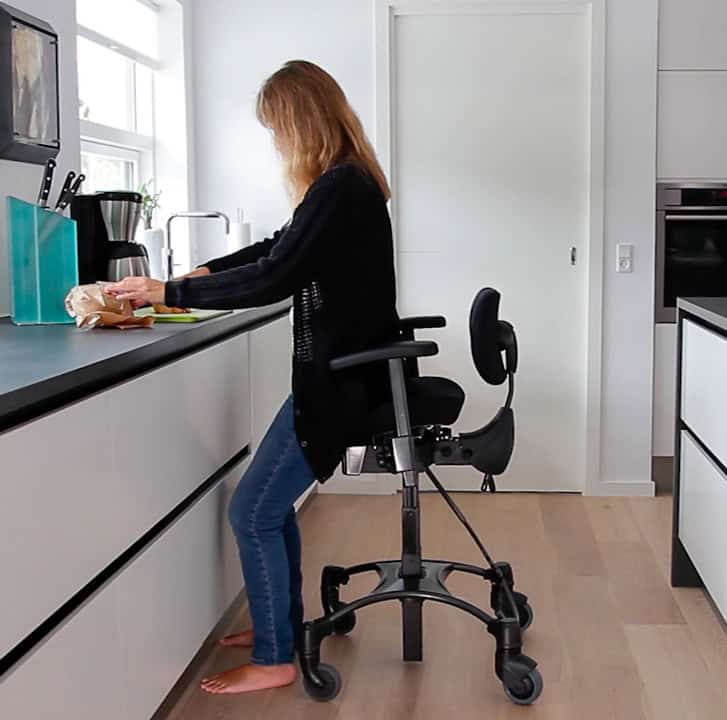
To further support the desire for seniors to stay in their own homes, solutions like the VELA Independence Chair come into play. Unlike the more institutionalized environment of nursing homes, assistive devices like the VELA chair offer a medically approved alternative designed specifically for home use. These chairs enhance safety and provide significant freedom of movement while seated, making daily activities like cooking, dressing, or transferring both easier and safer for seniors. They also help reduce the physical burden on informal caregivers, thus enabling older adults to maintain greater independence.
Staying Independent at Home with Support
Innovative solutions such as the VELA Independence Chair are transforming how seniors approach in-home care by empowering them to maintain autonomy for longer periods. Designed with features like a central brake for stability, electric height adjustability, and built-in assistive controls, these chairs significantly improve safety and ease of movement within the home. Whether navigating the kitchen or relaxing with family, the chair offers everyday functionality that mitigates the need for further care escalation, often delaying or eliminating the move to a nursing home. By providing the much-needed balance between self-reliance and support, mobility solutions like the VELA chair enhance dignity, safety, and energy conservation. While not the only option available, it is a proven and practical part of any senior care strategy focused on aging in place. For more insights, see Senior-Focused Mobility Solutions and Enhancing Daily Mobility.
Latest Technological Advances in Comprehensive Care
The landscape of comprehensive in-home care is rapidly evolving with the adoption of artificial intelligence (AI), Internet of Things (IoT), and wearable smart devices that deliver dynamic, context-aware support for people with reduced mobility or disabilities. Recent innovations include AI-enhanced smart prosthetics and mobility aids that adapt in real-time to user movements and environmental changes, improving both safety and independence Cognitive Market Research. In particular, wearable technology such as Meta’s Ray-Ban Smart Glasses with Live AI provides real-time, hands-free audio descriptions and helps users interact with their environment, supporting navigation and object recognition for those who are visually impaired First Aid for the Blind.
Further technological progress includes the integration of voice recognition, eye-tracking, brain-computer interfaces, and AI assistants into unified platforms, streamlining support for people with visual impairments and cognitive disabilities Let’s Envision. Remote health monitoring, fall detection, and medication management technologies have gained greater importance, especially following the COVID-19 pandemic, enabling aging-in-place strategies and enhancing home-based comprehensive care Consumer Technology Association.
Inclusive and user-centered product design is increasingly shaped by direct feedback from users with disabilities, resulting in practical improvements to functionality and usability in rehabilitation and everyday assistive devices American Foundation for the Blind. As global needs rise, recent market reports highlight ongoing gaps in product accessibility, especially in low- and middle-income countries, and emphasize the need for supply chain improvements and policy reform Clinton Health Access Initiative. Events like the 2025 CSUN Assistive Technology Conference showcase the latest solutions, including VR and AR technologies offering immersive rehabilitation, orientation, and training experiences for people with disabilities InnocaPTion.
Conclusion: Embracing the Future of In-Home Care
Comprehensive care for those who wish to age in place now benefits from a dynamic blend of personalized support and cutting-edge technology. As the range of smart, adaptive devices continues to expand, and inclusive design receives greater attention, seniors and people with disabilities can expect more responsive, accessible, and effective solutions to help maintain independence at home. Ongoing advances in AI, remote health monitoring, and user-centric innovation, along with continued focus on breaking down barriers for underserved populations, are set to define best practices in comprehensive care for years to come.
Sources
- Cognitive Market Research. Assistive Technology Market Report 2025 (Global Edition)
- Let’s Envision. Future of Assistive Technology & AI Assistants in 2025
- InnocaPTion. Top 5 Assistive Technologies Showcased at CSUN 2025
- First Aid for the Blind. Assistive Technology Roundup August 2025
- Clinton Health Access Initiative with ATscale. 2025 Assistive Products Market Report
- American Foundation for the Blind, 2025 Special Issue on Advancements and Innovations in Assistive Technology
- Consumer Technology Association – CES Accessibility Section
- Journal of Geriatric Care – Aging in Place Study
- Medicare.gov – Home Health Services
- NIH/NIA – Long-Term Care Facilities Overview
- A Place for Mom – Assisted Living vs. Home Care
- Commonwealth of Pennsylvania – HCBS Information
- VELA – Senior-Focused Mobility Solutions
- VELA – Enhancing Daily Mobility