

Updated September 2025: We have updated the article to reflect recent advancements in AI and smart technology integration into assistive devices, including AI-powered wheelchairs, wearables for vision and speech support, and innovative rehabilitation tools. The latest clinical endorsements and regulatory support for AI-enabled assistive technologies have also been included.
Concerned for Independent Living: A Comprehensive Guide
The transition to independent living is a significant decision for seniors, balancing the desire for autonomy with concerns for safety. Statistics indicate that the median national cost for independent living is approximately $3,100 per month, highlighting the financial importance of this decision. According to A Place for Mom, the cost difference between assisted and independent living services is substantial. Independent living aims to preserve individuals’ independence while easing their day-to-day lives, according to HelpGuide.org.
Understanding Seniors’ Concerns About Independent Living
Seniors contemplating independent living often have concerns about safety, healthcare access, and maintaining social connections. Transitioning from a familiar home to a community setting demands a careful evaluation of these factors. Refer to a comprehensive discussion by Westmont Living. Take the story of Jane, a 76-year-old widow: her transition to a community offering vibrant social activities and enhanced safety showcases how these environments can alleviate concerns while providing support with minimal assistance for daily living. For more, visit Elderwood Senior Living.
Profiles: Who Benefits Most from Independent Living Communities
Typically, seniors aged 65 to 96 benefit most from independent living, often seeking reduced home maintenance responsibilities and enhanced social opportunities. A case study of a lively 70-year-old choosing an independent living setup illustrates this desire to enjoy social opportunities without the burden of home upkeep, catering to individuals even with minor health challenges. For detailed insights, see HelpGuide.org.
Safety, Socialization, and Healthcare Access: Top Priorities for Seniors
Safety features, healthcare accessibility, and social engagement are fundamental priorities. Many communities offer 24-hour staff availability and convenient transportation, greatly enhancing residents’ peace of mind. For instance, at Westmont Living, structured environments minimize risk and encourage interaction through activities and common areas designed for socialization.
Tools and Products That Promote Independence at Home
Recent advances in assistive technology now empower seniors with smart and AI-enabled devices for greater autonomy and safety at home. Modern mobility aids, such as AI-powered wheelchairs, integrate features like GPS navigation, collision avoidance, health monitoring, and app connectivity for personalized management and enhanced security.[1] AI-wearables, including smart glasses, offer real-time environmental descriptions and voice control for those with vision impairments, supporting navigation and hands-free interaction.[5] Products like the VELA Mobility Chair remain vital, providing ergonomic comfort, fall prevention, and movement assistance; however, today’s landscape also features AI-enhanced prosthetics and wearable speech converters for individuals facing diverse day-to-day challenges.[3]
Collectively, these innovations enhance independence at home by delivering highly adaptive, user-centered support. For additional insights, see these senior chairs for independent living.
Staying Independent at Home with Support
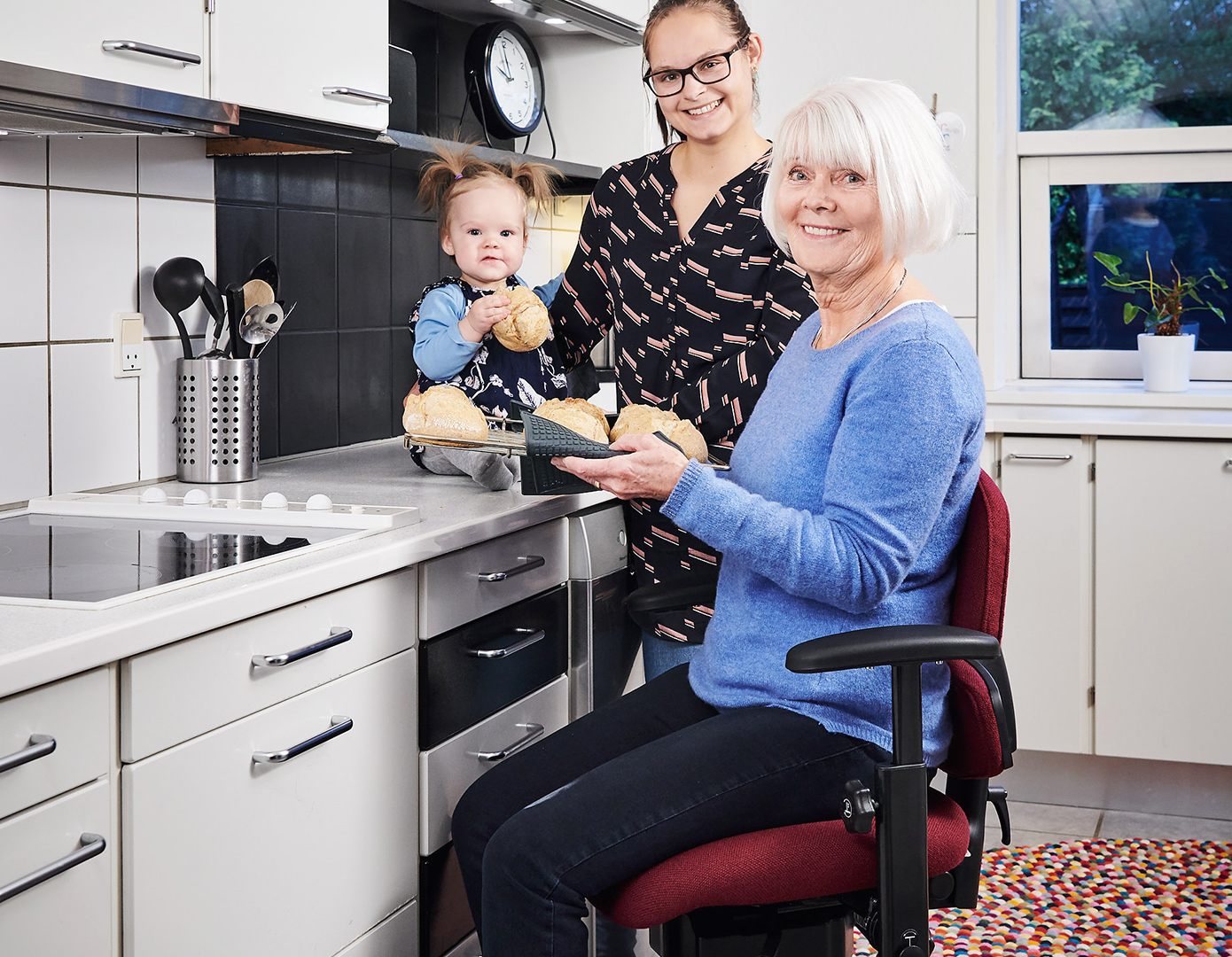
Mobility solutions like the VELA Independence Chair empower seniors to stay independent longer in their own homes, offering a practical alternative to nursing homes. With features such as a central brake for enhanced safety, electric height adjustability, and ease of movement while seated, the chair meets essential needs such as safety while reducing energy expenditure. Further, digital advancements now extend support through AI-enabled assistants, context-aware health monitoring, and personalized rehabilitation tools that foster natural movement and improved dignity for users.[6] Emerging regulatory practices and clinical guidance increasingly endorse smart assistive technologies for their proven safety and capacity to support aging in place.[4] Imagine performing daily activities like cooking or cleaning with greater ease and security — the chair’s support allows seniors to maintain their dignity and freedom. Although VELA is not the only solution, its ability to assist with everyday tasks while decreasing the strain on caregivers makes it a valuable, proven option for promoting aging in place. Mobility chair that supports everyday tasks are essential for those seeking to extend their independence at home effectively.
- Everything Medical Online, “The Latest Trends in Mobility Aid Technology for 2025” — https://everythingmedicalonline.com/blogs/news/the-latest-trends-in-mobility-aid-technology-for-2025
- LetsEnvision.com, “What’s Next for 2025: The Future of Assistive Technology & AI Assistants” — https://www.letsenvision.com/blog/future-assistive-technology
- Connsense Report, “13 CES 2025 Award-Winning Assistive Tech Innovations” — https://connsensereport.com/2025/02/03/13-ces-2025-award-winning-assistive-tech-innovations-for-healthcare-professionals-to-know-about/
- Innocaption.com, “Top 5 Assistive Technologies Showcased at CSUN 2025” — https://www.innocaption.com/recentnews/top-5-assistive-technologies-csun-2025
- First Aid for the Blind, “Assistive Technology Roundup: August 2025 Update” — https://www.faftb.com/post/assistive-technology-roundup-august-2025-update
- SEN Teacher Training, “Assistive Tech Trends in 2026 Every Special Needs Teacher Should Know” — https://www.senteacherstraining.com/blog/2414-Assistive-Tech-Trends-in-2026-Every-Special-Needs-Teacher-Should