

Updated January 2026: We have updated the article to reflect advancements in assistive technology for independent living, including the latest in AI-powered real-time assistance, expanded wearable solutions, haptic feedback navigation devices, and progress in brain-computer interface technology. The article now highlights emerging trends such as conversational AI integration, new wearable mobility tools, and continued innovation in user-centered design for greater autonomy.
Updated September 2025: We have updated the article to reflect the latest breakthroughs in assistive technology, including AI-powered smart glasses, brain-computer interface prosthetics, integrated conversational AI assistants, wearable real-time navigation aids, and advances in user-centered design. The article now covers key conference highlights, the expansion of assistive solutions into public and educational sectors, and emerging trends that enhance independent living for seniors and people with disabilities.
Understanding Concerns for Independent Living in 2025
As our global population ages, understanding the complex concerns surrounding independent living is crucial. This issue affects not only seniors but also society as we seek sustainable solutions to accommodate the rapidly expanding elderly demographic. Financial concerns loom large; according to Finance & Commerce, by 2030, the senior living sector will experience a shortfall of 550,000 units, demanding a $275 billion investment to bridge this gap. The psychological well-being of solo agers also presents challenges; McKnight’s Senior Living reports that 42% of solo agers express life dissatisfaction, largely due to isolation.
Demographic and Socio-Economic Trends Impacting Seniors
Demographic shifts reveal increases in solo agers, financially insecure seniors, and those with complex health issues. These individuals face hurdles like fluctuating housing markets and insufficient retirement savings, complicating their ability to live independently. Brittany Flanagan, an expert at Eldersource, shares, “It’s not just about numbers; we see real people struggling daily with isolation and financial stress, significantly impacting their mental health.”
Affordable Housing and Home Care Costs: The Current Landscape
Affordable housing and care are critical to independent living, but rising costs pose barriers. Flanagan notes, “The dream of aging in place often meets the hard reality of financial constraints.” With senior living costs averaging between $2,000 to $4,500 monthly, excluding additional home care services, the anticipated shortfall underscores the need for significant investment in affordable housing.
Mental and Physical Health Challenges for Independent Seniors
Health challenges, both mental and physical, are prevalent among independent seniors, often exacerbated by isolation. Experts from Ruby Care Senior describe social isolation as a “silent epidemic,” leading to depression, anxiety, and cognitive decline, affecting quality and longevity of life. See fall prevention strategies for elderly.
Innovative Community Support Models for Solo Agers
Innovative community models are emerging to support solo agers, such as Eldersource in Rochester, NY. These programs offer volunteer networks and continuing-care-at-home memberships, providing essential companionship and support, exemplifying effective community-driven solutions (Concern for Independent Living Inc.).
Technology and Equipment Solutions for Safer Home Care
Technology plays a critical role in enhancing safety and autonomy for seniors at home. The latest assistive technologies in 2025 and beyond are transforming the landscape with significant innovations:
- AI-powered smart glasses and real-time assistive devices: The newest devices, including VisionX and Meta’s Ray-Ban smart glasses equipped with “Live AI” features, now offer real-time conversational scene descriptions. This advance eliminates the need for users to take photos or use touchscreens, shifting assistive technology from reactive assistance to anticipatory and seamless support. Such tools provide real-time environment descriptions, facial recognition, text reading, and navigation assistance, furthering independence for people with visual impairments Think Beyond the Chair First Aid for the Blind First Aid for the Blind.
- Wearable technology expansion and haptic feedback devices: Recent developments include smart glasses and wearables that integrate multilingual support, advanced scene recognition, and improved battery life. Additionally, new mobility tools such as the Glide device—using haptic feedback—are in development to help guide users around obstacles, further enhancing independent mobility for those who are blind or visually impaired.
- Brain-computer interface (BCI) progress: BCIs have advanced beyond eye-tracking and now interpret complex speech and motor patterns. Applications include control of communication systems, computer cursors, and robotic limbs. Thought-controlled prosthetic devices like NeuroGrip represent a significant advancement in intuitive, natural-feeling movement through direct brain signal interpretation Think Beyond the Chair.
- Integrated AI assistants: The shift from single-function accessibility to live, conversational AI assistants delivers real-time, contextual support. These advances provide instant responses to a wide variety of needs, improving access and reducing friction for users managing daily activities LetsEnvision.
- Wearable, personalized assistive devices: Beyond smart glasses, options such as haptic vests, wearable navigation aids, and environmental sensors are being adopted to further enhance continuous interaction and mobility, especially for people with low vision JVIB.
- Real-time visual interpreting and support services: Services such as Aira provide on-demand environmental descriptions and support for a variety of situations, including transportation, education, and unfamiliar public spaces, improving participation and autonomy CSUN Conference 2025.
- Emerging educational and cognitive aids: Tools such as text-to-speech engines, FM listening systems, and sip-and-puff controllers continue to support inclusive education and address a wide spectrum of independent living challenges Asian College of Teachers.
There is a rapid shift toward integrated, conversational AI assistants that anticipate needs and provide real-time information, replacing standalone accessibility apps—especially benefiting users with visual impairments and those requiring immediate help LetsEnvision. Wearable technologies, from enhanced AI-enabled glasses to haptic feedback navigation tools, represent a significant leap in user experience and mobility.
During and after the COVID-19 pandemic, the adoption of aging-in-place technologies such as remote health monitoring, medication management, fall detection, and adaptive furniture accelerated considerably, allowing seniors to remain in their homes safely for longer and improving quality of life for both users and caregivers Cognitive Market Research.
Recent innovations presented at major events in 2025 and beyond include AI-powered visual interpreting tools (such as Aira), gamified American Sign Language (ASL) learning platforms, motorized cosmetic applicators for users with limited dexterity, custom gaming controllers, haptic mobility aids, and the continued expansion of wearable sensor technology. These advances highlight the merging of assistive technologies with mainstream consumer electronics, increasing usability and acceptance Market.us CSUN Conference 2025. User-centered, iterative design has grown in prominence, involving users with disabilities at every stage of product development to ensure real-world relevance and comfort JVIB.
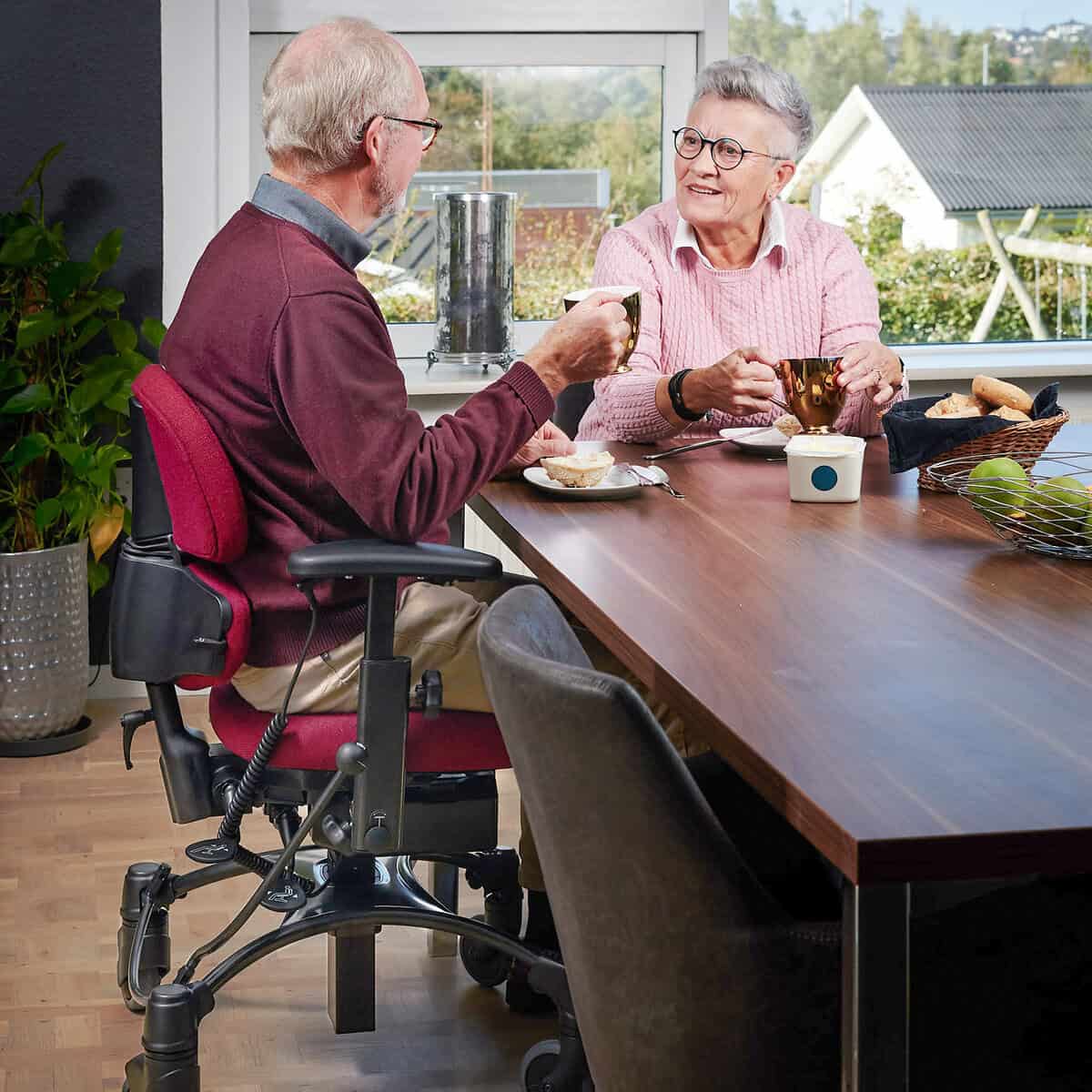
Transitioning from concerns about traditional nursing home environments to solutions that promote living independently at home, the VELA Mobility Chair presents a noteworthy option. It is a medically approved mobility chair designed explicitly for home use, enhancing safety and freedom of movement while seated. The chair supports daily activities such as cooking, dressing, and transferring between seating and standing, all while reducing the physical burden on informal caregivers. This solution connects effectively with the autonomy desired by seniors wishing to avoid institutional living.
Supporting Aging in Place: A Practical Option
As seniors strive to maintain their independence, solutions like the VELA Chair prove essential. Designed to enable seniors to remain active and self-sufficient, the chair addresses safety with its central brake for stability and electric height adjustability for ease of transfer. These features can significantly delay the need for a nursing home by reducing fall risks and preserving energy. A life with a VELA Chair means more freedom in daily tasks, be it cooking, cleaning, or simply relaxing without constant assistance. While it is not the only solution, the VELA Chair stands out as a practical and dignified aid, making support for seniors living independently more attainable.
References:
Cognitive Market Research, Assistive Technology Market Report 2025
LetsEnvision, Future of Assistive Technology & AI Assistants 2025
Market.us, Assistive Technology Statistics and Innovations 2025
CSUN Conference 2025, Top Assistive Technologies Showcased
Helen Keller Services, Tech Blitz 2025
Journal of Visual Impairment & Blindness (JVIB), 2025 Special Issue
Think Beyond the Chair, The Best Assistive Tech Gadgets in 2025
First Aid for the Blind, Assistive Technology Roundup August 2025
Asian College of Teachers, Assistive Tech Trends in 2026
First Aid for the Blind, Assistive Technology Roundup August 2025