

Updated September 2025: We have updated the article with new findings on AI-powered assistive devices, advances in smart wheelchairs and prosthetics, trends in ergonomic design, and updated clinical guidelines supporting technology-driven independence in both independent and assisted living settings.
Navigating Senior Living Choices: Independent Living vs. Assisted Living
Understanding the difference between independent and assisted living is crucial for families and seniors exploring long-term care options. These two senior living arrangements offer diverse environments, varying levels of care, and associated costs that significantly impact daily life and financial planning. According to the Arkansas Department of Human Services, assisted living facilities ensure residents receive health and social services while maintaining independence whenever possible.
Understanding Senior Living Options: Independent vs. Assisted Living
Independent living communities cater to seniors who are autonomous and desire a maintenance-free lifestyle. These communities often feature apartment-style living with amenities that create a country club atmosphere, focusing on active lifestyle opportunities. In contrast, assisted living is designed for seniors who need help with daily tasks, such as medication management or personal hygiene. A Place for Mom explains that while independent living is suited for those not requiring hands-on care, assisted living provides necessary support with activities of daily living (ADLs).
New advances in assistive technology are now increasingly found in independent living communities. AI-powered smart wheelchairs, for example, learn user behavior, offer advanced navigation, and support remote customization via mobile apps, allowing many seniors with physical disabilities or mobility limitations to maintain their autonomy longer than before.[2], [4] Further, brain-computer interface (BCI) prosthetics are enabling more natural and intuitive control of artificial limbs, reducing barriers for users to live independently.[4]
Consider the case of Mrs. Johnson, who moved to independent living to enjoy her retirement without the hassles of home maintenance. She thrived in the vibrant community environment that offered numerous social activities and only required minor support from on-site services. With access to connected devices such as AI-enhanced mobility aids, she experienced an even greater degree of autonomy and safety in her daily activities. This setting provides her with autonomy and social engagement, aligning perfectly with her needs.[1], [2]
Assessing Care Needs: When to Choose Independent or Assisted Living
Determining the appropriate care level is essential in choosing between independent and assisted living. If a senior begins experiencing difficulties managing ADLs, it might be time to consider assisted living. For active seniors, independent living communities offer an opportunity to enjoy life without the physical demands of homeownership.
The Jacksons, an elderly couple, faced this decision when Mr. Jackson needed more help due to mobility issues after a fall. They moved to an assisted living community where Mr. Jackson received necessary care, while Mrs. Jackson enjoyed the amenities and social opportunities available to her. The Arbor Company notes that assisted living communities offer personalized assistance within 25-120 apartment-like units, accommodating diverse care needs.
Current expert consensus recommends tailoring assistive technologies to each individual’s unique abilities and needs—regardless of setting—incorporating flexibility, ergonomic advances, and user feedback at every stage.[6] The latest ergonomic aids include AI-enhanced walkers, connected smart glasses, and wearable health monitoring devices, supporting independence even as care needs evolve.[4], [8]
Daily Life Comparison: Activities and Routines in Both Settings
Life in independent and assisted living varies significantly in terms of daily routines and social activities. Independent living is characterized by vibrant social calendars, often including community events, fitness classes, and excursions. Assisted living, however, offers a more structured routine, with staff facilitating activities tailored to varying abilities.
Take the example of Mr. Thompson, who enjoyed his active lifestyle in independent living. However, as his health needs increased, he benefited from the structured support provided in assisted living, allowing him to continue enjoying social connections within a safe environment. Cedarhurst Senior Living highlights that while independent living fosters autonomy, assisted living environments emphasize structured community-based activities.
Recent advances in user-centered design have brought more intuitive controls and seamless interfaces into both environments, reducing the effort needed to interact with assistive devices and increasing engagement in community activities.[6] This focus on personalization allows devices to facilitate participation in routine and social activities, bridging the gap between independent and assisted living experiences.[4]
Financial Planning for Senior Living: Costs and Payment Options
Financial considerations are pivotal when choosing between independent and assisted living. Independent living typically incurs lower costs, covering housing and basic services, with healthcare needs paid separately. Conversely, assisted living usually involves higher monthly fees, encompassing personalized care and housing.
For instance, Ms. Evans saved for her transition from independent to assisted living, carefully planning her finances to ensure continued care. She evaluated payment options, including long-term care insurance and retirement savings. Otterbein SeniorLife indicates that while independent living costs range from $1,500 to $4,000 monthly, assisted living fees vary from $3,000 to $7,000, depending on care needs.
Increasing adoption of smart, connected assistive devices can offer additional cost benefits, as many technologies provide remote maintenance, self-diagnostics, and customization through mobile applications—helping to reduce overall service costs and support greater independence without additional ongoing fees.[2], [8]
Maintaining Independence with Supportive Technology
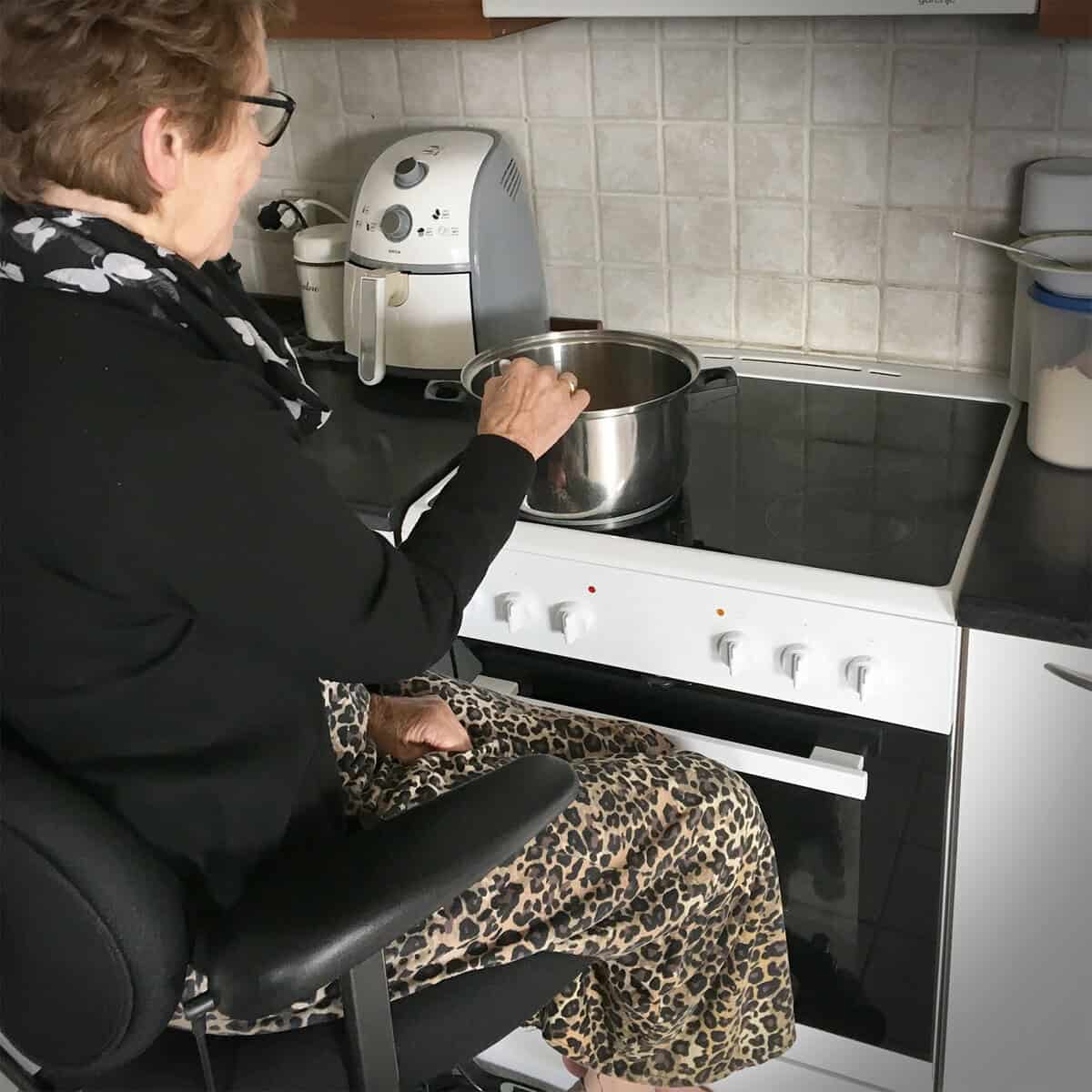
While nursing homes offer comprehensive care for those with high needs, many seniors are interested in solutions that allow them to remain independent in their own homes for as long as possible. One such innovative solution is the VELA Independence Chair. This medically approved mobility chair is designed for home use, providing enhanced safety and freedom of movement while seated. With features supporting daily activities like cooking, dressing, or transferring, it significantly reduces the burden on informal caregivers by allowing seniors to manage more tasks on their own.
In today’s landscape, the VELA Chair stands alongside a new generation of AI-enabled mobility aids and ergonomic devices tailored for independence. Integration with digital health monitoring and voice control means users can actively participate in everyday life, making independent living more attainable for a wider variety of needs.[2], [4]
Supporting Aging in Place: A Practical Option
Exploring alternatives to nursing homes, VELA Chairs offer a way for seniors to stay independent longer at home. Features like the central brake enhance safety by preventing slips during transfers, while electric height adjustability allows users to effortlessly reach high shelves or counters. Ease of movement while seated reduces fatigue and helps preserve energy for leisurely activities. By supporting safe and independent daily activities, these chairs can delay the need for a nursing home, granting seniors dignity and freedom in their familiar environment. While not the only solution, VELA provides a proven and practical option for those wishing to maintain their autonomy. For more information about solutions for seniors needing home assistance, these chairs indeed make a tangible difference in everyday life.