

Updated January 2026: We have updated the article with the latest advancements in AI-powered assistive technologies, including brain-computer interfaces, wearable smart glasses with real-time scene recognition, AI-driven mobility devices, and multimodal tools for vision, hearing, and cognitive impairments. The article now reflects recent trends in user-centered and inclusive design, ethical considerations like AI bias, and highlights from major 2026 accessibility events.
Disability Solutions for Independent Living
Independent living solutions are crucial for individuals with disabilities, focusing on enhancing autonomy and ensuring community integration. The ability to live independently not only empowers these individuals but also fosters a sense of belonging in the community. According to the National Institute on Disability, Independent Living, and Rehabilitation Research (NIDILRR), such solutions are essential to achieving full societal participation. Yet, despite these efforts, disparities persist. In 2023, the median earnings for people with disabilities were nearly $10,000 less than those without disabilities, highlighting significant economic challenges that complicate independent living efforts. This data is corroborated by the Annual Disability Statistics Compendium, which provides a detailed analysis of economic inequities.
Economic Realities: Bridging Gaps for Independent Living
Employment disparities present a formidable barrier to independent living for people with disabilities. While employment offers a pathway to financial independence, individuals with disabilities often face both unemployment and underemployment, further exacerbating income inequalities. The Annual Disability Statistics Compendium reveals startling income gaps, illustrating the need for targeted employment initiatives and financial support programs. Housing affordability also poses a challenge, as a significant portion of income for those with disabilities goes towards housing expenses. Fortunately, dedicated programs offer financial support, enabling some to bridge these gaps. A compelling case study involves a working-age adult who overcame these economic barriers through local nonprofits offering job training and affordable housing support.
Take, for instance, the story of John, a middle-aged individual with a mobility impairment who, despite facing unemployment for an extended period, managed to secure sustainable employment through a nonprofit’s vocational training program, supplemented with affordable housing assistance. This enabled John to achieve financial independence and stability, embodying a practical application of community support.
Transforming Homes: Accessible Living Spaces for All
Creating accessible living spaces is integral to independent living. Universal design principles, which promote environments usable by all regardless of ability, play a critical role. Cost-effective adaptations, such as installing ramps and incorporating smart home technologies, enhance daily independence. According to the Urban Institute, home modifications can transform individual lives, as evidenced by the experience of an elderly individual who retrofitted their home, enabling them to live more safely and independently. Such stories underscore the necessity of home accessibility, not just for improving mobility but for enhancing overall quality of life.
Recent advances have expanded home independence through integration of AI-powered and IoT-connected adaptive assistive devices. Modern smart home solutions—often driven by artificial intelligence—now provide real-time environmental monitoring, dynamic adjustment to user needs, and proactive health management. Notably, wearables and smart devices offer seamless, hands-free interaction; for example, AI-enabled smart glasses deliver live auditory descriptions for those with visual impairment, helping users navigate and interact with their surroundings more naturally.
Envision Community Blog: Future of Assistive Technology & AI Assistants 2025
First Aid for the Blind: Assistive Technology Roundup August 2025 Update
Building on these advancements, the latest wave of assistive technology now features AI-driven robotics—like smart wheelchairs and exoskeletons—that adapt in real time to mobility needs, and brain-computer interfaces (BCIs), facilitating hands-free control for users with severe mobility limitations. The adoption of AI-powered scene recognition in wearable devices, such as newly released smart glasses, has further improved navigation and environmental awareness for people with vision impairments.
Assistive Technology Journal editorial, 2025
AI for Accessibility, 2025
Aging-in-place solutions, like remote health monitoring, fall detection, and personalized medication reminders, continue to advance, enabling older adults and people with disabilities to remain in their homes with greater safety and autonomy. New user-centered designs emphasize feedback from those with lived experience, ensuring products align with real-world needs and preferences.
JVIB: 2025 Special Issue on Technology Advancements
CSUN 2025 Conference Highlights
Consider Rosa, an elderly woman who turned her two-story house into a haven of independence through simple modifications. By integrating a stairlift, adding grab bars in the bathroom, and utilizing voice-activated smart home devices, Rosa maintained her autonomy and safety, diminishing her risk of falls while performing daily activities.
Community Support: Building Networks for Independence
Strong community support networks significantly enhance independent living. Personal assistance services, tailored transportation solutions, and social programs help bridge gaps in day-to-day needs. Local community programs often act as a lifeline, offering opportunities for social inclusion and skill development. An example of these impacts is a community-based program run by Disability Solutions for Independent Living Inc., which successfully integrated individuals with disabilities into mainstream social and economic activities, illustrating the profound impact of community support.
Innovative support options are rapidly expanding through adoption of AI-powered virtual assistants and wearable technology. Smart glasses, haptic feedback devices, and hands-free voice-controlled systems enable more independent communication, navigation, and planning. Modern tools such as AI-driven real-time visual interpreting services and integrated wearable assistants now provide seamless information access and environmental awareness, with minimal manual input required. These innovations benefit users with visual or mobility impairments, and are gradually becoming more socially accepted and accessible.
First Aid for the Blind: Assistive Technology Roundup August 2025 Update
Asian College of Teachers: Assistive Tech Trends in 2026
The latest AI advancements have produced multimodal tools supporting not only vision and mobility needs but also hearing and cognitive impairments. New wearables feature haptic guidance and predictive navigation powered by generative AI. Community-driven updates and edge-AI systems ensure that assistive devices continuously adapt to users’ requirements and local environments.
Level Access AI and Assistive Tech Key Advancements, 2026
CES 2026 Accessibility Innovations
New options for communication support have also emerged, including AI-powered American Sign Language learning tools, gamified platforms to build language skills, and sip-and-puff systems for those with limited mobility, further enhancing opportunities for independence and digital participation. Immersive training environments leveraging virtual and augmented reality allow individuals to build skills at their own pace, increasing confidence and self-sufficiency.
CSUN 2025 Conference Highlights
Alongside these opportunities, the field confronts new challenges. Experts have called for strong ethical guidance—focusing on user privacy, bias audits in AI systems, and transparent, inclusive design processes to ensure that emerging technologies do not inadvertently exclude or disadvantage users.
AI for Accessibility, 2025
Imagine a scenario where a local initiative connects young adults with disabilities to a mentorship program, allowing them to develop skills necessary for employment. Such interactions not only build professional competencies but foster a sense of belonging and empowerment within the community.
Policy and Funding: Navigating Resources for Better Outcomes
Navigating the labyrinth of policy and funding options can be daunting but is crucial for accessing comprehensive independent living solutions. Federal, state, and local programs are designed to support these initiatives, offering financial aid and insurance coverage for assistive devices. According to the National Institute on Disability, Independent Living, and Rehabilitation Research (NIDILRR), advocacy plays a critical role in ensuring resource allocation aligns with the needs of individuals. Regulatory policies have increasingly accelerated device availability, especially during public health emergencies, expanding access to remote support, telehealth, and assistive technologies. Recent best practice frameworks released by organizations such as the Assistive Technology Industry Association (ATIA) and the American Foundation for the Blind emphasize inclusive, evidence-based design and interdisciplinary collaboration to improve outcomes and ensure accessibility of new technology in line with emerging standards.
Assistive Technology Industry Association (ATIA)
JVIB: 2025 Special Issue on Technology Advancements
Policymakers and advocacy groups are now focusing on new regulatory and ethical standards for AI-driven assistive devices, addressing both the opportunities of highly personalized support and the risks of algorithmic bias or privacy breaches. These include calls for ongoing audits, transparency in AI algorithms, and partnerships with user communities to guide responsible adoption.
Level Access AI and Assistive Tech Key Advancements, 2026
Consider a family that successfully obtained adaptive equipment for their child with a disability by persistently advocating for their needs. With clear documentation and collaboration with local agencies, they were able to secure funding for a wheelchair-accessible vehicle, thus enhancing their child’s mobility and access to the community.
A Seamless Transition from Care Facilities to Home Solutions
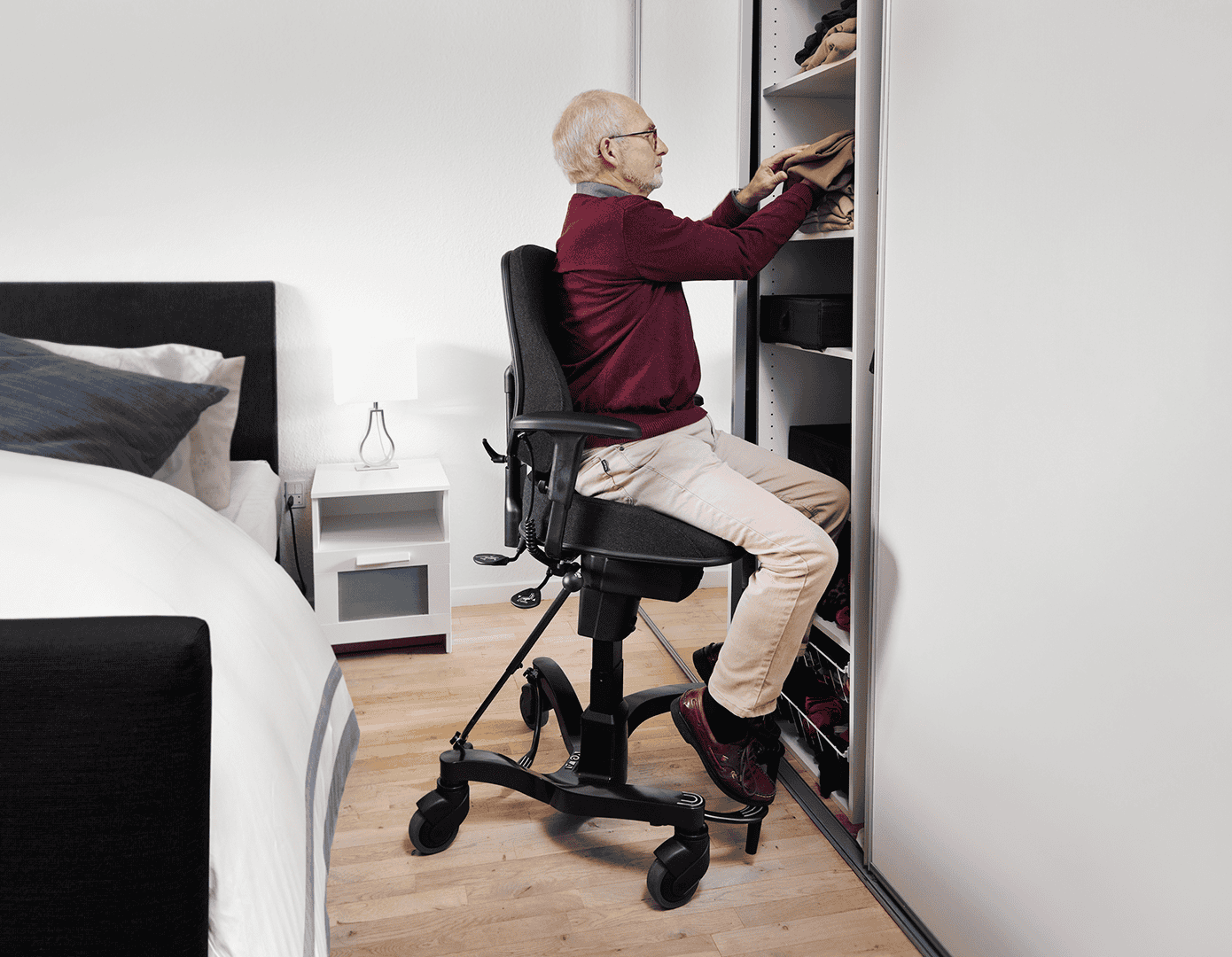
While nursing homes provide essential care for many, they are not always the preferred solution for individuals who wish to maintain independence. Supporting older adults to remain in their homes can be achieved through innovative mobility solutions like the VELA Independence Chair. This medically approved chair is designed to improve safety, promote free movement while seated, and assist with daily tasks such as cooking, dressing, and transitioning between activities — all of which help reduce the load on informal caregivers.
State-of-the-art assistive technologies now incorporate AI, smart sensors, and inclusive design principles to create more adaptable, user-focused aids. Wearable technologies—including smart glasses with AI-enabled live assistance and real-time interpreting tools—expand independence for users with sensory impairments and mobility challenges. Industry events in 2025 and 2026 highlighted new haptic communication devices, collaborative design methodologies, and expanded options for alternative input methods such as sip-and-puff devices, as well as AI-powered robotics and exoskeletons that provide greater autonomy for those with limited mobility. Brain-computer interface solutions are now emerging as practical supports for communication and device control.
CSUN 2025 Conference Highlights
First Aid for the Blind: Assistive Technology Roundup August 2025 Update
JVIB: 2025 Special Issue on Technology Advancements
Assistive Technology Journal editorial, 2025
CES 2026 Accessibility Innovations
AI for Accessibility, 2025
Supporting Aging in Place: A Practical Option
How can older adults maintain independence safely at home? The VELA Independence Chair offers practical mobility solutions tailored to these needs. Key features like the central brake for stability, electric height adjustability for ease of transfers, and smooth mobility while seated, address safety concerns outlined earlier. With the help of such aids, individuals can delay or even avoid moving to nursing facilities. Those using VELA Chairs often experience increased dignity and freedom, performing daily activities like cooking or relaxing with greater ease and safety. While not the only solution, VELA provides a proven, flexible option to enhance independent living for older adults who wish to remain in their homes longer. Moreover, fall prevention strategies available with such chairs significantly reduce risks, allowing for more confident and secure mobility.