

Updated January 2026: We have updated the article to reflect major 2026 advancements in AI-driven health monitoring, robotic mobility aids, smart home integrations for seniors, telehealth expansions, and home-based rehabilitation solutions. The new content highlights innovations such as predictive analytics, wearables, virtual therapy, and smart home modifications that enable cost-effective, independent living for seniors and people with disabilities. Several new authoritative sources have been added.
Securing Affordable Senior Independence: Navigating Income-Based Independent Living
Income-based independent living is a vital option for older adults seeking affordable housing. As financial challenges mount, particularly for those reliant on Social Security, finding suitable accommodation becomes crucial. In 2018, around 7.09 million seniors had incomes below 80% of their state’s median, indicating a substantial demand for affordable housing solutions. According to The Public and Affordable Housing Research Corporation (PAHRC), this demand is expected to grow.
What is Income-Based Independent Living?
Income-based independent living provides seniors with housing that maintains their independence while keeping rents affordable by tying them to income levels. The U.S. Department of Housing and Urban Development (HUD) is critical in establishing income limits and determining eligibility.
Consider the story of Mary, a senior living solely on Social Security, who transitioned into an income-based community. This move allowed her to retain her autonomy while benefitting from reduced rent.
How to Qualify for Income-Based Senior Housing
To qualify for income-based senior housing, seniors generally need to be at least 55 or 62 and have an income below identified thresholds relative to the Area Median Income (AMI). Patience is required, as waiting lists have lengthened by 18% in recent years as per the National Low Income Housing Coalition (NLIHC).
Consider John’s journey through this application process: despite the challenges of document collection and extended waiting times, securing subsidized housing ultimately eased his financial pressures.
Affording Independent Living: Rent and Subsidy Options
In affordable senior housing, rent is typically about 30% of a resident’s income. Programs like Section 8 and Low-Income Housing Tax Credits (LIHTC) provide vital support, as highlighted by National Church Residences. For instance, a senior with a $1,000 monthly income might pay $300 in rent, with subsidies covering the rest.
These financial structures significantly reduce economic burdens on low-income seniors, allowing them a quality living environment without undue financial strain.
Tools for Safety and Independence in Senior Living
Maintaining safety while encouraging independence is essential. Recent advances in assistive devices and technology now play a major role in supporting seniors and people with disabilities to remain in their homes safely. The latest options include AI-powered smart mobility aids such as intelligent wheelchairs, robotic exoskeletons, walkers, and scooters that are now equipped with real-time obstacle detection, gait-adaptive fall prevention, predictive health analytics, IoT-integrated controls, GPS navigation, and adaptive features. These provide both enhanced safety and greater autonomy, representing a shift from static aids to dynamic, responsive mobility solutions (CES 2026 Senior Living Tech Trends; Assistive Technology Market Analysis 2026).
New wearable devices now combine advanced sensor technology with continuous monitoring of vital signs, movement, and sleep quality, providing real-time fall detection and emergency alerts via connected care systems. Many incorporate AI-driven health forecasting, feature integration with telemedicine platforms, and enable early disease detection—such as smart toilet seats and home-based sensors—allowing for personalized care and reduced risk of hospitalization (AllSeniors.org: 2026 Home Health Trends; Senior Housing News: 2026 Trends).
Home-based rehabilitation and therapy has also seen major advances through remote telehealth solutions, virtual therapy with AI-powered motion tracking, and robotics-assisted balance training. Affordable, smart medication dispensers that automatically alert caregivers and family members further support independence for aging-in-place, especially as Medicare and Medicaid have expanded coverage for home-based health benefits through 2026, making these technologies more accessible for low-income seniors (AllSeniors.org: 2026 Home Health Trends).
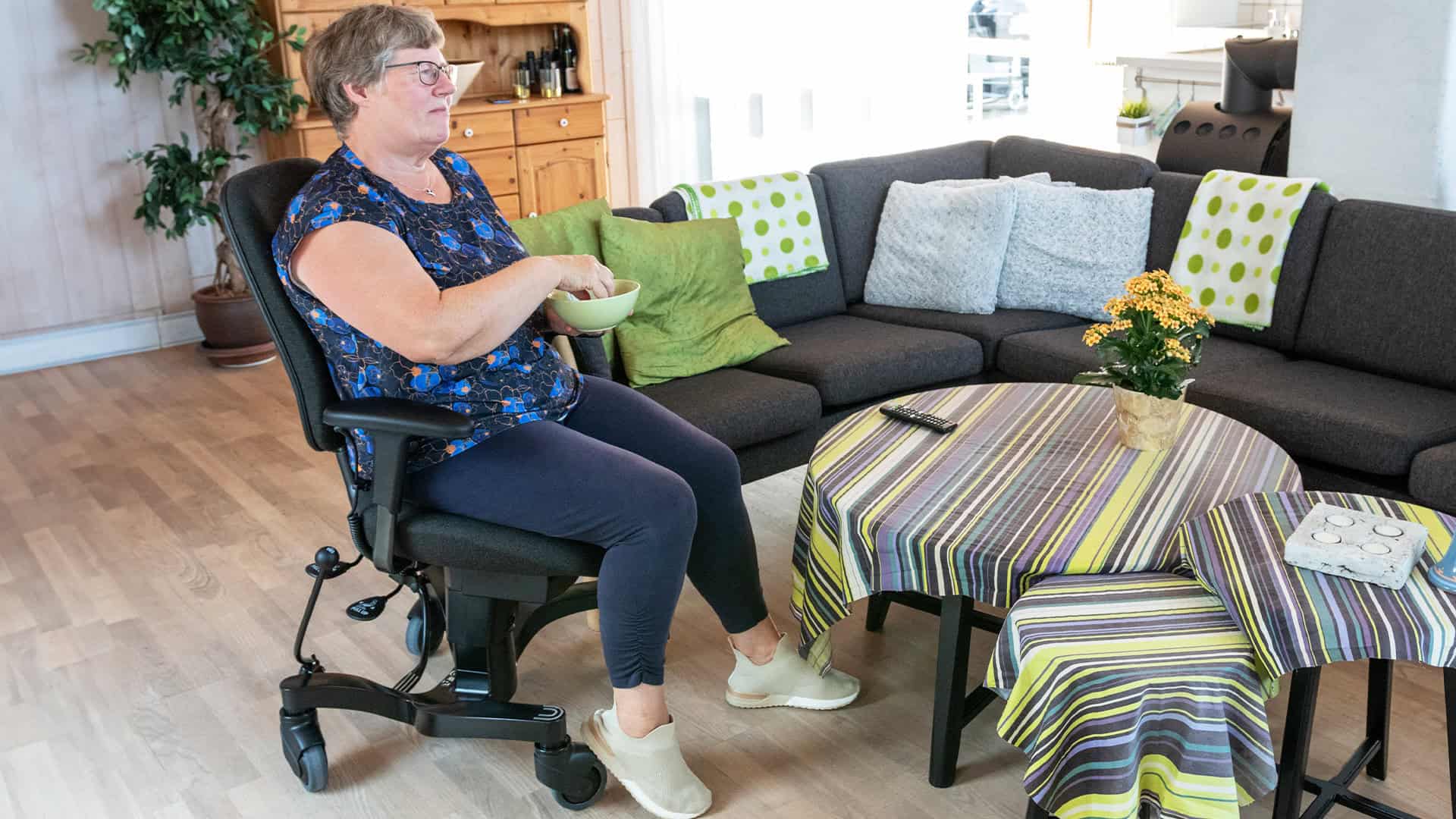
Mobility and independence can also be enhanced by clinically proven solutions like the VELA Independence Chair—a medically approved mobility chair designed for home use. This chair improves safety by offering a central brake, provides freedom of movement while seated, and supports daily activities such as cooking and dressing, while reducing the burden on informal caregivers.
Neural interface technologies, including brain-computer interfaces (BCIs), now allow users with profound mobility limitations to control assistive devices directly. Advanced ergonomic designs and home integration solutions such as automated lighting, voice-activated systems, stairlifts, and smart home safety modifications make it possible for most seniors to remain safely on accessible first floors, a preference echoed by almost 80-90% of older adults. As market analyses indicate, the assistive technology market is projected to see significant growth through 2034, driven by these user-centered innovations and a policy push for aging-in-place (Disabled and Elderly Assistive Tech Market to 2034; Senior Housing News: 2026 Trends).
Take the real-life example of Ellen, who, despite mobility challenges, remained independent using the VELA chair. Westmont Living shared her story, demonstrating the chair’s pivotal role in securing self-reliant living.
Securing Affordable Senior Independence
In summary, income-based independent living offers a viable solution for low-income seniors by combining financial assistance with the latest advancements in assistive technology. This comprehensive approach now includes real-time health monitoring, predictive safety systems, remote rehabilitation, smart medication management, and ergonomic home modifications—promoting autonomy, dignity, and a higher quality of life. Providers such as National Church Residences and Westmont Living illustrate how a blend of innovative housing and next-generation support tools enables seniors to age with greater security and independence (National Church Residences, Westmont Living).
Supporting Aging in Place: A Practical Option
Enabling seniors to remain at home rather than moving to institutional care is now even more practical thanks to advances in smart home and wearable technologies, proactive health management, and virtual care. AI-powered mobility aids, safety-focused smart home systems, and integrated medication management devices are scalable, affordable, and covered under expanded insurance benefits for 2026, making them ideal for a broad range of seniors—including those with limited income. User adoption trends show that first-floor accessibility, partnered with AI-driven safety and health nets, is strongly preferred by up to 88% of seniors (Assistive Technology Market Analysis 2026).
Mobility solutions like VELA Chairs offer significant advantages, allowing seniors to stay independent longer at home. With features like a central brake for added safety, electric height adjustability, and ease of movement while seated, these chairs help manage common age-related challenges. For seniors facing difficulty with transfers or needing support for everyday activities such as cooking and cleaning, VELA Chairs can delay the necessity for a nursing home. Independent living solutions for seniors emphasize maintaining dignity, freedom, and energy efficiency while reducing caregiver burden. Newer assistive tools now address not only safety and function but also quality-of-life areas through inclusive, ergonomic, and data-driven designs—empowering seniors and caregivers with actionable, real-time information and support (CES 2026 Senior Living Tech Trends; Disabled and Elderly Assistive Tech Market to 2034).
CES 2026 Senior Living Tech Trends
Assistive Technology Market Analysis 2026
Disabled and Elderly Assistive Tech Market to 2034
Senior Housing News: 2026 Trends
AllSeniors.org: 2026 Home Health Trends
AgeTech Trends 2025: AI, Robotics & the Future of Aging — Cyces, May 2025
The Latest Trends in Mobility Aid Technology for 2025 — EverythingMedicalOnline, Jun 2025
Assistive Technologies Shaping Senior Care in 2025 — Channel Point Village, Jul 2025
Innovations in Mobility Aids: A Look at the Latest Technologies — Keyway Medical, Apr 2025
Future of Assistive Technology & AI Assistants — LetsEnvision, Aug 2025
Recent trends in assistive technology for mobility — PubMed Central, 2025
Geriatric Assistive Devices Market Trends & Technologies — iHealthcareAnalyst, 2025