

Updated January 2026: We have updated the article to reflect recent advancements in AI-powered assistive devices for seniors, including the integration of IoT connectivity, smart sensors, predictive fall prevention technologies, voice-activated controls, telehealth-compatible durable medical equipment, and policy shifts expanding access to these innovations. The article now covers emerging trends such as exoskeletons, wearable robotics, personalized AI health coaching, and 3D-printed adaptive devices for enhanced independent living.
Enhancing Experience, Expertise, Authority, Trustworthiness in Elderly Care
As our population ages, understanding independent daily living skills becomes a critical focus in optimizing elderly care. These essential life skills empower seniors to manage their daily activities safely and effectively while remaining in the familiar surroundings of their homes. Caregivers and family members must evaluate these skills regularly to plan and implement effective care strategies. According to A Place for Mom, over 20% of seniors above 85 years old need assistance with daily living activities, emphasizing the importance of these skills in senior care. Here, we explore these skills’ essential components and their role in preserving senior independence.
Understanding Independent Daily Living Skills for Seniors
Independent daily living skills divide into Basic and Instrumental Activities of Daily Living (ADLs and IADLs). Per the NCBI Bookshelf, ADLs encompass fundamental physical tasks like bathing, dressing, and feeding. Meanwhile, IADLs involve more complex activities such as medication management, meal preparation, and finance handling, necessitating higher cognitive functioning.
For example, consider a senior carefully organizing their weekly medication in a pill organizer—demonstrating not only safety and health maintenance but also boosting self-esteem and life quality.
Assessing Independent Living Capacity: Tools and Checklists
To assess a senior’s ability to live independently, various tools and checklists are utilized. Healthcare professionals are indispensable in performing these evaluations, using criteria to assess capability in executing both ADLs and IADLs. According to Cleveland Clinic, these activities are foundational to life and wellness, thus their evaluation is crucial in determining care requirements.
For instance, in cases of limited mobility, an assessment might indicate the need for adaptive tools like wheelchairs or home alterations to ensure safe navigation within the living space.
Adaptations and Assistive Devices: Enhancing Safety and Autonomy
Promoting safety and autonomy now includes a wide spectrum of technologies and adaptations. In addition to foundational home modifications such as grab bars, advances in assistive technology have introduced smart home systems, AI-powered devices, and non-intrusive monitoring to enhance independent living. Voice-activated controls for lighting, thermostats, and security features are tailored for seniors and simplify daily routines while increasing safety. AI-based cognitive aids, including tablet applications and brain health programs, now provide options for maintaining cognitive function and supporting memory—particularly relevant for those living with dementia or cognitive decline. Wearable health monitors and telehealth platforms have also become more accessible, allowing real-time health data tracking and direct communication with healthcare providers from home. These technologies reduce reliance on medication, bolster mental engagement, and foster autonomy among seniors Channel Point Village, My Care Concierge, Number Analytics Blog, The Good Life Silicon Valley, Ask Samie, Seniors Blue Book, Age In Place Tech, Cyces, ButterflyMX, Cognitive Market Research, NextMSC, Market.us Media, Seniors Blue Book (2025), Health Dimensions Group, Geriatric Assistive Devices Market, Provider magazine, AI and Older Adults 2026.
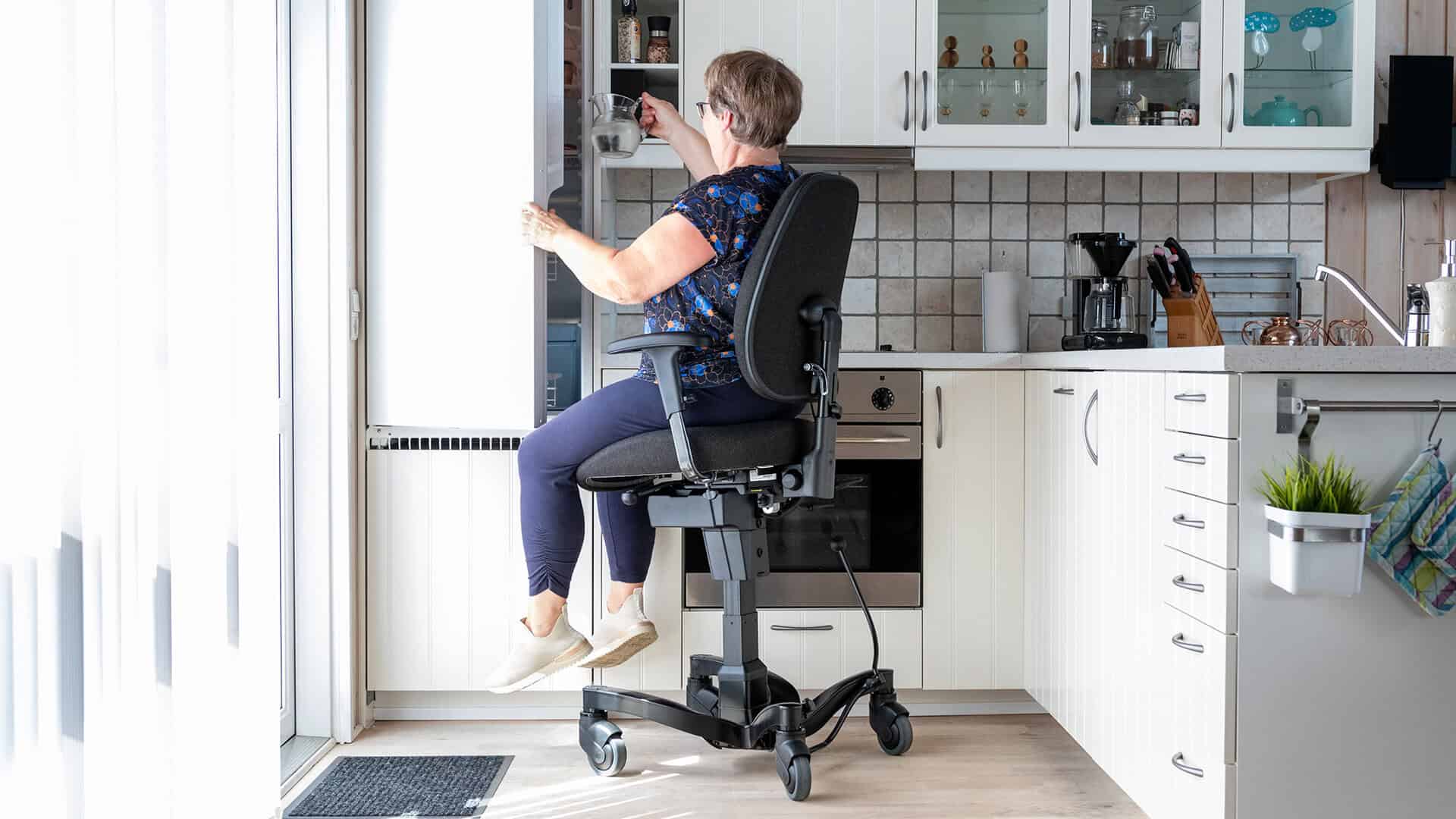
Among mobility aids, intelligent canes, AI-driven walkers, and adaptive seating such as the VELA Independence Chair support movement, reduce fall risk, and assist daily activities like cooking, dressing, or transferring. The latest innovations extend to AI-powered wheelchairs with obstacle detection, auto-adjusting features, and real-time connectivity, as well as voice-activated controls that allow hands-free operation for those with dexterity challenges. New bathroom aids now utilize pressure sensors for smart alerts, and predictive AI analyzes multi-dimensional sensor data for fall risk assessment before accidents happen. Exoskeletons and wearable robotics are emerging as tools for assisted movement, projected for wider clinical use in the next few years. Personalized health coaching is increasingly available through telehealth-compatible durable medical equipment, allowing for remote monitoring and tailored support for activities of daily living. Compact foldable mobility devices address social integration, while 3D-printed custom devices and smart home ecosystems foster aging in place. These solutions allow seniors to achieve greater independence and reduce the physical and emotional demands on caregivers Cyces, ButterflyMX, NextMSC, Market.us Media, Geriatric Assistive Devices Market, Provider magazine, AI and Older Adults 2026.
Local Senior Living and Home Care Market: Providers & Costs
Exploring local markets reveals a wide array of senior care providers offering diverse services tailored to older adults’ needs. Decision-making often involves weighing costs against service quality. As noted by A Place for Mom, home care costs typically range from $25 to $45 hourly, while assisted living facilities may charge between $3,500 and $6,000 monthly. Choosing between home adaptations and professional care depends on personal circumstances, finances, and preferences.
Recent trends show that digital health technologies and smart DME now enable seniors to receive high-quality remote care and proactive safety monitoring without leaving home. Telehealth-compatible devices allow for direct connection with healthcare professionals, reducing hospital visits and enhancing preventative care. Smart ecosystems powered by IoT provide seamless integration of lighting, security, appliance control, and environmental monitoring. Wearable and sensor-based devices now deliver superior fall detection and even predict risks before incidents occur, while real-time health and activity data support hyper-personalized interventions. These advances are also supported by improvements in data privacy safeguards and expanded insurance coverage for advanced DME, reflecting a policy shift toward proactive, home-based independence Cyces, ButterflyMX, Cognitive Market Research, Health Dimensions Group, Geriatric Assistive Devices Market, Provider magazine.
Real-life scenarios highlight these options, such as a family selecting home care for its personalized approach and lower expense, whereas others may choose assisted living for comprehensive service provision.
Supporting and evaluating seniors’ independent daily living skills involves balancing home modifications, professional care, technology integration, and selecting suitable assistive devices to maximize independence without compromising safety. As emphasized by Pomeroy Living, recognizing evolving senior needs and responding with appropriate strategies is crucial to ensuring sustained well-being and independence. Current best practices recommend combining adaptable technology—now including AI-driven, sensor-connected, and telehealth-enabled solutions—with a human approach for optimal results Channel Point Village, Cyces, ButterflyMX, Geriatric Assistive Devices Market, Provider magazine, AI and Older Adults 2026.
Exploring Alternatives to Nursing Homes
How VELA Chairs can help people stay independent longer at home cannot be overstated. These mobility solutions are designed to prioritize safety through features such as a central brake, which provides stability during use. The electric height adjustability enhances comfort, enabling easier transfers and adjusting seating positions to support daily tasks such as cooking, cleaning, or simply relaxing. By alleviating the physical strain on caregivers and allowing seniors to save energy while performing activities, the VELA Independence Chair may effectively delay the need for nursing home placement. Recent progress in assistive technology also highlights the impact of integrated safety systems, discreet monitoring sensors, and AI-optimized mobility aids—including smart canes, adaptive walkers, and now exoskeletons and wearable robotics—which together reduce risks and support home independence Number Analytics Blog, Ask Samie, Cyces, ButterflyMX, Health Dimensions Group, Geriatric Assistive Devices Market, Provider magazine, AI and Older Adults 2026.
Global trends show increased government support for reimbursement and digital accessibility standards, making it easier for seniors to access, afford, and benefit from these innovations Age In Place Tech, Cognitive Market Research, Geriatric Assistive Devices Market, Provider magazine. Picture the contrasting experiences of life with and without such supportive seating: the dignity, freedom, and confidence a senior enjoys at home versus the increased dependence without it. While VELA Independence Chair with mobility features is not the only solution, it stands as a proven and practical option, encouraging autonomy and safety for those wanting to age gracefully in place.