

Updated January 2026: We have updated the article to reflect recent advancements in assistive technology, including AI integration in mobility aids such as real-time navigation and gesture controls, the introduction of power-assist wheelchair attachments, AI-powered all-terrain mobility devices, and IoT smart home solutions for aging in place. Market trends and new innovations from CES 2026 have also been included, emphasizing the role of personalized AI solutions and inclusive design.
Updated October 2025: We have updated the article with the latest advances in assistive technology, highlighting the shift toward AI-powered wearable devices, integrated smart assistants, and immersive VR/AR rehabilitation methods. The article now reflects contemporary best practices, current regulatory and clinical recommendations emphasizing inclusive, personalized solutions, and recent trends from key events such as CSUN 2025.
Exploring Independent Living in Evesham Township
Evesham Township is addressing its growing aging population by enhancing independent living options. With nearly 19% of its residents aged 65 and older, the township focuses on providing quality solutions tailored to seniors. The US Census Bureau confirms the need for accessible senior care solutions. Those seeking independent living in Evesham Township should consider both demographic insights and the available facilities.
Diverse Independent Living Choices for Evesham’s Seniors
Evesham offers a variety of independent living communities, such as Brightview Greentree Senior Living and The Residence at Cherry Hill. These communities are noted for their comprehensive amenities, including social activities and emergency support systems. According to Medicare.gov, these communities cater to seniors needing little assistance but who benefit from nearby supportive services. For example, a resident might transition smoothly from their family home, finding empowerment in both their living space and community interactions.
Evesham’s Aging Population and Their Unique Care Needs
The local senior population often has specific care needs, influenced by conditions such as arthritis and cognitive impairments. The CDC highlights the importance of effective environments that enhance mobility and self-care, crucial for maintaining health and independence. Consider a local resident with diabetes and mobility challenges: their experience shows the necessity for accessible living spaces that provide medical and physical support.
Financial Considerations for Independent Living in Evesham
Independent living costs in Evesham Township range from $2,500 to $5,000 monthly, influenced by apartment size, amenities, and chosen care packages. Many seniors evaluate financial assistance options to manage these expenses. An illustrative scenario involves a couple who carefully assessed their budget and selected a facility aligning with their financial and personal preferences. This strategic choice was informed by comprehensive local provider data.
Creating Secure and Accessible Spaces for Evesham’s Seniors
Safety and accessibility are priorities in these communities. Facilities comply with NJ Department of Health standards, incorporating robust safety features and emergency protocols. This ensures seniors can live securely and independently.
Shifting focus from traditional nursing homes, many seniors are now looking towards solutions that allow them to maintain independence within their own homes. The latest advances in assistive technology are rapidly transforming independent living. AI-powered, integrated wearable devices such as smart glasses can now provide seamless, live environmental descriptions and interactive assistance, greatly enhancing mobility and independence for users with visual or physical impairments LetsEnvision, 2025. These advancements reflect the broader industry trend towards inclusive, real-time, multi-modal solutions that adapt to each user’s needs and environment, as shown at recent events like CSUN 2025 CSUN, 2025. The use of AI assistants and wearable smart devices fosters greater autonomy and safety for seniors seeking to remain active in their communities FAFTB, 2025.
Recent innovations now make AI an integral feature in mobility devices. Advanced wheelchairs and power-assist attachments—such as the WheelMove device launching mid-2026—extend the operational range (up to 25 km per charge) and include real-time navigation, predictive obstacle avoidance, and voice or gesture controls CES 2026. AI-powered all-terrain wheelchairs (for example, models like XSTO X12) now climb stairs and handle varied surfaces, increasing autonomy for users with diverse mobility needs. AI enhances not just mobility, but also overall independence and safety by integrating with smart environments and allowing seamless transitions between home and community spaces Digital Learning Institute, 2026.
The progression of smart home and IoT solutions is also significant for aging-in-place. Modern homes increasingly feature adaptive furniture, automated fall detection, remote monitoring, and personalized AI assistants capable of speech recognition and gesture response. These integrations improve both safety and comfort for seniors remaining at home, especially for individuals with chronic musculoskeletal or neurological conditions, now affecting over 1.17 billion people globally Cognitive Market Research, 2026.
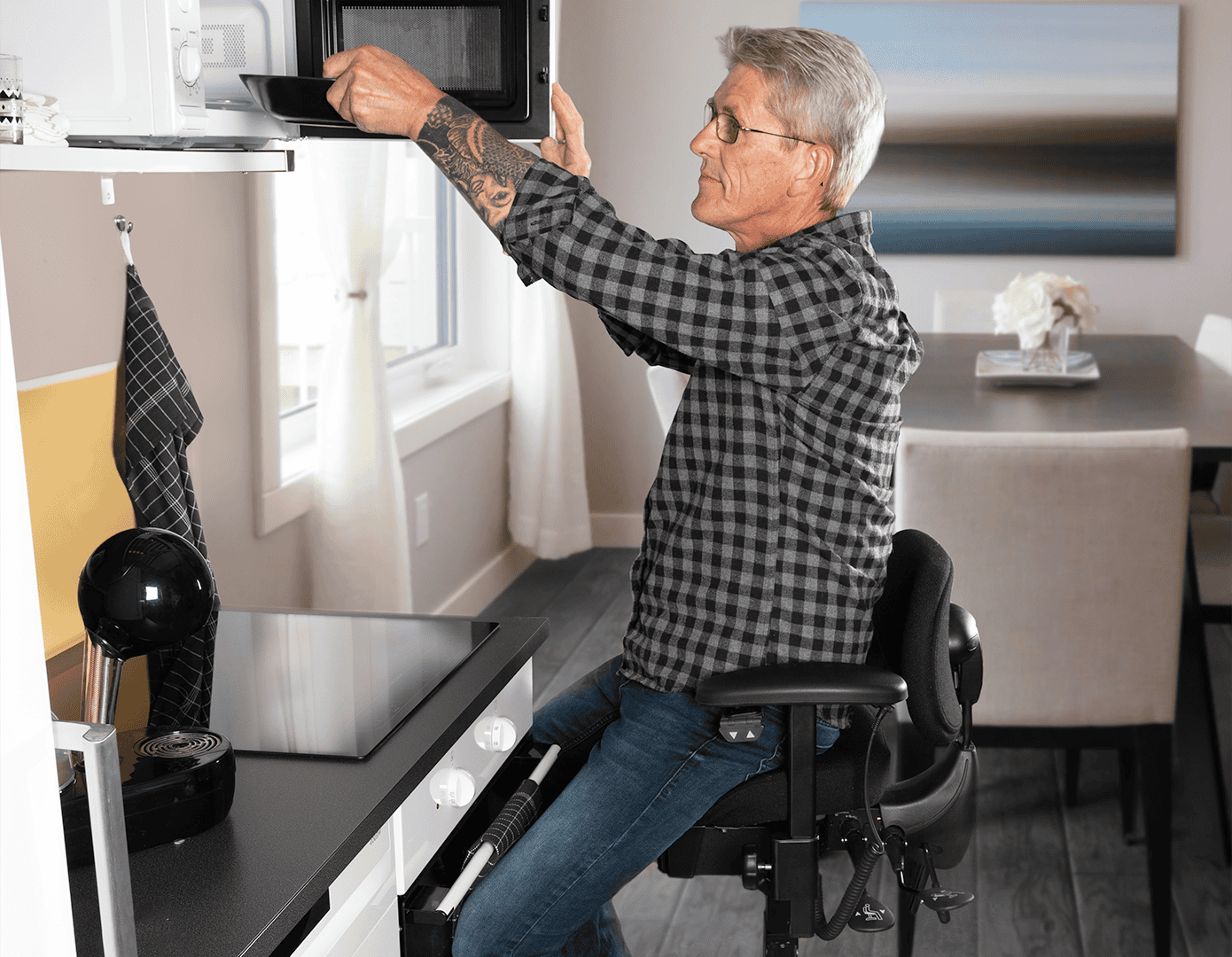
One notable approach is integrating advanced mobility solutions that support everyday activities. For instance, the VELA Independence Chair is a medically approved mobility chair designed for home use. This chair enhances safety and freedom of movement while seated, supporting daily tasks such as cooking, dressing, and transferring. By reducing the burden on informal caregivers, VELA chairs empower seniors to lead active lives within their communities.
Supporting Aging in Place: A Practical Option
For seniors keen on aging in place, mobility solutions like the VELA Independence Chair play a pivotal role. These chairs designed for elderly living at home provide essential features such as a central brake for safety, electric height adjustability, and easy movement while seated. This not only preserves energy but also significantly enhances safety and autonomy. By simplifying daily routines, such as cooking or moving around the house, the chair may help delay the transition to a nursing home. Through this approach, individuals can maintain dignity, freedom, and a higher quality of life. While VELA is one of many solutions available, its proven benefits make it a practical choice for those aiming to stay independent longer in the comfort of their own homes.
Innovations in Rehabilitation and User-Centered Design
Emerging rehabilitation practices now frequently employ virtual and augmented reality (VR/AR) to create immersive and effective training and therapy experiences, supporting seniors and people with disabilities to gain and maintain functional skills JVIB, 2025. Additionally, the latest clinical recommendations and regulatory guidelines increasingly favor solutions designed with direct user involvement, emphasizing personalization and adaptive functionality. Interactive AI-powered tools, including wearable smart devices and visual interpreting applications, have demonstrated substantial benefits, gaining recognition at leading conferences such as CSUN 2025 and through positive user feedback CSUN 2025. Recent events such as CES 2026 continue to spotlight inclusive design and multi-modal AI interfaces (e.g., MaaS-Bridge accessible vehicle-pedestrian solutions and SEERU environmental sensors for seniors with mobility or hearing limitations) that help expand the scope of independent living and participation for all users CES 2026. Policy shifts now stress integrated, inclusive approaches to assistive technology, with strong emphasis on co-design and the rise of AI-driven voice, gesture, and environmental controls for daily living CES, 2026.