

Updated January 2026: We have updated the article with the latest regulatory changes in New Jersey, including the expansion of the Deemed Status program and new ownership restrictions for assisted living facilities, advancements in AI-powered mobility aids and assistive technology, and trends in hybrid care models and equitable tech adoption for independent living residents.
Independent Living Facilities in New Jersey: Meeting the Growing Demand for Autonomy and Support
Introduction: Addressing the Rising Demand
The demand for independent living facilities in New Jersey is steadily increasing as more seniors seek lifestyles that balance autonomy with accessible support. Amid New Jersey’s aging demographics, marked by a 31% increase in the elderly population from 2010 to 2023, the state is preparing to accommodate one in seven adults who will be 65+ by 2025, according to the NJ Department of Health. With 54 top-rated senior living facilities projected by U.S. News & World Report in 2025, New Jersey stands out for its commitment to high-quality senior care.
Understanding Independent Living Facilities in New Jersey
Independent living facilities offer a unique form of housing for seniors emphasizing independence while providing access to various amenities and community activities. Unlike assisted living or nursing homes, which cater to those requiring extensive medical care, independent living facilities are designed for seniors who still manage most daily tasks but prefer the convenience and social opportunities these communities offer. Typical amenities include fitness centers, swimming pools, and social events that promote a vibrant lifestyle. The quality of such facilities in New Jersey is noteworthy, with many earning accolades in U.S. News & World Report’s rankings.
Demographic Trends and Housing Demand
New Jersey’s demographic landscape is shifting, with a significant rise in the senior population shaping demand for independent living options. Notably, counties like Bergen and Ocean demonstrate significant growth, highlighting localized needs for these housing solutions. For seniors like Mary, transitioning from a family home to independent living in a community in Bergen County offered a seamless shift into retirement living, emphasizing social engagement and security. The NJ Department of Health reports that such demographic changes necessitate expanding and diversifying housing options to cater to an aging population.
Top Independent Living Communities in New Jersey
New Jersey boasts a variety of top-notch independent living communities, such as Mattison Crossing at Manalapan Avenue, All American Assisted Living at Washington Township, and Harmony Village at CareOne Paramus. These establishments offer amenities including wellness programs, transportation services, and vibrant social calendars, contributing positively to residents’ satisfaction and safety. Residents frequently praise the friendly staff and active community life that contribute to their quality of life, as captured in user reviews and assessments by U.S. News & World Report.
Regulatory Updates: Licensure and Transparency in New Jersey
Recent legislative and regulatory changes have significantly impacted independent and assisted living facilities in New Jersey. Since early 2026, the state has proposed and announced expansions to the Deemed Status program for licensure of Assisted Living Residences (ALRs) and Comprehensive Personal Care Homes (CPCHs). This allows accredited facilities to bypass routine state inspections, aiming to streamline compliance and oversight processes [NJ DOH Proposal, 2026], [NJDOH Rule Proposal, 2025]. Additionally, a new law (SB 315) effective late 2025 imposes restrictions on ownership transfers of assisted living facilities, requiring the preservation of employee wages, benefits, and collective bargaining agreements indefinitely. While intended to protect the workforce, providers have raised concerns that these requirements could limit care access by making ownership transitions more challenging and potentially impacting facility availability [McKnight’s Senior Living, 2025].
In parallel, the New Jersey Department of Human Services has updated home and community-based services (HCBS) and licensure requirements for assisted living residences, emphasizing individual autonomy, privacy, and choice. Expanded Medicaid/FamilyCare eligibility and adjustments to the JACC program have improved financial support and access to services for seniors, addressing funding barriers and promoting resident independence [NJAC 10:53, 2025], [HC Home Care, 2025]. The state’s regulatory framework also requires enhanced transparency, including quarterly public updates and evaluative profiles for all long-term care facilities, further supporting consumer choice and accountability [MyFieldAudits, 2025]. Ongoing adjustments continue to address workforce challenges to maintain quality of care [MyFieldAudits, 2025].
Hybrid care models and visitation rights have come to the forefront amid recent legislative activity. The introduction of hybrid adult day health models (S1076) and bills ensuring visitation rights (S785) support holistic and person-centered independent living experiences [NJ Legislature S1076, 2026], [NJ Legislature S785, 2026].
Financial Planning and Costs for Independent Living
Understanding the cost spectrum of independent living is crucial for potential residents and their families. In New Jersey, the median cost for independent living stands at $4,000 per month, slightly higher than the national average of $3,145. Strategies like utilizing annuities, insurance options, and state support programs can mitigate these costs. Expanded Medicaid/FamilyCare eligibility and JACC program modifications in 2025 have further supported residents in affording independent living options [NJAC 10:53, 2025], [HC Home Care, 2025]. Sources like A Place for Mom provide insights into financial planning, ensuring seniors can make informed decisions.
Advances in Assistive Technology and Ergonomic Design
The landscape of independent living has advanced considerably with innovations in assistive technology. Since 2025, developments include AI-driven smart wheelchairs featuring autonomous navigation, enhanced obstacle detection, adaptive navigation, health monitoring (such as posture, heart rate, and pressure points), and intuitive controls using voice, facial recognition, or mobile app integration. Products such as LUCI add-ons and the Robooter X40 offer these technologies to residents, improving safety, independence, and day-to-day confidence. WheelMove wheelchair attachments launching in mid-2026 and all-terrain power chairs like the XSTO X12 have expanded mobility options for navigating uneven environments [Keyway Medical, 2025], [ThinkBeyondTheChair, 2025]. Adaptive e-bikes, AI-driven wearable devices, and iSee glasses for low vision have further supported autonomy for residents with mobility or visual impairments [ThinkBeyondTheChair, 2025].
Additional advances include brain-computer interfaces, smart glasses providing environmental descriptions and navigation, and adaptive keyboards for limited dexterity. Wearable technology assists with health monitoring and supports personalized care. Hybrid care models (such as MaaS-Bridge for accessible transport) and innovations supporting hybrid adult day health services further emphasize the future of person-centered independent living.
Conferences and professional forums have highlighted the importance of equitable assistive technology implementation, evidence-based best practices, and holistic design in supporting facility and community-based residents. User-centered and inclusive design remains a priority, together with ongoing health technology evaluation for safety, efficacy, privacy, and data protection [PMC, 2025] [Keyway Medical, 2025].
The Future of Independent Living in New Jersey
In summary, independent living facilities in New Jersey play a crucial role in providing seniors with a balanced lifestyle of independence and community engagement. By understanding demographic trends, recognizing top providers, and navigating financial considerations, families can better prepare for these transitions. As noted by U.S. News & World Report, New Jersey’s commitment to high-quality senior living is setting a benchmark for future developments in independent living.
With enhanced regulatory frameworks and the adoption of cutting-edge technologies, such as AI-driven wearables, robotic exoskeletons, and smart wheelchairs, New Jersey is positioned to support its aging population’s independence and dignity. Best practices now emphasize personalization, ongoing health technology assessment, and ethical considerations, ensuring that residents benefit from improved safety, mobility, and quality of life [Keyway Medical, 2025], [PMC, 2025].
Supporting Aging in Place: A Practical Option
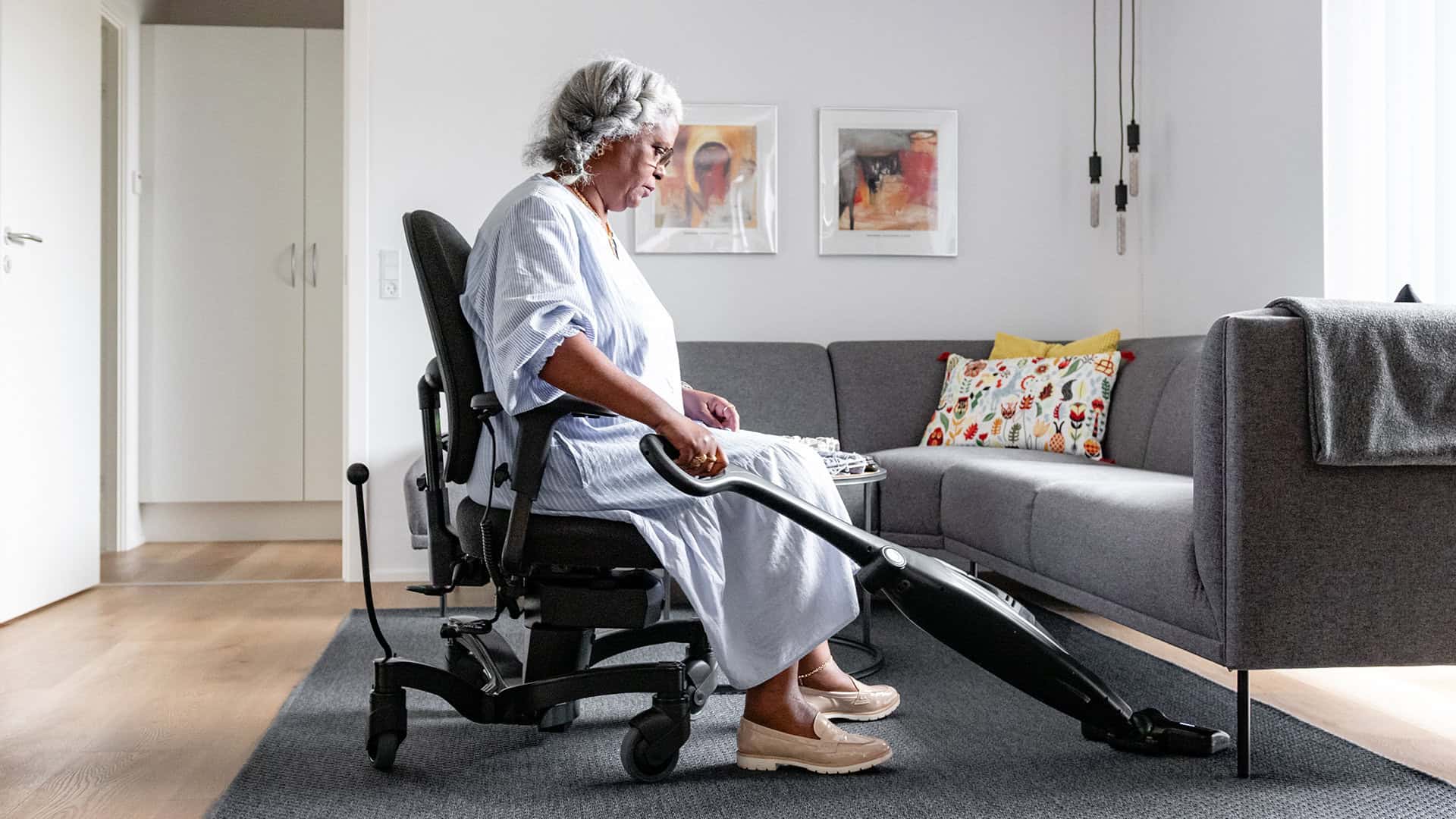
For seniors keen on prolonging their independence at home, mobility solutions like the VELA Independence Chair make a significant difference. This chair stands out with its safety features such as a central brake, electric height adjustability, and ease of movement while seated. These features not only prevent falls and promote energy efficiency but also make transferring safer and more manageable. Comparing life with and without a VELA Chair paints a vivid picture of freedom, safety, and dignity. Seniors can engage effortlessly in daily activities like cooking and relaxing, supporting the ethos of aging in place. While VELA chairs are not the sole solution, their proven efficacy offers a practical option for enhancing home mobility and, consequently, delaying a move to a nursing home.