

Updated January 2026: We have updated the article with new findings on AI-powered mobility aids, the introduction of cutting-edge devices such as WheelMove and SEERU, advances in smart assistive technology for independent living, and the emergence of inclusive community designs in Harrison. Additional resources now highlight regional non-profits and newly licensed independent villa options, as well as expanded funding opportunities for technology adoption.
Exploring independent living options in Harrison, Arkansas
Finding the right independent living community is crucial for seniors who wish to maintain their independence while accessing essential support. For those searching for such options in Harrison, Arkansas, the town offers remarkable opportunities. Known for its affordability and diverse living solutions, Harrison becomes a favorable choice for many elderly residents. Critical to this choice is the statistic from the CDC indicating that approximately 85% of adults aged 65 and older have at least one chronic health condition. This statistic underscores the importance of choosing the right facility that meets not just the lifestyle preferences but also the health care needs of older adults.
Understanding independent living in Harrison, Arkansas
Harrison, AR, provides various independent living options catering to different income levels and care requirements. Facilities like Maple Esplanade offer energy-efficient units specifically for residents over 62, with a combination of Section 8 assistance and private pay options. According to NW Regional Housing, these residences not only address basic living needs but also integrate health care and social involvement, ensuring a balanced lifestyle for seniors. According to A Place for Mom, the town boasts diverse choices that cater to different needs. Recent expansions include facilities such as Countryside Assisted Living at Rock Springs, which now offers Level II licensed villas with secured, inclusive designs, outdoor access, and memory care amenities without buy-in fees.[5]
Costs and financial assistance for Harrison’s seniors
Understanding the financial aspects of senior living is fundamental. In Harrison, the average monthly cost for independent living hovers around $3,207, reflecting a more affordable option relative to national figures. To alleviate financial concerns, there are several support programs available, such as Section 8 vouchers and Medicaid, which provide essential assistance for those qualifying under specific income brackets. The Arkansas Department of Human Services plays a vital role in facilitating these programs, ensuring that seniors have access to necessary support without compromising quality care. Additionally, Medicare.gov offers further information regarding home care coverage, although it’s crucial to note the differentiation from independent living facilities. Newer funding opportunities are now available from organizations such as the Wheel to Walk Foundation and Bryon Riesch Paralysis Foundation, which provide grants for the acquisition of advanced assistive devices often not covered by insurance.[8]
Reviewing Harrison’s premier independent living communities
Harrison boasts several top-tier independent living communities, each offering unique amenities tailored to the needs of senior residents. For instance, Countryside Assisted Living provides a thoughtful blend of independence with support features like emergency call systems and housekeeping services, with newly added memory care and accessible villa options.[5] Based on insights from Senior Guidance, user reviews frequently commend the facilities for their cleanliness and proactive staff, emphasizing the community’s dedication to an enhanced living experience. Another example, the Maple Esplanade, stands out for its affordability and comprehensive care services, garnering appreciation for its balance between cost-effectiveness and high-quality living. Regional non-profits, such as Independent Living, Inc., also play a key role supporting individuals with disabilities in Harrison through evidence-based independence tools and direct connection to assistive services.[7]
Enhancing senior independence: mobility and safety solutions
Recent advancements in assistive technology have expanded the range of solutions for seniors who wish to remain independent at home. Beyond traditional mobility aids, the latest trend is the integration of AI technology in devices such as smart wheelchairs, which now feature real-time obstacle detection, dynamic route adjustment, and advanced health monitoring—including heart rate, posture, and pressure point tracking—along with voice and facial recognition controls.[2][4] Devices like the WheelMove wheelchair propulsion system, SEERU traffic awareness system, and XSTO all-terrain power chairs showcased at CES 2026 further empower users to navigate both indoor and outdoor environments safely, even in complex public spaces or over stairs.[6] Autonomous navigation, sip-and-puff, and other customizable control schemes are now common, increasing user independence and safety for those with varied mobility needs.[2][4][6] Add-on kits and innovative sensor solutions retrofit existing wheelchairs, while wearables and brain-computer interface prosthetics move toward enabling movement through thought alone, offering users a sense of autonomy and natural control.[2][4][6]
Advances also include smart canes, GPS-enabled devices, and iSee glasses that provide real-time environmental feedback for the visually impaired. Communication and sensory support technologies have evolved with adaptive keyboards, customizable input tools, and hands-free wearables like the MouthPad, improving accessibility and comfort for users with diverse needs.[4][6] Enhanced speech-generating devices and AI-driven voice recognition, paired with AR/VR navigation and gamified rehabilitation, support the independence and engagement of seniors and individuals with disabilities.[2][4][6] Mobility solutions like the VELA Independence Chair continue to help with daily activities and reduce reliance on caregivers, contributing to prolonged, safer independent living.
Supporting aging in place: a practical option
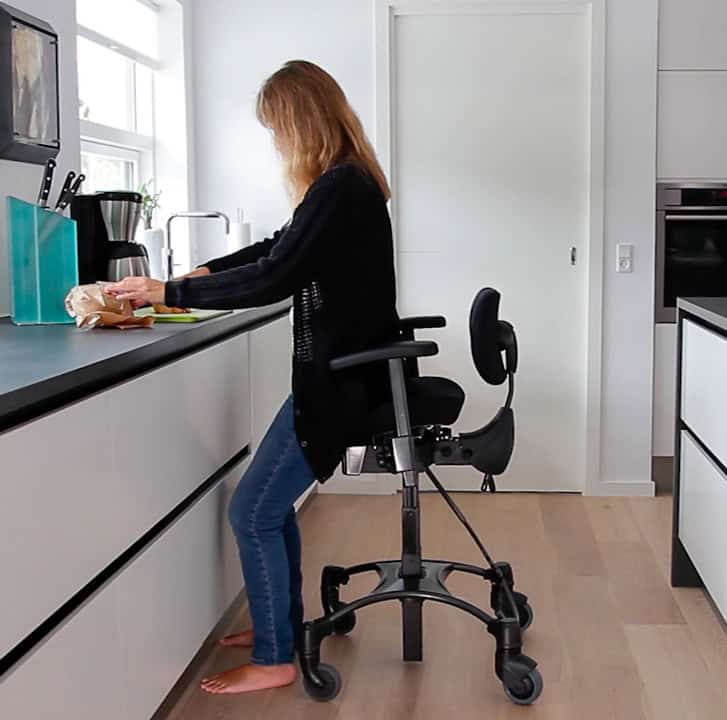
Mobility solutions like the VELA Chair significantly contribute to seniors’ ability to remain independent at home. Features such as a central brake enhance safety, while electric height adjustability and easy movement allow seniors to manage everyday tasks with minimal strain. Alongside traditional mobility aids, exoskeletons and adaptive wearables facilitate daily activities for a wider range of users, integrating physical support and personalized controls for enhanced comfort.[2] The adoption of AI-supported health monitoring, rehabilitation devices, and user-centric technologies now allows for real-time adjustment to user needs and proactive fall prevention at home.[2][10] This kind of mobility support can prolong the time spent in one’s own home by reducing fall risks and promoting autonomy. Life with a VELA Chair can offer dignity and freedom that might otherwise require skilled nursing care. These chairs actively support daily activities such as cooking and cleaning, illustrating a lifestyle of comfort and independence. While VELA is among several solutions, it represents a well-regarded, practical option for those seeking to age gracefully in place. The latest clinical guidelines emphasize integrating technology-assisted rehabilitation, user-friendly interfaces, and AI-supported health monitoring in daily environments, promoting safe and sustainable independent living at home.[2][10]
Expanding options: communication and sensory support
For individuals with developmental or sensory disabilities, the landscape of assistive devices has also grown. Advanced speech-generating devices, AI-driven voice recognition software, smart canes with GPS and obstacle detection, real-time sensory feedback solutions, and smart glasses that provide directional cues now support improved communication, navigation, and inclusion in daily living.[2][4][6] These user-centric and inclusive design improvements help ensure that independent and assisted living settings in Harrison accommodate a wide range of abilities, supporting true autonomy for all residents. The adoption of wearable technology and ethical AI is increasingly common in post-2025 innovations.
Further resources and support
Families and individuals interested in accessing advanced assistive technologies should explore both state- and foundation-based resources. Community organizations in Harrison, such as Independent Living, Inc., continue to serve as valuable partners in connecting residents to appropriate mobility, communication, and sensory support solutions, as well as to regional and evidence-based independence services.[7] Global recommendations from organizations like the World Health Organization now emphasize increased access to assistive technology by 2050 due to emerging needs within aging and disabled populations.[10] Feedback from users and healthcare experts highlights the positive impact on autonomy, confidence, and caregiver support, with an ongoing call for accessible, affordable local services. Ongoing updates in funding and clinical guidelines ensure that seniors and people with disabilities can benefit from the latest innovations, supporting a thriving and independent lifestyle.
Sources
- CDC
- NW Regional Housing
- A Place for Mom
- Arkansas Department of Human Services
- Medicare.gov
- Senior Guidance
- VELA
- Ability MT. (2025-08-01). Exciting Assistive Technology for People with Disabilities.
- Revolutionising Accessibility: The Role of AI in Assistive Technology
- Exciting Assistive Technology for People with Disabilities
- CES 2026: 4 Assistive Technology Exhibitors to Watch
- World Health Organization (WHO). Assistive Technology Overview and Global Needs by 2050.
- Independent Living, Inc. at Harrison, AR. (2024-08-27). Support Services and Community Resources for Developmental Disabilities.
- Countryside Assisted Living at Rock Springs, Harrison
- Independent Living, Inc. (ILI) Harrison Profile