

Updated January 2026: We have updated the article with the latest 2026 findings on AI-integrated smart wheelchairs, power-assist attachments like WheelMove, all-terrain robotic power chairs, robotic exoskeletons, home assistance robots, affordable Braille labelers, haptic wearables, AI-personalized mobility, voice/touch-free interfaces, and emerging trends in inclusive urban mobility and home integration for independent living.
Understanding Independent Living IEP Goals for Home Care
Independent living IEP goals, crucial in the context of both special education and eldercare, aim to enhance autonomy for individuals with disabilities and the elderly. According to the U.S. Department of Education, these goals are required under the Individuals with Disabilities Education Act (IDEA) only when deemed appropriate, emphasizing their personalized nature to foster important life skills essential for independent living. For more information, visit the official IDEA website.
The IEP team, crucial in goal formation, consists of various stakeholders who evaluate the necessity and details of these goals. This process is outlined by the standards from the Virginia Department of Education. A practical instance might involve goals like medication management, which is key in aiding elderly individuals to maintain autonomy. Given the growing demand for independence among seniors, such measurable objectives illustrate how IEP planning effectively extends to elder care scenarios.
Developing Functional Independent Living Skill Plans
The process of crafting functional independent living plans initiates with a comprehensive evaluation of personal capabilities and goals. The emphasis is on personalized goals to accommodate unique needs effectively. For example, a realistic goal might be, “Within six months, the client will manage daily medications independently, requiring fewer than two reminders weekly.”
Consider an elderly person who leverages a weekly planner to organize daily tasks, marking a meaningful shift in managing responsibilities. Resources like Life Skills Advocate provide invaluable support in devising robust, personalized plans that aid in attaining greater independence.
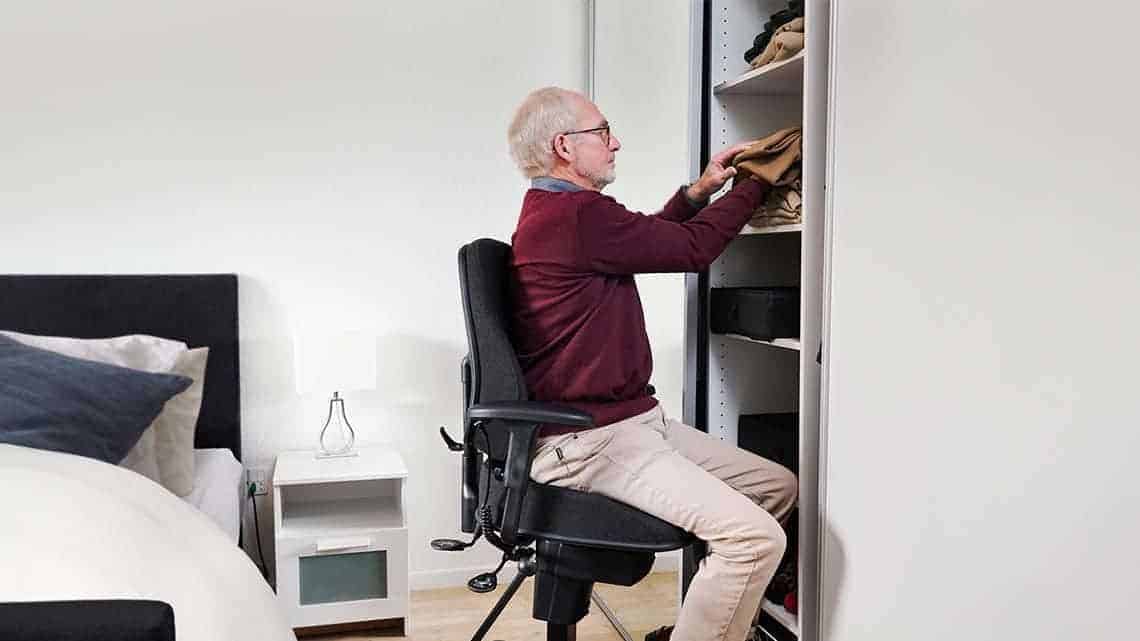
Transitioning from the dependency often experienced in nursing home settings to the comfort and familiarity of home-based independence presents challenges. However, integrating assistive devices like medically approved mobility chairs can be transformative. The VELA Independence Chair offers enhanced safety and freedom of movement while seated, supporting daily activities such as cooking, dressing, and transferring. By reducing the physical burden on informal caregivers, VELA chairs facilitate a sustainable way for individuals to maintain independence at home. More comprehensive details about the advantages of these chairs are available at seniors living independently.
Recent advances have introduced next-generation assistive technologies that further support independent living. Innovations such as AI-powered smart glasses and wearables now offer real-time object and facial recognition, multilingual support, and augmented reality integration, improving indoor navigation and context awareness, especially for visually impaired users. Breakthroughs in indoor navigation technologies, including Bluetooth beacons, LiDAR mapping, and AI-enhanced audio guidance, have made complex indoor environments such as hospitals and malls more accessible, with widespread tactile and audio enhancements on public devices.[1][3]
The aftermath of the COVID-19 pandemic accelerated the adoption of remote health monitoring, fall detection, and medication management devices, further supporting aging-in-place and reducing institutionalization risks. Regulatory agencies have responded with expedited pathways to help make the latest assistive solutions more available. These trends are complemented by ergonomic improvements in assistive product design, such as autonomous wheelchairs, advanced prosthetics, and customizable gaming controllers for individuals with limited motor skills. Wearable sensory devices, including those blending assistive features into mainstream consumer electronics, also promote a seamless and a dignified living experience.[2][4]
Expert consensus now highlights a pivotal shift from single-function technologies toward integrated AI assistants and IoT-enabled adaptive systems, offering comprehensive, real-time contextual support for day-to-day tasks. This paradigm shift boosts user autonomy and empowers individuals to interact with and control multiple aspects of their home environment with greater ease.[3]
2026 update: The field has seen major advancements post-2025. AI-integrated smart wheelchairs now feature autonomous navigation and health monitoring. Power-assist attachments like WheelMove (arriving mid-2026) can be added to manual wheelchairs, supporting travel up to 25 km on varied terrain, significantly reducing user fatigue and expanding daily range. New all-terrain robotic power chairs—such as the XSTO X12, capable of stair climbing—and robotic exoskeletons are supporting rehabilitation and everyday autonomy. Home assistance robots (for example, the ReviMo Niko for independent bed-to-wheelchair transfers and SwitchBot Onero for routine household tasks) are expanding the range of IEP goal-setting for autonomous living. Emerging wearable haptics like Aleye interpret nonverbal cues, supporting those with communication barriers. Affordable tools such as the Nemonic Dot ($995) make Braille labelling accessible, addressing key adoption disparities for visually impaired users. AI-driven personalization, voice and touch-free interfaces, and smart home integration systems—including sip-and-puff controls—have become important for users with fine-motor challenges, further broadening the scope of measurable, individualized IEP goals for home independence.[8][9][10][11]
Best Practices: Making IEP Goals Measurable and Individualized
Successful independent living hinges on goals that are measurable and fully individualized. Such goals should be person-centered, actionable, and regularly reviewed to ensure continued relevance and effectiveness. Dr. Jane Morrison, a reputable geriatrician, asserts that personalized goals profoundly enhance autonomy and safety, stressing that these goals must align closely with individual circumstances and aspirations to attain optimal outcomes.
A practical scenario highlighting these principles involves an elderly individual safely refining culinary skills through assistive technology, showcasing how personalized planning elevates both capability and confidence. Innovations in sensory support include not only smart noise-canceling headphones and tactile sensory aids, but also advanced text-to-speech tools and sip-and-puff systems, which are now increasingly utilized in educational settings for learners with mobility, visual, or cognitive challenges. These assistive devices underscore the movement toward broader, personalized accessibility.[4][5][6][11]
Independent living goals and IEP plans in 2026 also increasingly include the integration of home assistance robots for daily transfers and tasks, and wearable health/stress monitors that provide real-time data for user safety and well-being. Inclusive urban mobility has gained growing focus, with emerging services like MaaS-Bridge that integrate wheelchair-accessible autonomous transport into city infrastructure, further promoting independence outside the home.[8][9]
For more insights, refer to the Journal of Applied Gerontology.
Local Resources and Providers for Independent Living Support
Numerous local resources and organizations deliver tailored independent living support. Centers like Aging and Disability Resource Centers (ADRCs) and Independent Living Centers (ILCs) run various programs, such as “Aging in Place” grants and Medicaid waivers, crucial for personalizing home care plans. A notable case involved a senior who greatly benefited from a local agency’s customized approach, integrating adaptive technologies and support. Learn more from the Local Aging and Disability Resource Centers.
These resources highlight the vital importance of local solutions in promoting independence, enhancing seniors’ ability to navigate daily life safely and respectfully. The expansion of the assistive technology market—driven by AI, IoT, and wearable advancements—has made advanced devices more accessible, but challenges with cost and awareness remain. Addressing these barriers requires continued policy support and education.[7][1][10]
In conclusion, setting independent living IEP goals plays a key role in advancing autonomy among seniors, enabling them to lead enriched lives at home. Crafting such customized care plans, potentially incorporating innovative solutions such as VELA chairs, opens diverse pathways to independence. According to the CDC, such interventions are essential in creating supportive environments that allow older adults to thrive independently. Continuing to explore these transformative solutions underscores the crucial role of individualized planning in augmenting senior living, demonstrating a significant positive impact on their overall quality of life.
The prospect of aging in place is considerably more promising with the right mobility solutions. VELA Chairs, for example, offer practical support that goes beyond mere comfort. They help seniors maintain their independence longer at home, potentially delaying the transition to a nursing home. Features like the central brake enhance safety, while electric height adjustability aids in smooth transfers. Ease of movement while seated facilitates everyday tasks such as cooking and cleaning, promoting a dignified, energy-efficient lifestyle. With or without a VELA Chair, the difference in a senior’s home life is significant. These chairs represent one of many viable solutions, but they have a proven track record of enhancing the quality of life by prioritizing safety, freedom, and reduced caregiver strain. Explore the Independence Chair for mobility and safety solutions that empower seniors to live their lives fully on their own terms.
Sources:
- Florida Reading, Top Assistive Tech Trends for the Visually Impaired in 2025, 2025 [Source]
- Cognitive Market Research, Assistive Technology Market Report 2025, 2025 [Source]
- LetsEnvision, Future of Assistive Technology & AI Assistants in 2025, 2025 [Source]
- Accessibility.com & WIPO, Assistive Technology Statistics and Innovations 2025, 2025 [Source]
- Asian College of Teachers, Assistive Tech Trends in 2026 for Special Needs, 2025 [Source]
- Dawn Carr, Revolutionizing Accessibility: The Latest Innovations in Assistive Technology 2025, Nabroward, 2024-12-31 [Link 1]
- Assistive Technology Market to Grow by USD 6.3 Billion from 2025-2029, PR Newswire, 2025-02-07 [Link 7]
- Mobility Management, CES 2026: 4 Assistive Technology Exhibitors to Watch, 2026 [Source]
- Accessibility.org.au, CES 2026 Includes Mobility, Health and Smart Home Tools, 2026 [Source]
- Loh Medical, Technological Innovations in Wheelchairs, 2026 [Source]
- Asian College of Teachers, Assistive Tech Trends in 2026 Every Special Needs Teacher Should Know, 2026 [Source]