

Updated February 2026: We have updated the article to highlight cutting-edge advancements in assistive technology, including AI-powered and autonomous mobility devices, CES 2026 product launches (such as WheelMove and XSTO power chairs), increased adoption of wearables and adaptive electronics, and current trends driving more inclusive and user-centric solutions for adults with disabilities.
Independent Living Skills Checklist for Adults with Disabilities
In today’s society, autonomy and self-sufficiency are highly valued. Adults with disabilities can lead fulfilling and independent lives by developing crucial skills and relying on appropriate support systems. This comprehensive guide outlines an independent living skills checklist, designed to aid individuals, families, caregivers, and support teams in promoting independence and self-direction. According to a study provided by the Parent Educational Advocacy Training Center, structured skill development significantly enhances the independence of many adults with disabilities.
Mastering Personal Care: Building Blocks of Independence
Personal care is foundational to independent living for individuals with disabilities. Essential hygiene routines, such as regular toothbrushing and showering, profoundly impact daily well-being and self-esteem. For example, mastering self-dressing skills can bolster an individual’s autonomy and self-confidence. As highlighted by Milestones Autism Resources, these personal care skills enable adults with disabilities to embrace independence while acknowledging and respecting their unique abilities and needs. In recent years, innovative assistive technologies—such as AI-powered smart mirrors and adaptive grooming tools—are increasingly incorporated to further support routines, making personal care activities more accessible and personalized.EqualAccessibility LLC
Financial Savvy: A Key to Independent Living
Financial management is vital for achieving greater autonomy. Key competencies include budgeting, bill payment, and adopting saving strategies. For instance, consider an individual using a financial app to track expenses and maintain control over personal finances, illustrating the empowerment financial literacy fosters. UD Services emphasizes the importance of financial independence and provides insights into sound financial practices for adults with disabilities. Recent assistive technology innovations, including voice-activated devices and adaptive financial management applications, now allow individuals with limited dexterity or vision impairments to engage more independently with financial tasks. A Different World Services
Health and Wellness: Supporting Independent Living
Health and wellness practices are crucial for maintaining independence. Proficient medication management and healthy lifestyle habits are integral parts of independent living. Take the example of an adult regularly attending health check-ups, demonstrating proactive health management. According to research by the Lanterman Regional Center, strategic health management practices enhance independence and improve overall life quality. Technological advances now offer personalized health monitoring through smart wearables, remote consultation apps, and even brain-computer interface (BCI)-driven aids for medication reminders and scheduling. These smart tools can be adapted for individual needs and provide real-time feedback, supporting user-led health decisions and autonomy.PMC Article Assistive Technology Statistics and Facts (2026)
Safety First: Preparing for Emergencies
Safety and emergency preparedness are essential skills for secure independent living. Understanding safety procedures, like executing fire evacuation plans and managing emergency contacts, is invaluable. A poignant real-life story involves an individual who evaded a crisis by knowing how to call 911, underscoring the practical significance of safety skills. TTAC Online offers resources to bolster emergency preparedness for individuals aiming for greater independence. In addition, devices such as smart wheelchairs with pressure sensors and AI-powered navigation can proactively identify hazards, support safe mobility, and integrate emergency alerts, further reinforcing security at home.AbilityMT Exciting Assistive Technology for People with Disabilities CES 2026: 4 Assistive Technology Exhibitors to Watch
Technology Literacy and Device Management: New Core Competencies
The evolving landscape of assistive technology means that technology literacy and device management skills are increasingly essential for independent living. Core competencies now include learning to use smart wheelchairs, app-driven controls, AI-powered smart glasses, voice-activated systems, adaptive computing tools, and cutting-edge interfaces such as eye-tracking (e.g., Tobii Dynavox), sip-and-puff, and switch devices.ThinkBeyondTheChair 10 Assistive Technology Types You Should Know (2026) Recent advances include AI-powered autonomous navigation, smart sensors for obstacle and pressure detection (such as LUCI add-ons and Robooter X40), as well as new CES 2026 products like WheelMove (enhancing manual wheelchair range) and XSTO all-terrain power chairs. Mainstream electronics, including Samsung Relumino TVs and eSight Go wearable smart glasses, expand daily living and accessibility. Training should focus on operating, maintaining, and troubleshooting these devices, as well as keeping current with insurance- and policy-supported funding while adapting to rapid innovation and adoption trends.AbilityMT Assistive Technology Statistics and Facts (2026) CES 2026: 4 Assistive Technology Exhibitors to Watch
Overcoming Challenges with Support and Mobility Solutions
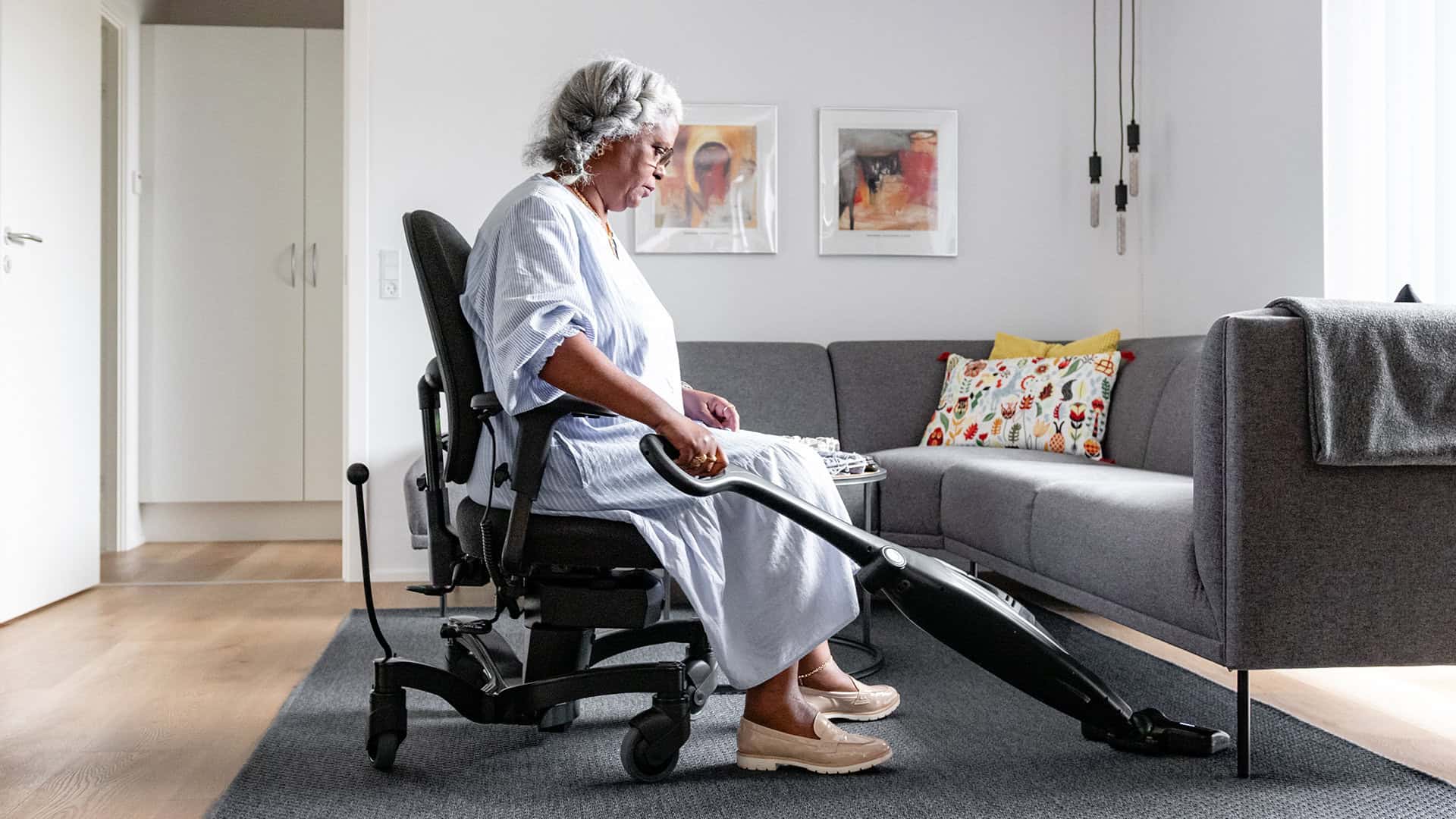
For many elderly adults with disabilities, maintaining independence at home rather than moving to a nursing facility is a desirable goal. Ensuring safety and usability in daily living spaces can be crucial to this independence. Here, mobility aids like the medically approved VELA chair prove invaluable. Designed specifically for home use, the VELA Independence Chair enhances safety and freedom of movement while seated. Its features support daily activities such as cooking, dressing, or transferring, significantly reducing the burden on informal caregivers. For more information on how the VELA chair supports independence at home, visit Mobility Solutions for Seniors. Recent ergonomic improvements and AI-driven adjustments ensure a more comfortable and supportive experience for users, further encouraging lasting independence.EqualAccessibility LLC The growing market share for mobility aids, which rose from 31% to 34% by 2025, demonstrates an increasing reliance on advanced devices, including all-terrain stair-climbing power chairs and quick-attach mobility expansions for manual wheelchairs—giving more options for users with varying needs.Assistive Technology Statistics and Facts (2026) Exciting Assistive Technology for People with Disabilities
The independent living skills checklist for adults with disabilities underscores the transformative power of skill development in fostering autonomy and self-direction. Balancing independence with the right supports enables adults to thrive with dignity. This guide encourages individuals and their support teams to adopt holistic, multidisciplinary strategies—including clinical consultation and technology assessment—to achieve meaningful, self-directed lives. For further insights into maintaining independence while accommodating specific needs, visit Vivid Care and PMC Article. More recent developments, such as brain-spinal cord interface rehabilitation and inclusive consumer electronics from CES 2026, continue to expand possibilities for self-directed living.Exciting Assistive Technology for People with Disabilities CES 2026 Highlights: Accessibility Meets Innovation (YouTube)
This guide aims to inspire individuals and caregivers, offering confidence that every step towards independence is a step towards a fulfilling and self-determined life. By focusing on strengths and cultivating new skills with patience and adaptability, adults with disabilities can achieve increased autonomy, dignity, and satisfaction in their daily lives.
Supporting Aging in Place: A Practical Option
Staying independent at home offers numerous benefits for older adults, promoting dignity, freedom, and enhanced quality of life. Practical mobility solutions like the VELA Chair are designed for individuals who seek to delay the need for nursing home care, promoting “aging in place.” This chair is equipped with features that tackle common issues such as falls and limited mobility. With a central brake for increased safety, electric height adjustability for transfers, and ease of movement while seated, the chair offers substantial support for everyday tasks such as cooking, cleaning, or simply enjoying leisure time. These advantages help decrease the workload for caregivers, allowing seniors to maintain their independence longer. For examples of such safety measures, explore Fall Prevention Strategies. While VELA chairs aren’t the only answer, they present a proven, practical choice for sustaining independence at home. Increasingly, adaptive and AI-driven devices—such as smart wheelchairs with autonomous functions, exoskeletons, and real-time monitoring wearables—are also being integrated into home environments to further strengthen independent living and safety for all users.ThinkBeyondTheChair CES 2026: 4 Assistive Technology Exhibitors to Watch
Sources: