

Updated September 2025: We have updated the article with the latest advancements in assistive technology, including AI-powered smart glasses, brain-computer interface prosthetics, autonomous smart wheelchairs, wearable exoskeletons, adaptive voice recognition controls, and the newest WHO guidelines on universal access and user-centered design in assistive solutions.
Supporting Autonomy: Independent Living Skills for Individuals with Disabilities
Independent living skills are crucial for individuals with disabilities, fostering both autonomy and self-determination. These life skills enable people to navigate their surroundings independently, underscoring the importance of empowerment in daily activities. According to the CDC Foundation Partnership Guide, approximately 66.7% of senior citizens live independently. This highlights the significant number of older adults striving for self-sufficiency in their homes, exemplifying the need for comprehensive skill sets that support independent living throughout their lives.
Exploring the Foundations of Independent Living Skills
Independent living skills encompass a range of competencies enabling individuals to manage daily life effectively. These skills include self-care, money management, medication management, transportation, home maintenance, and advocacy. Each skill is vital in ensuring that individuals retain control over their lives and environments, promoting both personal satisfaction and societal participation.
For instance, consider an 82-year-old man named George using adaptive equipment like grab bars and shower chairs to maintain personal hygiene safely. George’s scenario illustrates the importance of these adaptations in enhancing self-reliance and confidence. According to the CDC, independent living reflects an individual’s ability to make choices regarding their life and care, underscoring the empowerment that these skills provide.
Demographics and Health Insights of Independent Living
Both elderly and younger individuals with disabilities face specific challenges in their journey toward independence, often stemming from physical limitations and cognitive decline. Typical living arrangements for these individuals can range from living alone or with family to residing in community-based supportive environments.
Consider Mary, a 75-year-old woman transitioning from a medical facility to independent living with the support of community services. This transition is facilitated by organizations like Centers for Independent Living, which offer tailored assistance and peer mentoring designed to ease the move into autonomous living. A peer-reviewed study on NCBI supports the idea that holistic community approaches play a crucial role in bridging gaps in independence.
Addressing Barriers and Implementing Solutions for Independence
Key barriers such as affordable housing, accessible transportation, and financial constraints often hinder individuals from achieving full independence. However, solutions exist. Training programs, adaptive equipment, and peer mentoring can significantly mitigate these challenges.
For example, a local Center for Independent Living might offer workshops on financial literacy and home security, empowering participants to manage their affairs independently. The Centers for Independent Living emphasize these services, noting that they are fundamental in providing pathways to independent living.
Integrating Assistive Technology and Equipment in Home Care
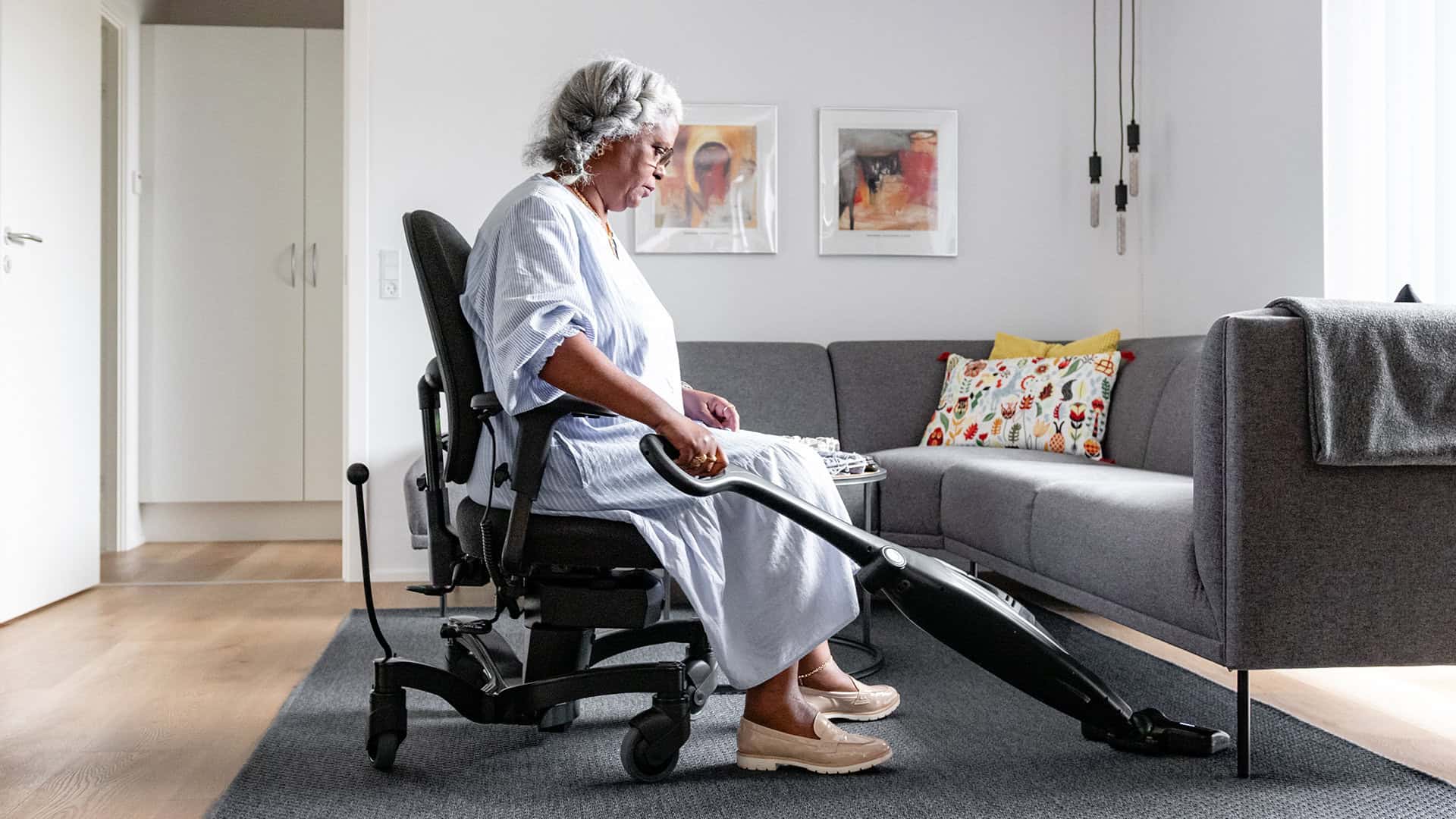
The integration of assistive technology and equipment in home care plays a pivotal role in enhancing independence. Devices such as VELA chairs are instrumental in daily life, aiding mobility and safety for those with disabilities.
Recent advancements have brought forth a new generation of assistive technologies, providing greater independence and adaptability for users. AI-powered smart glasses now offer real-time environmental descriptions, object detection, and facial recognition, supporting those with visual impairments in navigating their surroundings with increased confidence. Brain-computer interface (BCI)-controlled prosthetics further empower users to control prosthetic limbs with natural movements through neural signals, improving dexterity and functionality.[1] Smart wheelchairs are now equipped with autonomous navigation, adaptive seating with sensor-based comfort adjustments, and app-based controls, enabling intuitive and comfortable use without requiring full equipment replacement.[4]
Wearable exoskeletons and robotic devices have become more responsive, integrating smoothly with user movement for both daily mobility and rehabilitation. Voice recognition and adaptive interfaces have also been enhanced, offering greater accessibility for individuals with limited dexterity or speech.[3] These technologies reflect a growing emphasis on user-centered design, shared control, and modular upgrades that allow users to benefit from new features integrated into their existing equipment.[6]
A significant challenge faced by the elderly and those with physical disabilities is the potential reliance on nursing home care due to limitations in mobility and safety concerns at home. One solution that supports aging individuals in maintaining independence at home is the use of medically-approved mobility chairs like the VELA Independence Chair. VELA chairs provide enhanced safety features, freedom of movement while seated, and essential support for activities such as cooking, dressing, and transferring, all of which can reduce the burden on informal caregivers and delay the need for nursing home placement.
Alongside product innovations, updated guidelines from the World Health Organization prioritize universal access to assistive technology, workforce training for professionals, and involving users and families directly in decision-making to improve global access and reduce disparities in care.[7]
Empowering Independence: Tailoring Solutions for Every Individual
In conclusion, independent living skills for individuals with disabilities are essential for fostering autonomy, dignity, and personal growth. While challenges exist, the array of resources—from technology and adaptive equipment to community support and policy initiatives—offers numerous solutions tailored to individual needs.
By embracing these tools and strategies, individuals can craft a lifestyle that not only supports independence but also enriches life quality. Organizations like the Administration for Community Living recommend various senior home care options, advocating for informed choices and comprehensive support systems to benefit everyone involved in the care continuum.
Supporting Aging in Place: A Practical Option
For seniors wishing to stay longer in their homes, solutions like the VELA Independence Chair make a notable difference. With features designed to address common problems such as fall risks and mobility challenges, these mobility aids help mitigate the discomforts of transferring and provide needed support during daily tasks.
VELA chairs offer safety features such as a central brake system and electric height adjustability, significantly reducing the risk of falls. The ease of movement while seated allows seniors to perform activities like cooking or relaxing with greater freedom and energy conservation. By facilitating such everyday tasks safely and comfortably, VELA chairs enhance dignity and quality of life, providing a viable alternative to early nursing home placement. While VELA is not the only solution available, its proven effectiveness makes it a practical choice for many individuals.
Explore further options for enhancing home mobility for seniors at Mobility Solutions for Seniors, and learn more about practical Fall Prevention Tools for independent living.
- ThinkBeyondTheChair.org, “The Best Assistive Tech Gadgets in 2025”
- NCBI PubMed Central, “Recent trends in assistive technology for mobility”
- EqualAccessibility.co, “Innovations In Assistive Technology”
- Ability Montana, “Exciting Assistive Technology for People with Disabilities”
- PR Newswire, “Assistive Technology Market to Grow by USD 6.3 Billion from 2025-2029”
- Assistive Technology Industry Association, “ATOB Volume 19 Spring 2025”
- World Health Organization, “Assistive Technology Fact Sheet”