

Updated September 2025: We have updated the article with the latest advancements in assistive technology, including AI- and IoT-integrated devices, new smart wearables such as AI-powered glasses, aging-in-place technologies, user-centered design trends, and regulatory developments that improve access to independent living solutions.
Independent Living Options in Warner Robins, Georgia: A Comprehensive Guide
Exploring the Independent Living Communities in Warner Robins
The demand for independent living communities in Warner Robins is on the rise owing to its growing senior demographic. Seniors, defined as those aged 65 and older, make up approximately 12.42% of the population, compared to the national average of 16.84% (Neilsberg). In Warner Robins, communities such as Springfield Gardens and Summer’s Landing cater specifically to this group, emphasizing autonomy alongside community support.
Springfield Gardens is fundamentally designed with senior independence in mind. Its spacious one-level units enhance mobility while providing an environment that supports aging in place—allowing residents to remain in familiar surroundings as their needs evolve (Springfield Gardens). The community thrives on fostering resident connections through diverse social and wellness programs, building a strong sense of community and actively promoting resident autonomy.
Similarly, Summer’s Landing offers independent living with the added assurance of available support. The facility takes care of routine household chores and provides facilities for elegant community dining and group activities. Importantly, it offers transportation services for medical appointments and outings, ensuring that residents maintain their local ties and essential social interactions (Summer’s Landing).
Balancing Cost and Comfort in Senior Living
Finances are a crucial factor when choosing an independent living community. Prospective residents should consider both immediate costs and long-term financial sustainability. Many facilities offer a choice between all-inclusive packages and à la carte services, enabling customization based on personal preferences and needs. This flexible approach often involves amenities ranging from housekeeping and wellness programs to transportation services (Paying for Senior Care).
To manage costs effectively, residents should scrutinize these service models and, where feasible, select a community that provides continuum care options. Such arrangements can significantly ease transitions to higher levels of care if future needs arise, keeping residents in familiar surroundings (A Place for Mom).
Fostering Community and Connection in Warner Robins
Active social engagement is crucial for maintaining a high quality of life in independent living communities. The Canopy at Warner Robins exemplifies this with its “zestful living” philosophy, offering a wide array of activities designed to invigorate residents physically, mentally, and socially. Programs range from creative arts workshops to fitness classes, forging interpersonal bonds among residents and fostering a spirit of community (The Canopy).
Resident testimonials often highlight the importance of social interaction, with many sharing experiences of vibrant community living, thus reinforcing the association between active participation and enhanced wellness.
Empowering Independence with Adaptive Equipment and Modern Technologies
While discussing the challenges faced by seniors navigating life in nursing homes, including limited mobility and decreased autonomy, it is important to consider how evolving technology enables more independent living at home. Current advancements are transforming assistive devices: artificial intelligence (AI) and the Internet of Things (IoT) are now integrated into mobility solutions, allowing devices to adapt in real time to individual needs and environments (Cognitive Market Research).
Modern wearable technology, such as AI-powered smart glasses, now provides users with real-time environmental descriptions and conversational assistance. For example, Meta’s Ray-Ban smart glasses feature live AI feedback, which can describe surroundings and facilitate independent navigation for users with visual impairments, enhancing their autonomy and access to community spaces (First Aid For The Blind, CSUN 2025 Conference Highlights).
In addition, aging-in-place technologies now combine features such as remote health monitoring, fall detection, and medication management, offering tailored support for those wishing to live independently at home (Cognitive Market Research).
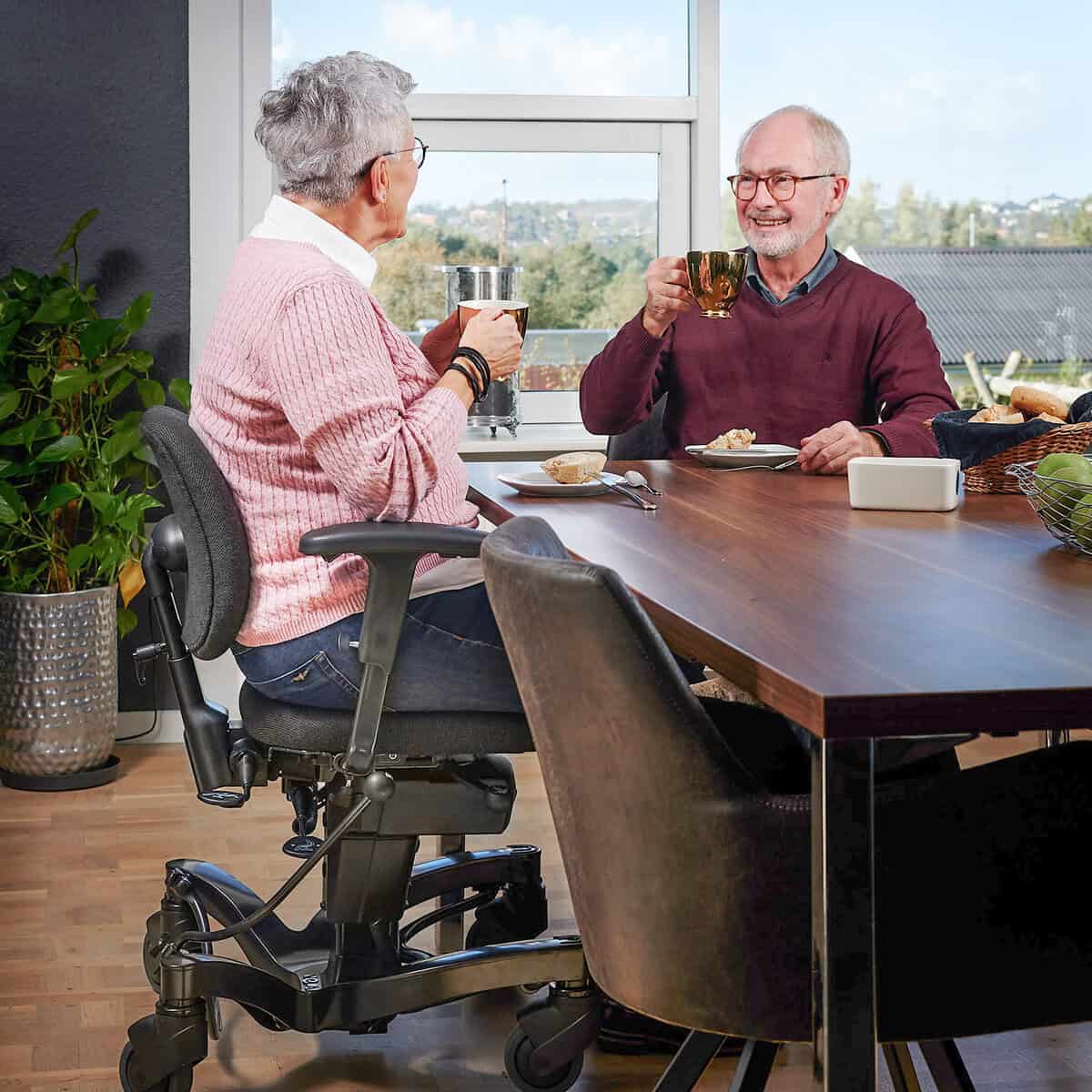
Mobility solutions like the VELA Independence Chair continue to provide a valuable means for seniors to enhance their daily activities safely. The VELA chair, a medically approved mobility aid, is designed for home use and promotes safe movement while seated. Its adaptability supports daily activities such as cooking or dressing and helps reduce the workload on caregivers, empowering seniors to maintain greater independence (Mobility Solutions for Seniors, Empowering Elderly Independence).
Rehabilitation and ergonomic design trends now feature strong user-centered design principles, with direct user feedback shaping more effective and inclusive products. Virtual reality (VR) and augmented reality (AR) are also emerging in therapeutic settings to deliver immersive experiences and enhance rehabilitation outcomes (Journal of Visual Impairment & Blindness, Envision Community).
Integrated AI assistants are also replacing standalone assistive apps, making it easier for users to control multiple functions such as voice-activated information retrieval and environmental scanning through one accessible interface (Envision Community, CES Accessibility Trends 2025).
Regulatory agencies have taken steps post-pandemic to speed up access to the latest assistive technology solutions, addressing challenges to service delivery and streamlining device approvals (ATIA).
Making the Right Choice
Warner Robins offers numerous independent living communities, each uniquely catering to diverse senior preferences. Personal visits to communities like Springfield Gardens and The Canopy provide valuable insight into the environment, amenities, and support systems in place.
- Visit Multiple Communities: Physically tour several communities to identify those that best align with personal needs and expectations.
- Assess Care Continuums: Consider communities offering a spectrum of care to facilitate seamless transitions in response to evolving needs.
- Engage with Staff: Interact with caregivers and community managers to better understand their approach to eldercare, ensuring they match your expectations.
VELA Chairs can be a crucial factor in helping individuals remain independent longer in their homes. With features focusing on enhancing safety, such as a central brake system, and electric height adjustability for ease of use, these chairs afford users a sense of security and independence. The ease of movement while seated provides additional support in everyday activities like cooking and cleaning, fostering a more relaxed and secure lifestyle. This practical solution might delay the need for nursing home care by enhancing dignity and autonomy in daily living. While VELA chairs represent a proven option, it’s essential to acknowledge other available solutions when crafting a tailored strategy for aging in place.
Sources
- Cognitive Market Research — Assistive Technology Market Report 2025
- Envision Community / LetsEnvision — Future of Assistive Technology 2025
- CSUN 2025 Conference Highlights
- First Aid For The Blind — Meta Ray-Ban Smart Glasses AI Live feature
- Journal of Visual Impairment & Blindness — 2025 Special Issue on Assistive Technology
- CES Accessibility Trends 2025
- Assistive Technology Industry Association (ATIA)